The snow changed first. It turned black. Sledges no longer moved across it and children could not play outside. This was not a number in a report. It was happening in a city where families lived and children grew up.
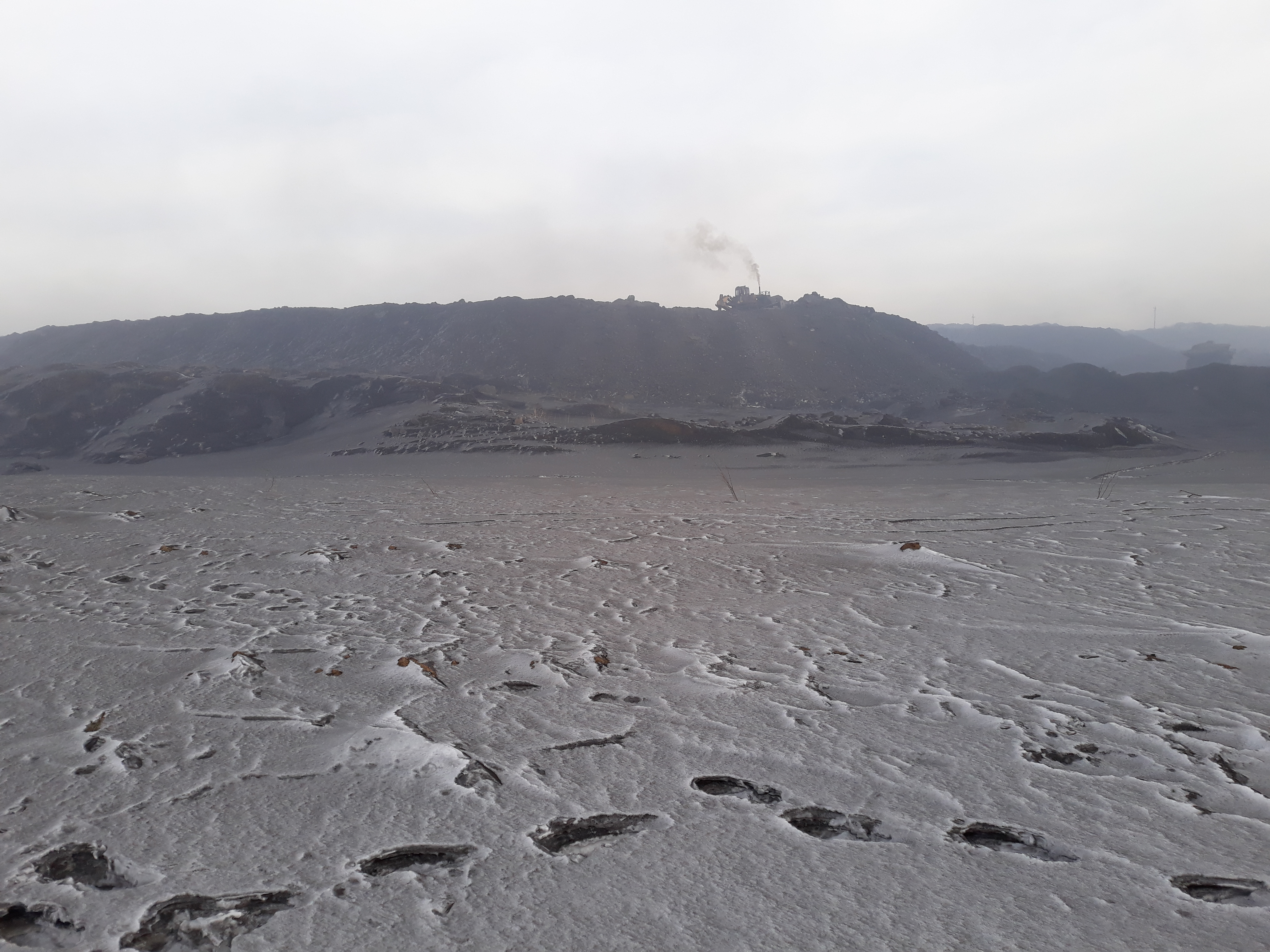
Black Snow of Kuzbass. Kiselyovsk
https://youtube.com/shorts/-3Zja0lDlUs
I submitted a request for measurements at places where children lived and studied and adults worked. I also wanted a sampling point outside the police building, so that its staff could see what they were breathing at work.
I proposed Kommunalnaya Street 19, then occupied by the police. The head of its press office called and asked me to choose the neighbouring hospital instead, so staff would not have difficulties with their superiors. That is how Kommunalnaya 15—a psychiatric and neurological clinic about 56 metres from the police building—appeared in the documents.
That explanation is my account of a telephone conversation. The letter confirms sampling at Kommunalnaya 15 but does not explain why that address was selected.
I did not know when the samples would be taken. Later I received a reply from the local office of Rospotrebnadzor, Russia’s federal consumer-rights and public-health surveillance authority.
The letter is dated 15 December 2020 and numbered 3007. It says that air samples were collected on 3 December at homes and educational institutions and on the boundary of the sanitary protection zone of Boiler House No. 25.
I then published an article and made the reply available for residents to download. Nearly six years later, I returned to it and began with the simplest question: what did the measurements actually show?
Two exceedances that can be compared directly with the stated limit
A number alone means little. The limit printed in the same official reply is therefore shown beside it.
Suspended particulate matter
1.4 of the maximum one-time limit.
Carbon monoxide
1.43 of the maximum one-time limit.
Carbon monoxide was 7.15 mg/m³ against a limit of 5 mg/m³: 1.43 times the limit. Suspended particulate matter was 0.7 mg/m³ against 0.5 mg/m³: 1.4 times the limit.
The document confirms exceedances in samples collected on one day. It does not show how many hours or days those concentrations persisted, or how often they recurred.
The most alarming figures required the strictest scrutiny
The same letter gives benzo[a]pyrene concentrations ranging from 6.6 to 13.3 ng/m³. Alongside them it states a daily-average limit of 1 ng/m³ and describes the results as exceedances of 6.6 to 13.3 times. These are the most alarming figures—and precisely where a dramatic conclusion would be premature.
Benzo[a]pyrene is one of the polycyclic aromatic hydrocarbons formed by incomplete combustion of organic material. IARC classifies it as carcinogenic to humans, Group 1. It is used as an indicator of the carcinogenic potential of PAH mixtures, but WHO stresses the limitation: one substance cannot represent the entire mixture and may underestimate its potential.
To verify independently whether each result was validly compared with a daily-average limit, we need the full laboratory protocols Nos. 11485 and 43135, including sampling duration and method. I do not have them. That is why this article does not display an eye-catching chart of “times above the limit”.
WHO reviews describe associations between PAH exposure and several health risks. They are evidence about substances and mixtures; they do not prove that samples from 3 December caused a particular illness in a particular person.
The document ended. For a resident, the story did not.
The next question was unavoidable: if a regulator found exceedances, what happened afterwards?
The letter reports one intended response: the local office was preparing materials for an unscheduled inspection of the boiler house operated by TK Aktiv LLC. I have not found the inspection result, an order, repeat sampling, or a document showing how it ended.
As the person who initiated the measurements and followed what happened next, I did not see official action that changed the situation. This is my testimony as a participant, not documentary proof that no action at all was taken.
Adverse meteorological conditions
Surviving reports allow us to establish that an adverse meteorological conditions regime—known by the Russian abbreviation NMU—was in force in neighbouring Prokopyevsk on 3 December. Rosgidromet’s quarterly record independently confirms NMU days in that period. The regional authority’s original operational notice can no longer be reproduced at its old address.
I found no corresponding notice for Kiselyovsk on that date. Letter No. 3007 also says the local office did not receive information about NMU in Kiselyovsk. The document does not explain that break in the information chain.
What counted as the city’s background pollution
Another official reply came from the Kemerovo Centre for Hydrometeorology and Environmental Monitoring, dated 22 April 2020, No. 08-10/467-1196. It states explicitly that regular air-pollution observations were not conducted in Kiselyovsk or the surrounding urban district.
For emissions projects, the centre supplied companies with background concentrations under a Rosgidromet method for towns without regular observations. This was provided for by the regulatory system. The centre also explained that these values were intended for emissions regulation, were not an independent description of actual air pollution and were not, on their own, to be compared with health limits.
A designer can use the recommended background as an input, add the modelled contribution from a new facility and compare the resulting model output with the limit. That answers a project question under stated assumptions. It does not create a record of what residents actually breathed on each particular day.
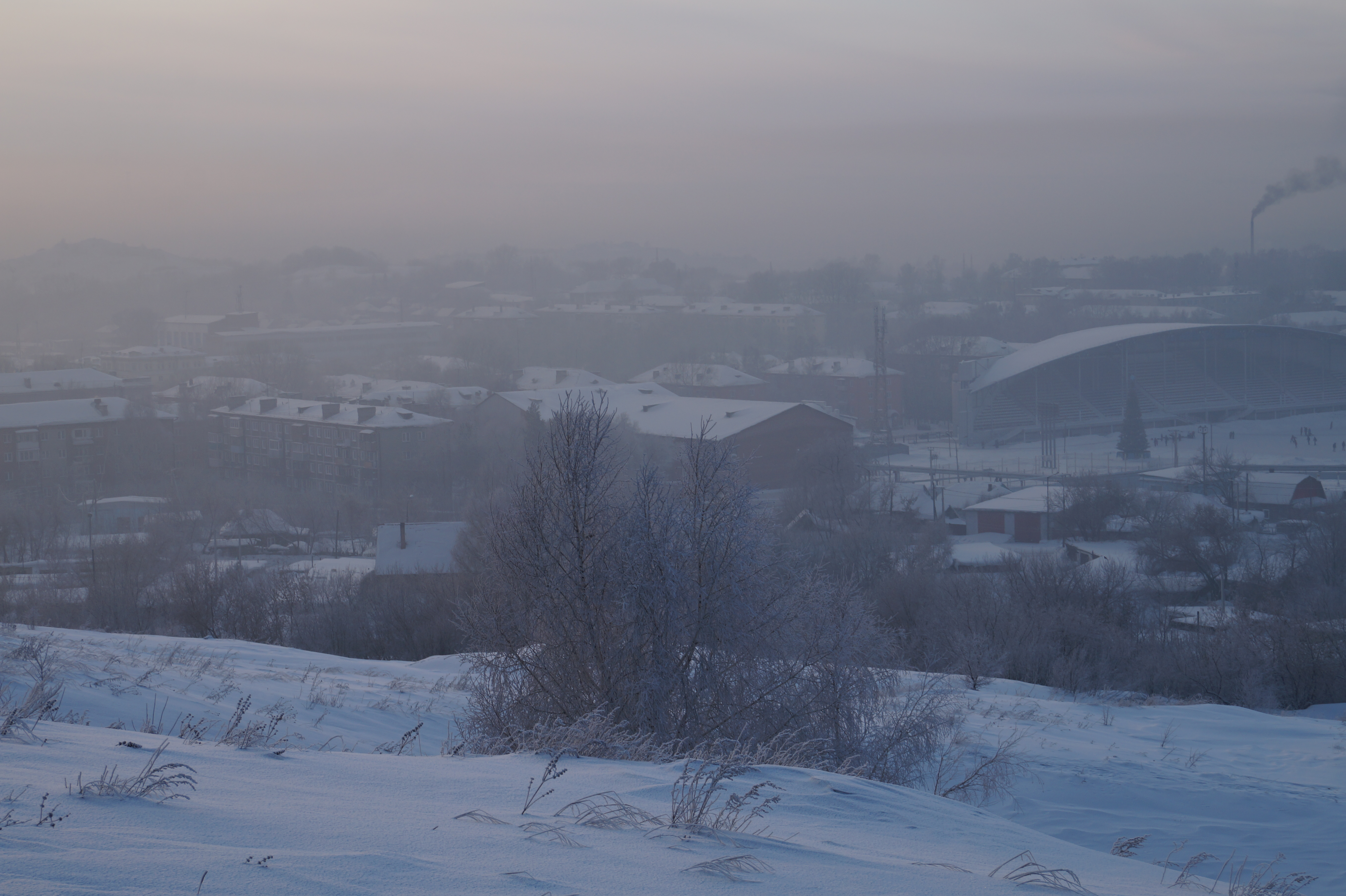
The city around a single measurement
Kiselyovsk sits in a landscape shaped by coal extraction. Black or grey snow alone does not establish its chemical composition or identify its source. But a one-day sample cannot answer a question about years of exposure either.
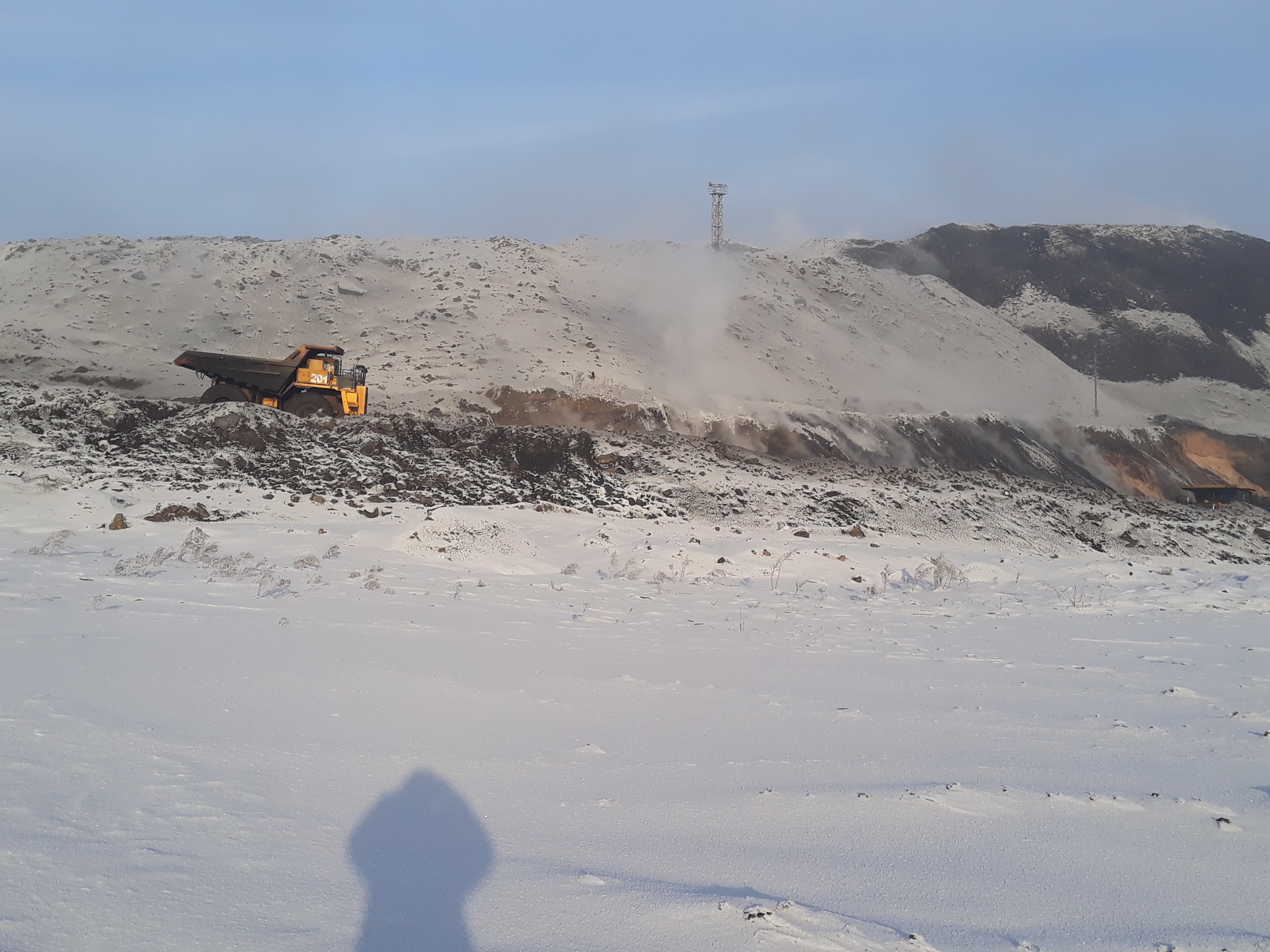
I looked for a simple annual series of coal production. The 2010 master plan contains a target of 12.065 million tonnes by 2020—but that is a forecast, not an actual outcome. I found no complete, comparable public series of actual production for 2010–2020, so there is no graph purporting to show “growth”.
Can health effects be seen?
I found an incomplete municipal series for newly diagnosed cancers, but no comparable long-term Kiselyovsk series for respiratory or cardiovascular disease. Regional figures cannot quietly substitute for city data. Even complete parallel trends would not establish causation by themselves. An empty space is more honest than a persuasive chart made from incomparable data.
Can a resident follow the path from measurement to outcome?
In the European Union, where a monitoring station exists, historical measurements can be downloaded through European Environment Agency systems. For installations covered by the Industrial Emissions Directive, the competent authority publishes a report within four months of an on-site inspection. In the United States, AQS/AirData provides station archives, while ECHO connects data on permits, inspections, violations and enforcement.
These systems also have gaps: stations are not located outside every home, pollutant registers have reporting thresholds, and agencies warn that some records are incomplete. The comparison is not between a bad system and perfect ones; it tests whether an existing data trail can be followed.
Russian law protects the right to reliable environmental information and requires legal entities and individual entrepreneurs operating Category I–III facilities to conduct industrial environmental control. A legal duty alone, however, does not give a resident the complete history of a particular inspection.
Documents and databases
Technical evidence is retained for readers who want to verify every step.
Open sources
- Rospotrebnadzor, reply No. 3007, 15 December 2020 — Natalia Zubkova’s archive.
- Kemerovo CGMS, reply No. 08-10/467-1196, 22 April 2020 — Natalia Zubkova’s archive.
- WHO: health risks of atmospheric PAHs
- IARC classifications
- EEA historical air-quality data
- EU Industrial Emissions Directive 2010/75/EU
- US EPA AQS/AirData
- US EPA ECHO
- Interfax, 2 December 2020: NMU in Prokopyevsk
Contributors
Natalia Zubkova — author of the study.
Sergey Nikolayevich Severin — co-author and editor.
Viktor Andreyevich Svetlov — co-author and research editor.
On 3 December 2020, the air in Kiselyovsk was measured. The official reply records results from samples collected on one day, reports benzo[a]pyrene concentrations, and says an unscheduled inspection of the boiler house was being prepared.
I did not see subsequent official action that changed the situation. But my testimony cannot replace a document. The result of the promised inspection and the full chain—exceedance, regulatory action, repeat inspection, outcome—could not be reconstructed from the available records.
That is the boundary between what the official reply confirms, what I witnessed, and what cannot yet be established from documents.