
Introduction
In 2021, the Commercial Court of Kemerovo Region considered two disputes which, five years later, had almost merged into one in my memory. In case A27-1854/2021, the claimants were individual entrepreneur Timur Frank and OOO Razrez Kuznetsky Yuzhny (“Kuznetsky Yuzhny Open-Pit Mine” LLC); I was the defendant. In the other case, A27-20471/2020, the open-pit mine company sued Vyacheslav Krechetov and me. It was in the second case that the court found one of eight disputed statements to be untrue; the other seven claims were dismissed. The set of documents I retained does not contain the final judicial decision in Frank’s personal claim.
I am deliberately not recounting these proceedings from memory. In an investigation that begins with the accuracy of other people’s words, it would be strange to allow inaccuracies of my own.
Five years have passed. I no longer live in Kuzbass and am far from the places I continue to write about, which has made obtaining documents considerably more difficult. I send enquiries to coal companies, but some of them go unanswered. Even so, I decided to return to the man who was a claimant in one set of proceedings and managed the company that was the claimant in the other.
This time, I will try not to speak from memory.
I assembled the available judicial decisions, materials from commercial and bankruptcy proceedings, corporate documents, information about companies and transactions, publications from different years, and documents concerning conflicts in which the name Timur Frank appeared.
Open sources show only the part of reality that became public and survived. When working with Russian sources, it is impossible to know which documents were never published, which disappeared from public access and what information remained non-public.
Where the document ends, so does our assertion. Conversely, the absence of a document we could find does not prove that an event did not occur.
There is one more thing I must say before the investigation itself begins.
In 2020–2021, I was very afraid of Timur Frank.
That fear did not arise from a single document. It became real to me in Cheremza — the place where Frank ceased to be a surname in corporate records and became part of my own story. Residents were protesting against a coal-loading project. At the time, Frank headed RK Proekt, and from the end of May, according to a claim filed later, he had been appointed managing director of Kuznetsky Yuzhny. Police detained people. Vyacheslav Krechetov filmed the conflict and later found himself in a temporary detention facility and in hospital. An anonymous outlet published accusatory pieces about journalists and activists and then Krechetov’s medical documents. Outside the court, strangers filmed us as we filmed them. According to my own account, links to publications about me were sent to my husband, his relatives and his colleagues.
This was the reality in which my fear arose.
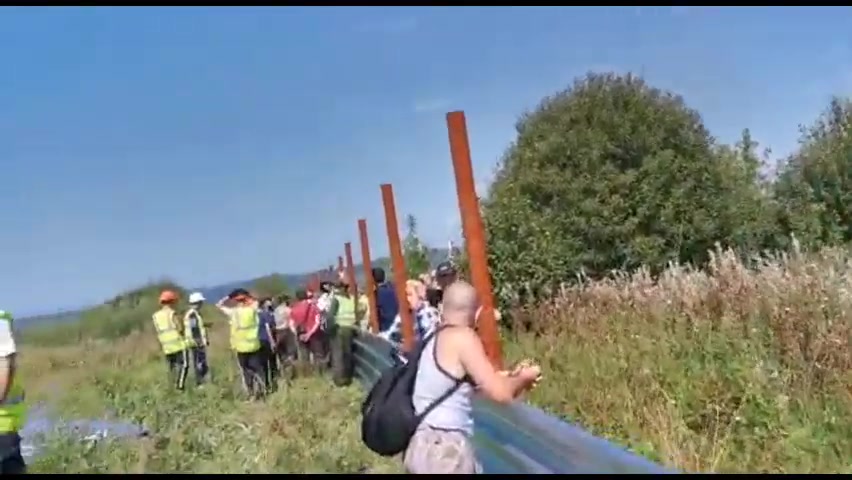
It changed the way I worked. I needed to travel to mining areas, spoil heaps and industrial sites where there was no one for kilometres around. At some point, I became afraid to go there alone: I thought something might happen to me and no one would know where to look.
There are now thousands of kilometres between Kuzbass and me. I can reopen old cases, compare dates and verify what I once knew only in fragments.
But the fear has not gone away.
I am still afraid of Timur Frank.
That is an established fact about me. Whether Frank intended to harm me has not been established.
Two points in time will therefore coexist in what follows: what I knew and how I perceived events then, and what the documents allowed me to establish five years later. One must not take the place of the other.
This is not an attempt to relitigate a court judgment or to prove retrospectively that I was right about everything at the time. I want to show the reader the documents and separate what is supported from what could not be proved.
The court case from which I begin again
First, I must correct my own memory. I had spoken of a single “claim by Frank”, but the surviving documents show two separate sets of proceedings.
A27-1854/2021
- Claimants
- Individual entrepreneur Timur Frank; OOO Razrez Kuznetsky Yuzhny
- Defendant
- Natalia Zubkova
- Subject
- an article and a video report
- Outcome
- the archive contains no final judicial decision
A27-20471/2020
- Claimant
- OOO Razrez Kuznetsky Yuzhny
- Defendants
- Natalia Zubkova; Vyacheslav Krechetov
- Subject
- Krechetov’s video report
- Outcome
- 1 of 8 statements found untrue; claims concerning 7 dismissed
The first was case A27-1854/2021. The claimants were OOO Razrez Kuznetsky Yuzhny and individual entrepreneur Timur Vladimirovich Frank. I was the defendant. There was no second defendant in this case — there was a second claimant.[D-00]
The claim concerned the article “Are the People of Cheremza Celebrating a Victory, or Lawlessness Under the Governor’s Protection?”, published by Novosti Kiselyovska [Kiselyovsk News] on 22 August 2020, and the video report “Timur Frank, Get Out; Sergey Tsivilyov, Resign”. Relying on memory, I had previously associated these proceedings with the video “Has Frank Turned to Threats?”. The claim identifies a different publication and a different video report.[D-00][D-03]
The claimants asked the court to find certain statements in the article and video report untrue and defamatory. They regarded them as serious accusations against Frank and the company. They also asked the court to order me to remove the video report and to recover RUB 6,000 in state fees from me.[D-00]
These were the claimants’ requests, not findings by the court. The case has concluded, but I do not have the final decision, and so this article does not recount its outcome.[D-00][D-03]
While I was living with a tearing sense of fear, the claim filed on behalf of Frank and the company described his own distress. I learnt about it only five years later.
I reread the sentence in the original claim several times: “Following the publication of the article, Frank T. V. began to experience a sense of guilt and to give humiliating explanations to relatives, acquaintances and friends.”[D-00]
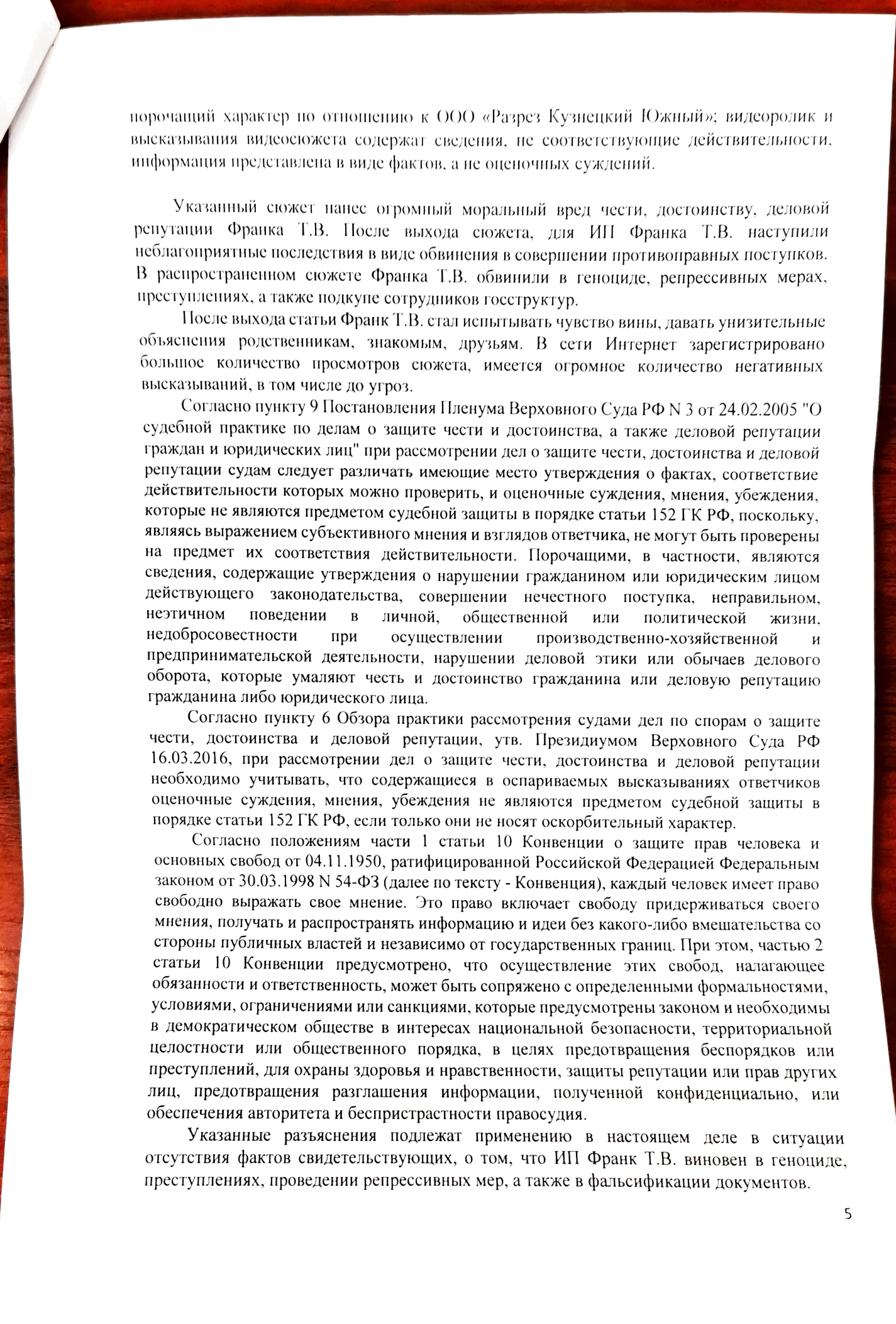
Document
“Began to experience a sense of guilt”
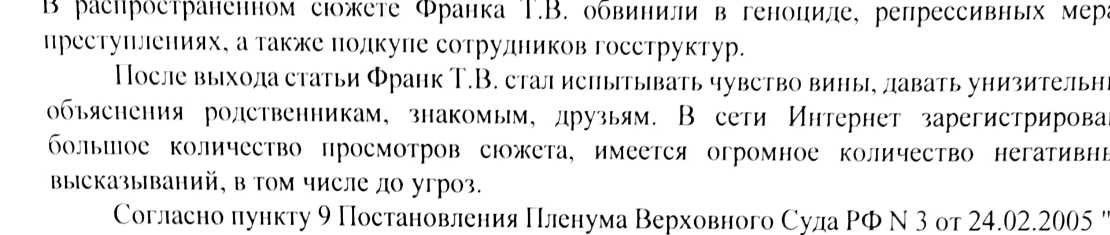
Fragment of the statement of claim in case A27-1854/2021, printed page 5 (page 7 of the PDF). The wording appears in a claim filed on behalf of Frank and the company and signed by their representative, E. V. Zhurakovskaya. Source: author’s archive, D-00.
The statement of claim was signed by E. V. Zhurakovskaya as the representative of both claimants. I do not know what exactly was meant or whether the wording literally reflected Frank’s own state of mind.
I did not know that then.
What I did know very well was what they wrote about us.
First, the second court case.
The second set of proceedings was case A27-20471/2020. Here the sole claimant was OOO Razrez Kuznetsky Yuzhny, while the defendants were me, as the founder of the online newspaper Novosti Kiselyovska, and Vyacheslav Krechetov. The dispute arose from Krechetov’s video report “Sergey Yevgenyevich, How Could This Be?”, published on 31 May 2020.[D-01]
The company disputed eight passages. They addressed violations identified by regulatory authorities, forest plots, Red Data Book plants, state expert-review findings, closed meetings with residents, a road beside a cemetery, the results of public consultations, the unauthorised use of land — and the assertion that the management of the open-pit mine company had “a whole trail of criminal cases” behind it.[D-01]
On 18 March 2021, the Commercial Court of Kemerovo Region upheld the claim only in relation to the fourth statement — the one about a “trail of criminal cases”. It dismissed the claims concerning the other seven passages. On 6 June, the appellate court, and on 14 September, the circuit court of cassation, left the judgment unchanged. On 17 December 2021, Supreme Court judge N. V. Pavlova refused to refer the company’s appeal for consideration by the Judicial Panel for Economic Disputes.[D-02]
- first-instance judgment
- appellate court left the judgment unchanged
- circuit court of cassation left it unchanged
- Supreme Court judge refused referral of the appeal
In the ruling refusing referral, the Supreme Court judge recounted the lower courts’ findings: some of the statements were expressions of subjective opinion; the information underlying the report had been obtained from regulatory authorities; the company’s actions were assessed with regard to residents’ views; and the purpose of the publication was to inform the public about the situation, not to damage the company’s business reputation. The ruling also records that the courts took into account the company’s failure to provide evidence that the remaining information harmed its business reputation.[D-02]
The phrase about a “trail” conflated criminal proceedings in the surrounding business milieu, references to people and companies in civil disputes, and the criminal-procedural status of a particular person. Today I keep these things separate.
A man in the registers
When I remove my own fear from the account, what first appears before me is neither a hero nor a villain, but a long business history.
Frank’s professional path begins in law. According to extracts from the Unified State Register of Individual Entrepreneurs, he registered as an individual entrepreneur in 1997 and his principal activity was legal services. In the early 2000s, his name began appearing regularly in bankruptcy proceedings, now in the capacity of an insolvency practitioner. Bankruptcy work was an established part of his professional activity, not an isolated episode.[D-04][D-05]
Later, companies appear in the registers in which Frank was already a member or director. They include Adonis, Alfa and IFK Energo. Through these companies, his activity intersects with transactions, securities and corporate conflicts that become important later, in the story of Alexander Shchukin.[D-06]
The next stage is coal assets. Two companies are central to this article: OOO RK Proekt and OOO Razrez Kuznetsky Yuzhny. Historical register information indicates that Frank headed RK Proekt from March 2019 until September 2020. The claim filed on his behalf, citing the minutes of the board of directors dated 29 May 2020, states that the powers of Kuznetsky Yuzhny’s sole executive body were transferred to him and that he was appointed the company’s managing director.[D-00][D-04][D-07]
Ivan Povoroznyuk enters this story as an insolvency practitioner and a participant in the same business milieu. Like Frank, he worked in bankruptcies; later, their interests and companies intersected in corporate and coal-related disputes. He matters here not as a separate subject of the article, but as the practitioner with whom one of the most concrete chains leading to Frank begins.[D-08]
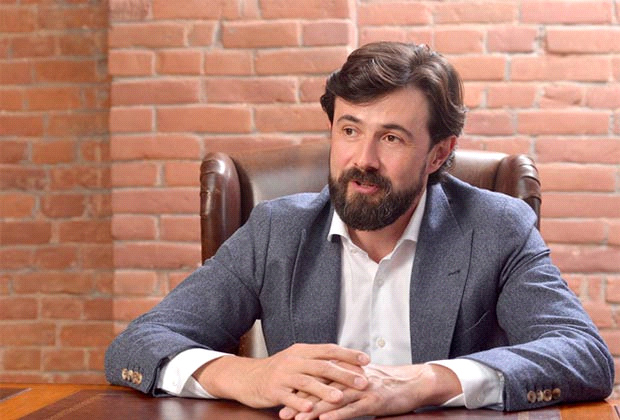
Timur Frank
Photograph: press service of OOO Razrez Kuznetsky Yuzhny; copy provided to Natalia Zubkova. Date of photograph unknown.
How one outlet portrayed the different sides of Cheremza
After the words about “a sense of guilt”, I said: I did not know that then, but I knew very well what they wrote about us. I can now compare not merely the individual publications that stayed in my memory, but all 644 preserved posts from Bez tsenzury [Without Censorship].[D-30][D-37]
The difference begins with the number of full-text matches: 101 publications mentioning my surname, 23 mentioning Krechetov’s, 66 mentioning Cheremza, six containing the exact or inflected name Kuznetsky Yuzhny, and one mentioning Frank’s surname. In the latter, his surname appeared in the title of someone else’s video, “Frank, Take a Hike!”. Another item quoted picketers shouting, “Timur, come out!”.[D-37]
In six posts, the company appeared as the initiator of the coal-loading project, the object of protest or a party to the conflict. Two pieces presented it as a possible target of pressure: the picketers were said to want “payoff money” from the coal operators or to “squeeze money” out of the open-pit mine company. The outlet did not examine Frank as an individual subject — unlike the journalists and activists whose finances, families, health and private lives became subjects of its publications.[D-37]
The outlet wrote differently about the other side of the conflict. It called activists and journalists “pseudo-environmentalists” and “itinerant eco-activists”, linked their actions to donations, “payoffs” and foreign money, and moved on to relatives, spouses’ employment, health and private life. In a publication dated 18 June 2020, the author addressed me personally, noted that my husband worked at an open-pit mine, and speculated about how we would live if the coal company closed. An August piece about picketers offered two explanations: either they had been paid or they themselves intended to extort money from Kuznetsky Yuzhny. No sources for those suppositions were identified.[D-37]
There was also a passage that complicates any overly simple picture. In a publication dated 26 June 2020, the outlet wrote that mines and open-pit mines had a negative environmental impact and that coal companies “in most cases do not engage in dialogue with the public”. Yet the main accusatory narrative in the same piece was again directed at activists, who were said to be chasing publicity and profiting from the conflict.[D-37]
The outlet portrayed the parties to the same conflict asymmetrically: the company mostly as a neutrally identified party or a possible victim of pressure, and the journalists and activists in personal and accusatory terms. The editorial asymmetry is established; a documentary link between the outlet and Frank or the company is not.
What I was able to trace from Forum to Prestizh
The most concrete chain begins with the bankruptcy of OOO Forum.
As bankruptcy trustee, Ivan Povoroznyuk arranged the sale of a package of Forum’s claims against four debtors. The package had a nominal value of RUB 49,666,426.80. In a sale by public offer, individual entrepreneur Timur Frank emerged as the successful bidder with an offer of RUB 1,001,000.[D-09]
The price was approximately 2.02 per cent of the nominal value. A claim’s nominal value is the amount recorded in the documents; its real value depends on whether the money can be recovered, the debtors’ solvency, the availability of security, limitation periods and future costs. The buyer of such a claim acquires risk, not money.
The chain continues. In two civil cases — nos. 2-2204/2018 and 2-2205/2018 — the court described how the individual entrepreneur who had won the sale assigned the acquired claims to OOO Prestizh. The identical amount of the package, auction record and composition of the claims make it possible to identify that entrepreneur as Frank. Prestizh then brought claims against apartment buyers and sought enforcement against their real estate.[D-10]
The documents allow the following sequence of actions to be traced: bankruptcy trustee Povoroznyuk sells an asset from the bankruptcy estate; Frank becomes the buyer; Frank transfers the package to another company; that company begins pursuing the debts.
The documented chain can be represented as follows:
trustee: Ivan Povoroznyuk
package transferred by assignment
The documented chain of the original package ends here.
Neither Frank nor Ivan Povoroznyuk was recorded as a member of Prestizh; the register listed Yevgeny Mitrofanov as its sole member. The specific package of claims passed from Frank to Prestizh.[D-11]
Alexander Shchukin: transactions, litigation and judgments that cannot be read selectively
Another line leads to Alexander Shchukin, a coal entrepreneur whose assets and companies were the subject of corporate and bankruptcy disputes for many years. Frank bought shares and claims from him, managed or owned companies that became central to later litigation, and himself took part in reciprocal claims involving large sums. This line shows especially clearly why a judgment cannot be cited without its subsequent procedural history.[D-13—D-17]
On 14 January 2013, Shchukin sold Frank 495,000 shares in AO ITEK — 99 per cent of the shareholding. Later judicial decisions cite a judgment of 1 December 2015 that declared this transaction invalid and ordered the shares returned to Shchukin as a consequence.[D-13]
What follows is a multi-layered series of disputes involving promissory notes, claims and the companies ITEK, IFK Energo, Region Sibir K and Alfa. ITEK issued IFK Energo a promissory note for RUB 1 billion; both companies were connected with Frank’s management during the relevant period. In November 2017, the appellate court made severe findings about this chain. On 2 February 2018, the court of cassation set aside the appellate ruling and left in force the first-instance order, which had found the RUB 1 billion claim substantiated and payable after the claims of the other creditors.[D-14]
An almost complete interest in OOO Alfa, with a nominal value of more than RUB 157 million, was sold through ITEK’s bankruptcy. The initial auction price was RUB 110 million and was later reduced to RUB 99 million. The successful bidder was OOO Adonis, which paid RUB 40 million. Frank was Adonis’s sole member. The courts rejected attempts to challenge the auction: they found neither procedural violations nor proven affiliation between the buyer and the organiser.[D-15]
There is one further episode. ITEK secured an obligation of more than RUB 1 billion owed to AO Chernigovsky NPZ. On 9 June 2016, Frank acquired this claim at a public auction for RUB 1.1 million. Shchukin challenged the transaction, but the courts did not find it unlawful.[D-16]
In April 2018, the first-instance court ordered Frank to pay Shchukin more than RUB 1 billion in damages and dismissed Frank’s counterclaim. On appeal, both parties withdrew their claims; the judgment was set aside and the proceedings were terminated on 29 June 2018. Shortly before that, Frank had requested that his claim be removed from ITEK’s register of creditors’ claims.[D-17]
ITEK shares
14.01.2013 · 495,000 shares · 99% holding · buyer: Frank.
01.12.2015: transaction declared invalid; shares returned to Shchukin.
RUB 1 billion promissory note
ITEK → IFK Energo. November 2017: severe findings by the appellate court.
02.02.2018: appellate ruling set aside; first-instance order left in force.
Interest in Alfa
Nominal value over RUB 157 million; starting price RUB 110 million, then RUB 99 million; Adonis paid RUB 40 million.
Challenge to the auction: dismissed.
Claim exceeding RUB 1 billion
Frank acquired the claim for RUB 1.1 million. The first-instance court ordered him to pay more than RUB 1 billion.
Both parties withdrew their claims; the judgment was set aside and the proceedings terminated on 29.06.2018.
Criminal cases nearby
In 2016, AO Biznes-Investitsii, headed by Ivan Povoroznyuk, brought large claims against coal companies on the basis of promissory notes. In case A27-11710/2016, the defendant alleged that evidence had been falsified. Following examinations and expert analyses, the disputed documents were excluded from evidence. The court stated that the timing of some of the entries did not correspond to the dates shown, that the documents bore signs of aggressive physical or chemical treatment, that no genuine promissory-note obligation existed, and that the claimant knew or should have known this. The claim was dismissed, and the judgment was upheld.[D-18]
The judicial decision does not identify the person who prepared the disputed documents.[D-18]
The Fifth Investigative Directorate of the Investigative Committee in Novosibirsk appears among the other participants listed on the case docket. In August 2018, Rossiyskaya Gazeta reported that a criminal fraud case had been initiated in 2016 and that Frank and Povoroznyuk had submitted the original documents to the court. Their procedural status and the outcome of the proceedings could not be established.[D-19]
After review, other striking stories had to be left outside the account of Frank. The case concerning the extortion of shares in the Inskoy open-pit mine involved other defendants; documents concerning the killing of Yevgeny Lazarevich do not link Frank or Povoroznyuk to it; and another case that was found proved to be administrative rather than criminal.[D-20—D-22]
There were indeed criminal proceedings in this business milieu. But the earlier formula of “a whole trail of criminal cases” in relation to Frank and Povoroznyuk did not withstand scrutiny.
Cheremza: the project, the land and the people
The story of Cheremza began before the protest camp, the detentions and the high-profile publications.
In January and February 2020, land-survey plans were prepared at the request of OOO RK Proekt to create a plot measuring 58,199 square metres. On 30 March, the administration of Novokuznetsk Municipal District entered into an easement agreement with RK Proekt, running until the end of 2036. The land was required for the private Kuznetskaya railway station and its connection to Tomusinskaya station. On 3 April, the encumbrance was registered in the Unified State Register of Real Estate.[D-23]
The claim filed later on behalf of Frank and the open-pit mine company states that, under minutes of the Kuznetsky Yuzhny board of directors dated 29 May 2020, the powers of the company’s sole executive body were transferred to individual entrepreneur Timur Frank and he was appointed managing director.[D-00]
For residents, this was not a diagram on paper. It was future coal-loading infrastructure beside their homes, natural areas and cemetery. Protests began in June. People established a camp, appealed to the authorities and demanded that the work be stopped.
On 17 June 2020, the media reported that Frank had said the work would be suspended or terminated. The wording differed between publications, and I do not have a complete recording of his statement.[D-24]
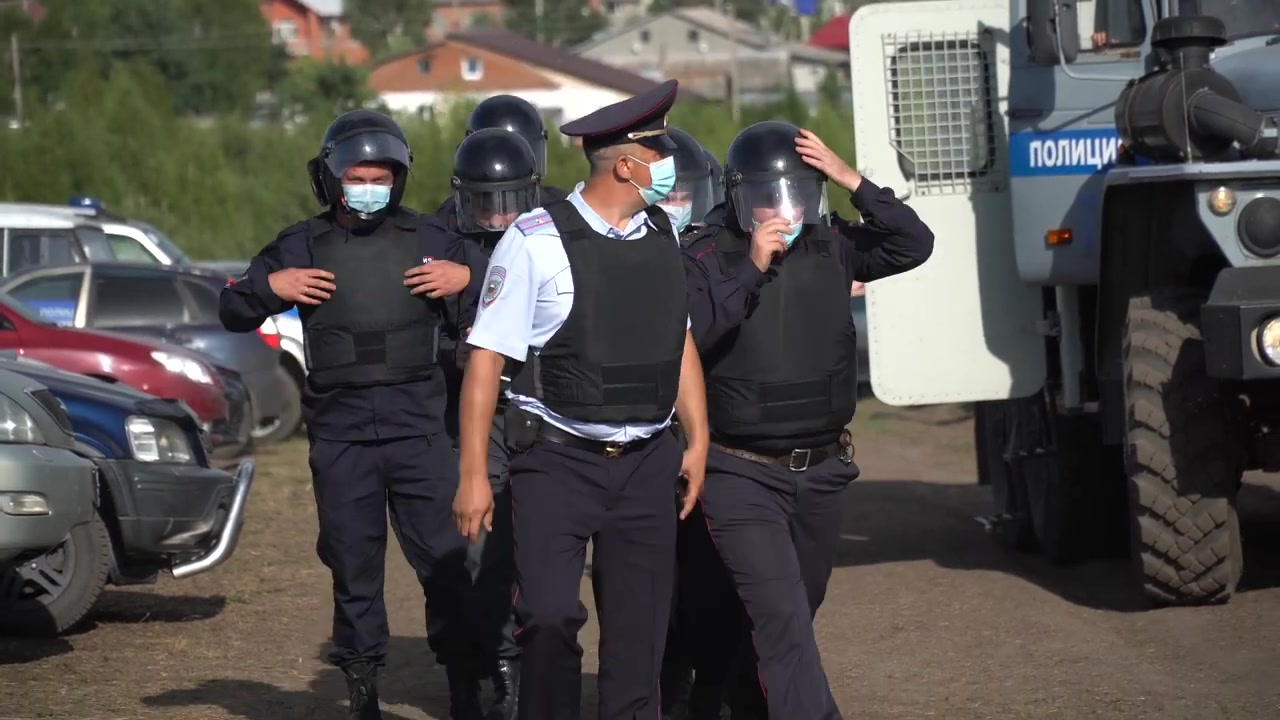
The protest continued. On 13 August, a confrontation took place at the camp; police and OMON riot police arrived, and people were detained. I was there and recognised Vladimir Gorbunov among those present. Why he was in Cheremza and who invited him could not be established.[D-25]
On 21 August, the authorities announced that the construction permit had been revoked. The dispute later reached the commercial court. On 7 September 2021, the court declared the easement agreement invalid and ordered the plot to be restored. The appellate and cassation courts upheld the judgment; the judicial sequence concluded on 6 April 2022. The courts found that the agreement was inconsistent with the nature of an easement and was intended to circumvent the competitive procedure for allocating land.[D-23]
- land-survey plans
- easement agreement
- encumbrance registered in the real-estate register
- residents’ protest
- media report Frank’s words; no complete recording
- confrontation, police, OMON, detentions
- construction permit reported revoked
- easement declared invalid
- judicial sequence concluded

Vyacheslav Krechetov: detention, a temporary detention facility, hospital and two different judicial outcomes
Vyacheslav Krechetov filmed events in Cheremza and published reports about the conflict. On 24 August 2020, after returning from Cheremza, he was detained. He was taken to a police station and then held in a temporary detention facility.[D-28]
On 25 August, Krechetov was taken to hospital after a seizure in which he lost consciousness. The discharge summary published later records treatment on 25–26 August, examinations and a medical assessment. That was followed by a court history that cannot honestly be summarised by the single word “fined”.[D-27]
On 27 August, the Central District Court of Novokuznetsk found Krechetov guilty under Article 20.2(2) of the Code of Administrative Offences and fined him RUB 20,000. He was accused of organising an unauthorised public event by positioning participants and encouraging them to chant “Shame on Frank!” and “Tsivilyov must resign!”.[D-28]
On 14 October, the decision was set aside and the case remitted for reconsideration. On 2 December, following reconsideration, the proceedings were terminated because the elements of an administrative offence were absent. The court stated that the actions described by the police were not among the acts defined by law as organising a public event and that the case materials contained no evidence of other organisational acts.[D-28]
The court also found a material violation of the right to legal assistance. A request for defence counsel to participate had been granted and the lawyer was present at the police station, yet the official report was still drawn up without him. The court ruled the report inadmissible as evidence. Appeals by the police official did not alter the result: the termination became final on 8 February 2021, and a subsequent appeal was also dismissed.[D-28]
- detention
- hospital
- Bez tsenzury publication
- initial fine of RUB 20,000
- fine set aside
- proceedings terminated because the elements of an offence were absent
- outcome became final
“Vyacheslav Krechetov — a Malingerer!”
On the morning of 26 August 2020, Bez tsenzury published an article headlined “Vyacheslav Krechetov — a Malingerer!”. The outlet claimed that it had spoken to medical staff and court bailiffs, that Krechetov had faked a seizure, and that the hospital had declined to admit him because he was “completely healthy”. Photographs of medical documents were published as evidence.[D-29]
But the discharge summary published by the outlet itself contains no finding of malingering. It records his hospitalisation on 25–26 August, the reported seizure and examinations. After the words “according to the patient”, it uses the cautious formulation “the diagnosis is highly probable”. The entry “CT scan of the brain — no pathology” relates to one specific examination.[D-29]
I recently made a point of asking Vyacheslav Krechetov about this again. He told me that after his hospital stay he had not been given the discharge summary, had not kept it and had not seen the document itself. Nevertheless, images of the discharge summary were published by Bez tsenzury. It was not possible to establish who obtained the document, who photographed it or who passed the images to the outlet.
“Vyacheslav Krechetov — a Malingerer!”
“Our editorial office has obtained documents confirming Krechetov’s status as a malingerer!”
Editorial reproduction of the headline and an excerpt from preserved publication ID 2835.
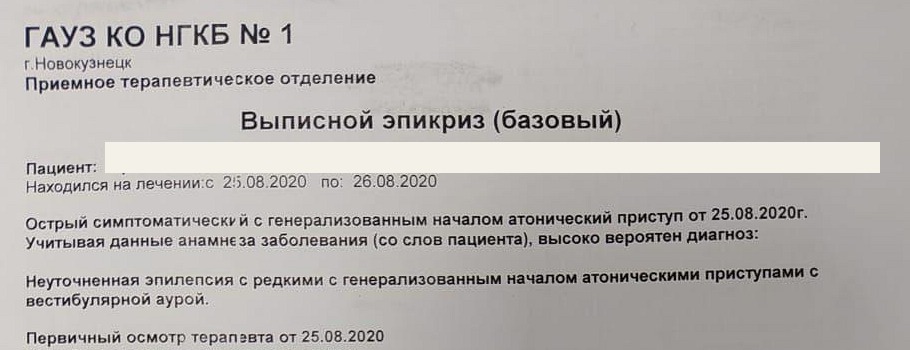
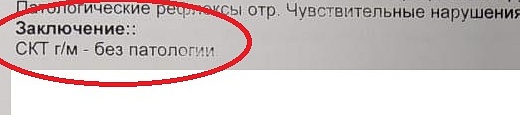
Fragments of the discharge summary published by the outlet on 26 August 2020. Some personal and medical information has been concealed by the editors. The document contains no finding of malingering.
The accusation was published. The reversal was not
The 644 publications also make it possible to trace how the outlet covered the judicial fate of its own accusations.[D-30][D-31]
On 29 September 2020, the outlet used the initial fine imposed on Krechetov to support its account of his role as an organiser. The fine was set aside on 14 October. The proceedings were terminated on 2 December because the elements of an offence were absent. Yet on 30 December — after both rulings — Bez tsenzury again described Krechetov as “the person who directly carried it out”, saying that he had instructed residents how to break the law and incur fines.[D-32]
The preserved publications contain no report informing readers that the initial decision had been set aside and the proceedings terminated because the elements of an offence were absent. The accusation was published. The reversal was not.
- the outlet uses the initial fine to support its account
- fine set aside
- proceedings terminated
- the outlet again calls Krechetov “the person who directly carried it out”
What I saw outside the court
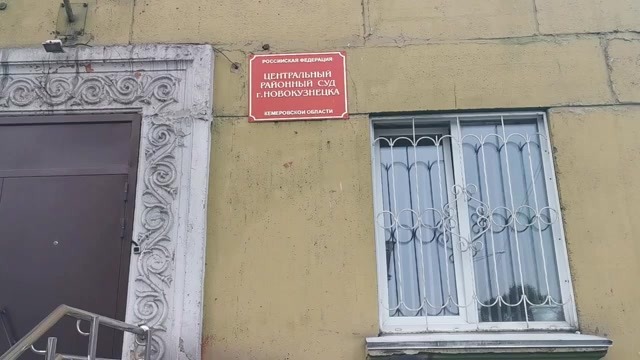
At 19:59 Kemerovo time on 25 August 2020, Zhurnal Abazhur [Lampshade Magazine] published my video filmed outside the Central District Court of Novokuznetsk. The title itself shows how I perceived what was happening at the time: “Centre E and Officials Conduct Illegal Surveillance — Court in Novokuznetsk”.[D-34]
The recording shows the court, several vehicles and a number of people; they film us and we film them. I address men in one of the vehicles and, on the day of the event itself, publicly describe what is happening as surveillance.[D-34]
That perception did not arise retrospectively: it was recorded in material published in 2020. The identities of those people and any connection between them and Frank have not been established.

When my work entered my home
For me, this story was never confined to companies, courts and the protest camp.
According to my own account, links to Bez tsenzury publications were sent to my then husband, his relatives and his colleagues. This intensified tensions within the family. Gradually, I began to see my husband as someone on the other side and to feel that I was expected to stop my journalistic work.
This is my testimony about the consequences of what was happening, not evidence of a connection between my husband and Frank, Bez tsenzury or any other participant in the conflict.
What the investigation did not confirm
I believe it is important to show not only the connections that were found, but also the theories that had to be abandoned. An absence of evidence does not prove that an event did not occur; it defines the boundary of this article.
- A “trail of criminal cases”. No official documents were found in the proceedings examined showing that Frank or Povoroznyuk had the status of a suspect or defendant. I abandoned the earlier blanket formula.
- A systematic transfer of bankruptcy assets. The Forum–Frank–Prestizh chain is supported. The documents did not reveal a system by which property belonging to companies under administration passed to Frank or Povoroznyuk.
- The Kyrgaiskaya mine. The chronology of the practitioner’s appointment and changes in ownership did not produce the hypothesised causal chain.
- Overseas property. No reliable chain of ownership of houses in Italy or Spain was found. This theory was not included in the article as fact.[D-35]
- Olga Frank. No significant intersection with the known coal interests of Timur Frank and Ivan Povoroznyuk was found in the cases she considered.[D-36]
- Vladimir Gorbunov. I personally recognised him in Cheremza. Why he was there and who invited him remain unknown.
- Bez tsenzury. Editorial asymmetry is visible in the publications; there are no documents linking the outlet to Frank, the open-pit mine company or law-enforcement agencies.
- The people outside the court. The video confirms the presence of people and mutual filming. Their identities, positions and any connection to Frank are unknown.
What remains
After all the registers and judgments, I return to the question with which I began. The documents do not support a finding that Timur Frank intended to harm me. But they allow us to see a man through a sequence of specific decisions and relationships.
I see a lawyer and insolvency practitioner who later became an owner and director of companies. I see the purchase of a claim from a bankruptcy estate, offered for sale by the trustee Povoroznyuk, and its subsequent assignment to Prestizh. I see complex transactions and litigation in Alexander Shchukin’s business milieu — with nominal sums in the billions, repeated reviews and judgments that cannot be quoted without their later procedural history. I see a coal project beside Cheremza and a land arrangement that three judicial instances declared invalid. I see the personal claim brought against me by Frank and the company — and a separate claim brought by the company against Krechetov and me. In the second case, one of our statements was found to be untrue, while the company’s claims concerning seven passages were dismissed. In the first case, the claimants’ requests are known, but I do not have the final judicial decision.
Beside this, I see the residents of Cheremza, the camp, the detentions and Krechetov in the temporary detention facility. I see the fine that was set aside and the case terminated because the elements of an offence were absent. I see the discharge summary published by an anonymous outlet, containing no finding of malingering, and hundreds of publications about journalists and activists — without a report informing readers that the proceedings against Krechetov had been terminated.
And I also see myself — a woman with a camera outside a court who was certain that day that she was being watched; a journalist who became afraid to travel alone to remote industrial sites; a person whose professional story entered her home and changed her relationship with her family.
Some parts of this picture are supported by judicial decisions, others by registers and technical data, and others remain my direct testimony. Some questions still have no answer.
I am still afraid of Timur Frank. That sentence is about me. It bears witness to the existence of my fear. Its consequences can be seen in the way that fear changed my work and my life.
I invite readers to judge Timur Frank by the documents, decisions, transactions and conflicts.
Documents and sources
Where a document is available only in the local collection, it is identified as “author’s archive”.
OOO Razrez Kuznetsky Yuzhny and individual entrepreneur Timur Frank v Natalia Zubkova. The scan is signed by E. V. Zhurakovskaya, representative of both claimants. Author’s archive.
OOO Razrez Kuznetsky Yuzhny v Natalia Zubkova and Vyacheslav Krechetov. Author’s archive.
17 December 2021, no. 304-ES21-23862, refusing referral of the cassation appeal in case A27-20471/2020. Author’s archive.
Prepared by the editors from the statements of claim and preserved judicial decisions.
Historical records concerning Timur Frank, RK Proekt and other legal entities. Federal Tax Service; author’s archive.
Materials concerning Timur Frank’s work as an insolvency practitioner. Author’s archive.
Extracts concerning OOO Adonis, OOO Alfa and OOO IFK Energo. Federal Tax Service; author’s archive.
Corporate-register extract, land documents and judicial materials; author’s archive.
Register and judicial materials concerning his role as an insolvency practitioner. Author’s archive.
Sale of OOO Forum’s package of claims by public offer. Author’s archive.
Civil proceedings concerning claims assigned to OOO Prestizh. Author’s archive.
Primary State Registration Number 1154205001213. Federal Tax Service; author’s archive.
Comparison of the amount, composition of the package, auction record and civil cases.
Judicial decisions citing the judgment of 1 December 2015 on the invalidity of the transaction and return of the shares. Author’s archive.
Case A45-2547/2016: appellate ruling of 20 November 2017 and cassation ruling of 2 February 2018 setting it aside.
Case A45-2547/2016: judicial decisions of 7 March 2018 and 8 June 2018. Author’s archive.
Judicial decisions concerning the public auction of 9 June 2016 and the outcome of the challenge. Author’s archive.
Case A45-2547/2016, appellate ruling of 29 June 2018: withdrawal of both parties’ claims, judgment set aside and proceedings terminated.
Judgment of 29 July 2018 and decisions of the appellate court, cassation court and Supreme Court; allegation of falsification and assessment of the promissory-note documents.
21 August 2018, p. 4, “Promissory Notes Subjected to Thermal Treatment”. Secondary journalistic source; author’s archive.
Judicial materials reviewed to distinguish other people’s criminal cases from Frank’s activity.
Reviewed to distinguish that episode from Frank and Povoroznyuk.
A striking case that was found proved to be administrative rather than criminal. Author’s archive.
Judgment of 7 September 2021, appellate judgment and cassation ruling of 6 April 2022. Author’s archive.
Media versions were compared; the archive contains no complete recording of the statement.
Publications, video and Natalia Zubkova’s direct testimony.
Krechetov refused food and explained this as fear of possible poisoning. The archive contains no direct recording or statement by Krechetov. The episode was removed from the main text in the fourth revision; the source remains preserved for another article.
Photographs published by Bez tsenzury on 26 August 2020. Only necessary fragments are shown in the PDF; unrelated information has been concealed.
Preserved case records and judicial decisions concerning the initial fine, its reversal and the termination of proceedings.
Bez tsenzury, 26 August 2020, ID 2835; preserved HTML copy and server metadata.
644 preserved WordPress publications; HTML, JSON, text files and technical catalogue. Author’s archive.
Search for reports that Krechetov’s fine had been set aside and the proceedings terminated.
Preserved Bez tsenzury publications, IDs 3408 and 4667.
Publications concerning Cheremza, Natalia Zubkova, Vyacheslav Krechetov, Kuznetsky Yuzhny and Timur Frank.
“Centre E and Officials Conduct Illegal Surveillance — Court in Novokuznetsk”, Zhurnal Abazhur, 25 August 2020, 19:59 Kemerovo time. YouTube.
Working extracts and a comparison of open registers, 21 September 2026. No reliable chain of ownership was found.
Catalogue of available judicial cases from 2008–2014; no significant intersection with the known coal interests of Timur Frank and Ivan Povoroznyuk was found.
Full-text and qualitative analysis of 644 Bez tsenzury publications. Author’s archive.
Visual and oral sources
“Cheremza: Clashes Between Residents and Coal Operators”
Video by Natalia Zubkova, Zhurnal Abazhur, 13 August 2020. YouTube.
Photograph of Timur Frank
Press service of OOO Razrez Kuznetsky Yuzhny; copy provided to Natalia Zubkova. Date of photograph unknown.
Oral account by Vyacheslav Krechetov
Two telephone conversations with Natalia Zubkova on 21 September 2026. Krechetov said that after his hospital stay he was not given the discharge summary, did not keep it and had not seen the document itself. The conversations were not recorded.