In the autumn of 2023, the Ministry of Energy of the Russian Federation accepted work at three coal-mine closure sites in Kuzbass. A state contract worth RUB 304.5762 million provided for extinguishing combustion zones in the waste-rock dump of the Shushtalepskaya mine and making the residual workings and structures of the Baidaevskaya and Dimitrova mines safe.
The contractor, OOO ShakhtaStroy, submitted KS-2 work acceptance certificates and KS-3 cost certificates dated 4 October, 3 November and 4 December 2023. The documents listed work at the industrial site of the Dimitrova mine and preparatory work at the Shushtalepskaya dump. The total was RUB 99,553,400. The documents were approved, among others, by representatives of the federal institution GURSH who were monitoring the progress of the work. The Ministry of Energy paid them from the federal budget.1
The ministry then carried out an audit. Its result, later set out by the Accounts Chamber, was stated directly: the contractor had not performed the work submitted for payment and paid for. The documentation related to work that was not included in the contract’s technical schedule. The Accounts Chamber stated that the documents had been approved by representatives of the Ministry of Energy, the construction-control company OOO RUSENERGO and GURSH. Budget funds had been paid without proper counter-performance.1
The Ministry of Energy submitted three claims to the contractor totalling RUB 105.129 million. As of the audit date, RUB 2.2461 million had been transferred and RUB 102.8829 million remained outstanding. On 19 March 2025 — while the audit was already under way — the ministry filed a claim seeking RUB 99.5534 million in unjust enrichment and RUB 3.3296 million in penalties.1
The body of material available to us does not show how this claim ended or how much money was returned to the budget. The Accounts Chamber material is not a criminal judgment and does not prove that all GURSH activity was fictitious. But for one state contract, the chain has been reconstructed: the contractor submitted the work, the control system approved it, the state paid, and a subsequent state audit established that the work had not been performed.
This one episode brought together two realities of a closed mine. On paper, there are a project, a contractor, a schedule, construction control, certificates and payment. On the ground, there remain old workings, dumps, heated soil, damaged homes and territory that must be monitored for many more years.
This article compares those two layers. An official document reliably shows what an institution, company or court recorded on paper. A photograph, video recording or direct observation shows the visible condition of a place within a known date and location. But an image by itself does not determine the chemical composition of an emission, who is responsible, the boundaries of a licence or the quality of a specific contract. An information gap sometimes remains between the document and the observed condition — and it cannot be filled by conjecture either in favour of the state or against it.
The investigation’s central question is broader than one contract: what happened to people and places after the mines closed, the state paid for closure, and GURSH reported that the work had been completed? Where is the boundary between the long-term physical consequences of mining, the shortcomings of a state mechanism, a failure of oversight and a proven crime?
The stories reconstructed in greatest detail concern Kuzbass. This is not an exhaustive picture of every closed Russian mine, but several places where the paper record can be compared with a specific piece of land and a person’s fate.
How People Came to Live Inside the Coal Geography
A resident of Kiselevsk does not always have to leave the city to see mine headframes, a spoil heap or the edge of an open pit. Natalia Zubkova observed this spatial proximity for many years as a resident and journalist. In her experience, the mine, homes, old workings and later open-pit mining existed not as separate worlds, but as parts of one everyday territory.
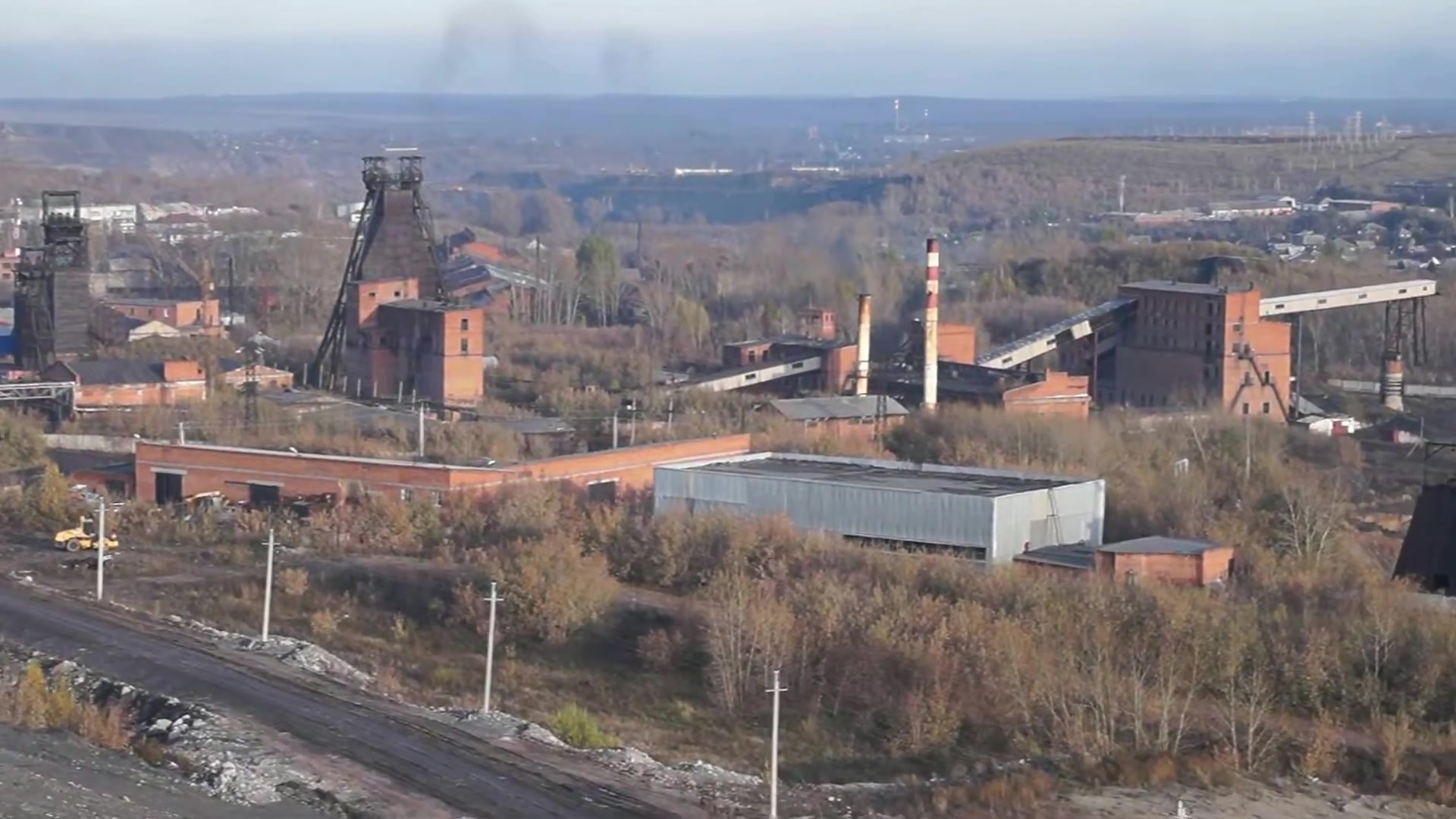
This history did not begin in the same way everywhere. Afonino and Cherkasovo existed before the industrial mine. In 1911, they had populations of 354 and 721 respectively; by the beginning of 1917, those figures had risen to 594 and 1,000. Following studies in 1914–1916, the Kiselevsky mine was founded; on 15 October 1917, open pit no. 1 produced the first 752 poods of coal.30 Not all housing in Kiselevsk emerged because of the mines: some settlements predated industrial mining.
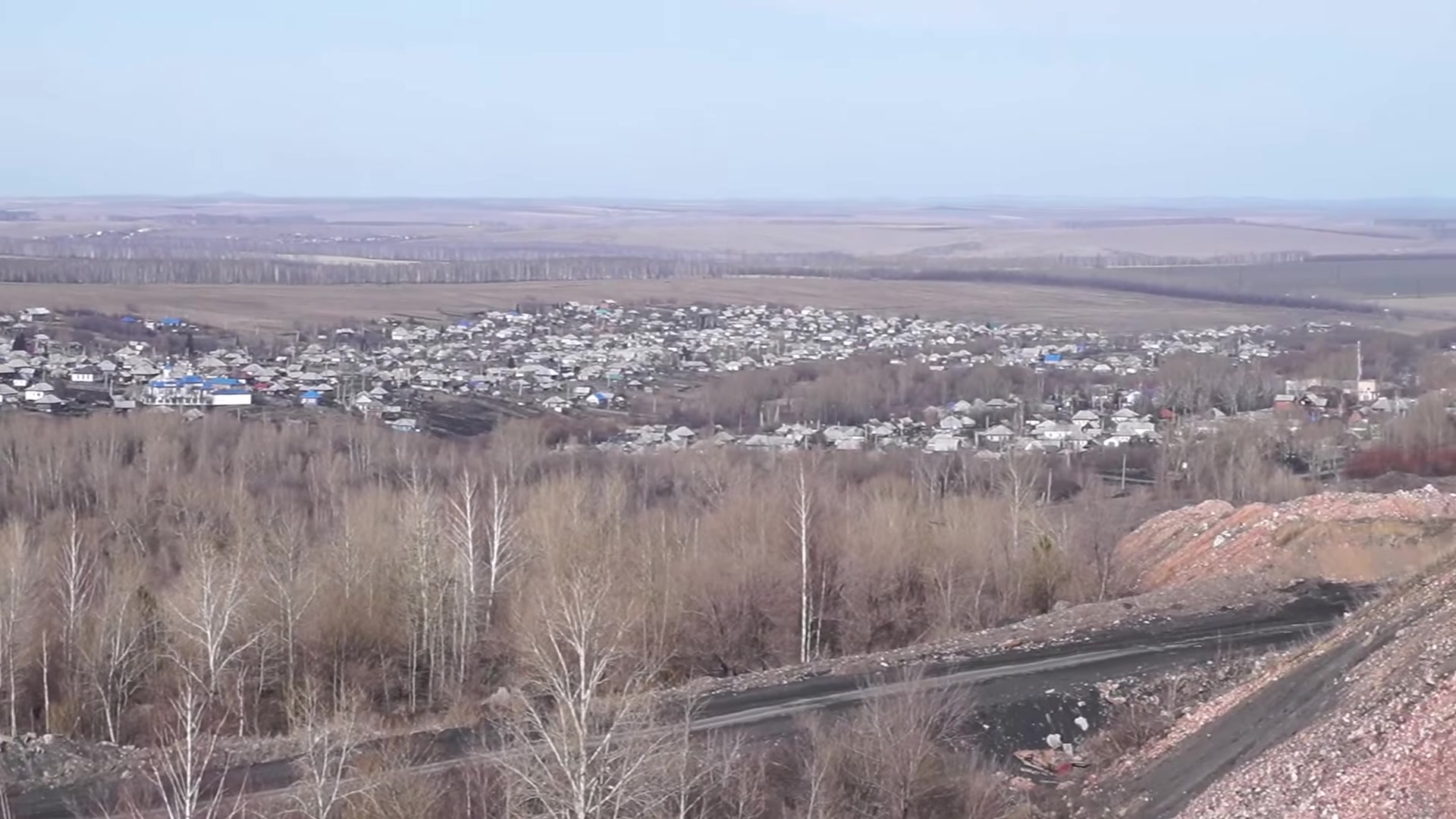
But a significant part of the later city grew together with mining. The sinking of adits and mine shafts attracted workers. In 1932, a workers’ settlement was established at the Kiselevsk coal mine. In 1935, the mine manager described an acute disparity: production was growing much faster than the housing stock, whose first homes had begun to be built in 1932.30
An official profile of the Kiselevsk Urban District later described its spatial structure in one phrase: “where there is a mine, there is a settlement.” The document lists eight separate districts, including Afonino and Zelyonaya Kazanka — “Mine No. 12.”30
Natalia also recalls the practical side of that proximity: workers had to reach the point where they descended underground every day, at a time when mass company transport did not yet exist. This is how she explains the urban environment familiar to her.
Mining then expanded within an already established city. Decades of underground extraction took place beneath existing development. After some mines closed, open-pit mining began or continued in certain areas. Project materials for the Mine No. 12 field show the open-pit sites “Mine No. 12” and “Cherkasovsky-2” combined into a single pit, along with old mining allotments and industrial sites of closed mines, settlement land and the nearest homes.31
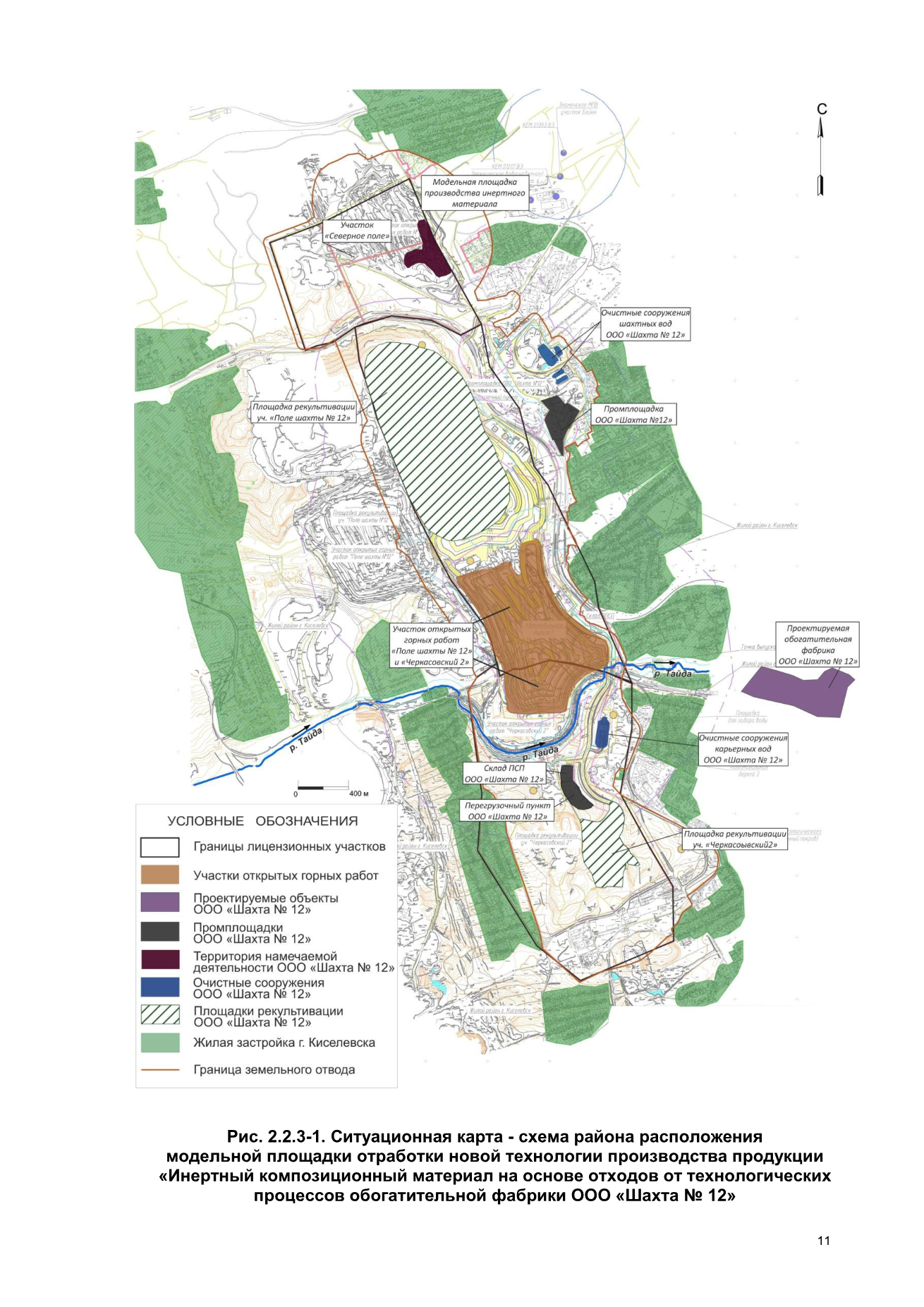
Шахта_12_ОВОС_результаты.pdf, figure 2.2.3-1, PDF page 10. The map shows the project’s representation of the area, not the result of reclamation. Source — PDFIn a video published in 2019, the surface of the northern slope of the Mine No. 12 dump looks different from the map’s conventional lines: dark soil, white mineral deposits, and local smoking or steaming on the site identified as such by the video’s author.
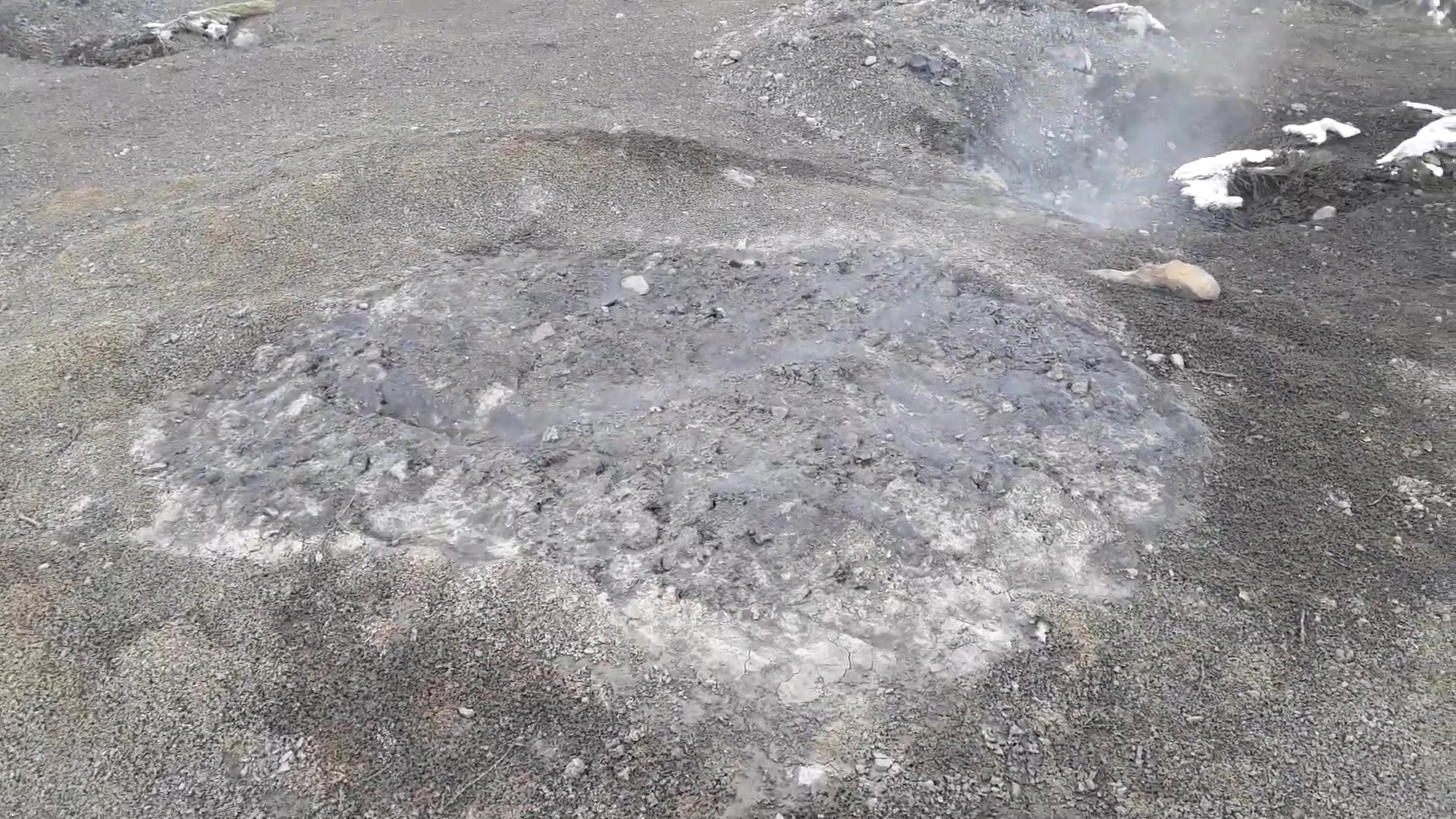
For the Kiselevskaya mine, a court established that open-pit mining had taken place on the mine field in 2007–2008. Archival documents concerning Malinnaya and Parnikovaya describe seam outcrops and old workings from 1974–1975, fissures, carbon monoxide and later heating zones.31 A present-day address here can refer simultaneously to a residential district, an old mine field and an area beside new mining.
As of 1 January 2025, the permanent population of Kemerovo Region — Kuzbass was 2,527,219.32 This is the region’s entire population, not the number of people living above mine workings, within sanitary protection zones or near open pits. The body of material examined does not show how many people live specifically within such zones. But the history of Kiselevsk explains how industrial geography could become the geography of everyday life in a large city.
After the Last Shift
By the beginning of 2008, according to an industry publication by the then director of GURSH, Alexander Agapov, mining had ceased at 188 mines and 15 open pits in Russia. The principal technical work was reported complete at 198 enterprises. By that time, RUB 25.7 billion had been allocated to closure measures from the federal budget and other sources.2
The word “closure” concealed a set of different tasks. Access to mine workings had to be sealed and shafts backfilled; buildings dismantled; dumps and underground combustion zones extinguished; land restored; the surface protected against subsidence; mine-dewatering and treatment facilities maintained; gas emissions monitored; and people resettled from homes made unsafe by mining.
Mine dewatering shows the duration of these obligations especially clearly. Even after mining ceases, water cannot simply be left unpumped where flooding threatens neighbouring workings, urban development or water sources. In 2008, GURSH reported 60 mine-dewatering facilities built, reconstructed, expanded or commissioned out of 64 provided for by the designs, and treatment facilities at 14 mines. Some sites were transferred to municipalities.2
The chemical composition of mine water and the effectiveness of its treatment require a separate investigation. What matters here is the duration: mining ended, but the infrastructure, responsibility and expense remained.
To manage this legacy, the State Institution for the Reorganisation and Closure of Unprofitable Mines and Open-Pit Mines — GURSH — was established in 1997. It was not the name of a single programme, but an institution through which the state organised closure projects, procurement, monitoring and social measures.3
The institution’s type changed in 2010; SOTSUGOL was merged into GURSH in 2022. The new charter established five branches, including the Kuzbass branch. Their tasks covered project and procurement preparation, monitoring, expert assessment, resettlement, work involving environmental-protection facilities, and handling citizens’ submissions.4
GURSH continues to operate today. Its state assignment for 2025–2027 provides for preparing proposals on the closure of mine workings, demolition, reclamation and monitoring; opinions on technical designs; and materials for resettlement. The 2025 plan includes preparation of 11 working designs. Separately, the state assignment provided for preparing materials concerning social support for 994 families.5 These are planned indicators, not confirmation that resettlement actually took place. For 2024, the Accounts Chamber compared a plan to resettle 933 families with GURSH’s report of 920 and recorded a shortfall of 13 families.1
In its own publications, the institution reported larger cumulative results. In 2008, it stated that RUB 7.61 billion had been allocated to land reclamation and other environmental consequences: dumps and underground fires had been extinguished at 19 mines, undermined structures restored at 32 enterprises, and 2,777.2 hectares reclaimed at 155 mines and open pits.2
Ten years later, GURSH director Andrei Moiseenkov cited 203 enterprises undergoing closure, 5,000 kilometres of mine workings, 54 mine-dewatering facilities, 12 treatment facilities, 65 dump fires and seven underground fires, and 6,740.9 hectares of reclamation under 222 projects. Of 52,926 families in need of resettlement, 42,200 were reported resettled.6
This was the institution’s self-reporting. But Moiseenkov himself did not put a full stop to the process: he estimated the remaining funding need at another RUB 30.486 billion.6
An aggregate table conceals the individual site. It cannot tell us whether the fertile soil layer was restored on a particular street, whether a dump stopped heating, or whether an owner can use the land safely. To answer that, it is necessary to work backwards — from the federal report to the mine, from the design to the acceptance certificate, and from the certificate to the land.
Completion Followed by Further Work
In its 2007 report, GURSH stated that treatment facilities had been commissioned and a burning waste-rock dump extinguished at the Baidaevskaya mine. At Shushtalepskaya, construction of treatment facilities was described as substantially complete; completion was planned for 2008.2
Fifteen years later, both mines appeared in a new state contract. In 2023, combustion zones in the Shushtalepskaya dump were to be extinguished and the residual workings and structures of Baidaevskaya made safe.
These were different obligations: treatment facilities, a specific extinguished dump, and the safe condition of residual mine workings. Physical conditions had also changed over fifteen years. This sequence shows why the word “liquidated” explains little without a date and a list of measures. In 2008, one set of measures was being completed; in 2023, different work was required at the same enterprises. And within the new contract, an established oversight failure involving RUB 99.5534 million occurred.
The Mine Closed Alongside New Mining
The history of the Kiselevskaya mine shows a different mechanism. On the territory of the old mine, closure work was linked to the right to extract coal.
In a 2011 tax dispute, the Seventh Commercial Appellate Court examined open-pit mining within the mining allotment of OOO Shakhta Kiselevskaya. The court found the extraction to be real: 217,332 tonnes in 2007 and 70,927 tonnes in 2008. The work concerned the western limb of the First Tyrganskaya anticline, the Dvoinoi, Podspornyi, Bezymyannyi and Moshchnyi seams, at elevations from +410 to +310 metres.7
The court also found it proven that open-pit work had been carried out under a design that had not been approved in the prescribed manner. At the same time, the case contained annual schedules approved by Rostechnadzor and a letter authorising the contractor to carry out mining work. The tax court established a defect in the design’s approval, but did not find the extraction or deliveries themselves to be fictitious.7
In 2014, Rosnedra offered the Bungursky Yuzhny-2 and 8 Marta-2 sites at auction. Along with the right to explore and extract coal, the winner was required to carry out closure work at the Kiselevskaya mine. OOO Sibenergougol won the auction; the one-time payment for the right to use the subsoil was RUB 215.6 million.8
The state thus linked the extraction of new coal to the duty to remedy the consequences of the old mine. The documents do not calculate the extent to which future extraction financed closure. But they show why separate accounting is especially important at such a site: what was moved for safety, what was extracted commercially, what land was restored, and who accepted the result.
In 2018, Sibenergougol, Shakhtoupravlenie Maiskoye, AO Salek and OOO RudniK signed an agreement covering six sites with a stated total area of 208.46 hectares. Vitaly Lisovoi acted as RudniK’s authorised representative. The document provided for amendments to the design, cadastral work, leases and expert approvals, and prohibited work from beginning before the land and necessary approvals had been formalised.9 The examined copy does not include the attached plan showing the precise boundaries. Municipal technical conditions described 421.7 hectares as land disturbed by work at the Kiselevskaya mine and provided for technical and biological reclamation, the planting of pine and birch, and at least five years of maintenance.10
On the surface, this complex contractual arrangement looked simpler. In an image published in November 2017 and identified by its author as the field of the closed Kiselevskaya mine, a local smoking or steaming area is visible on the technogenic terrain.
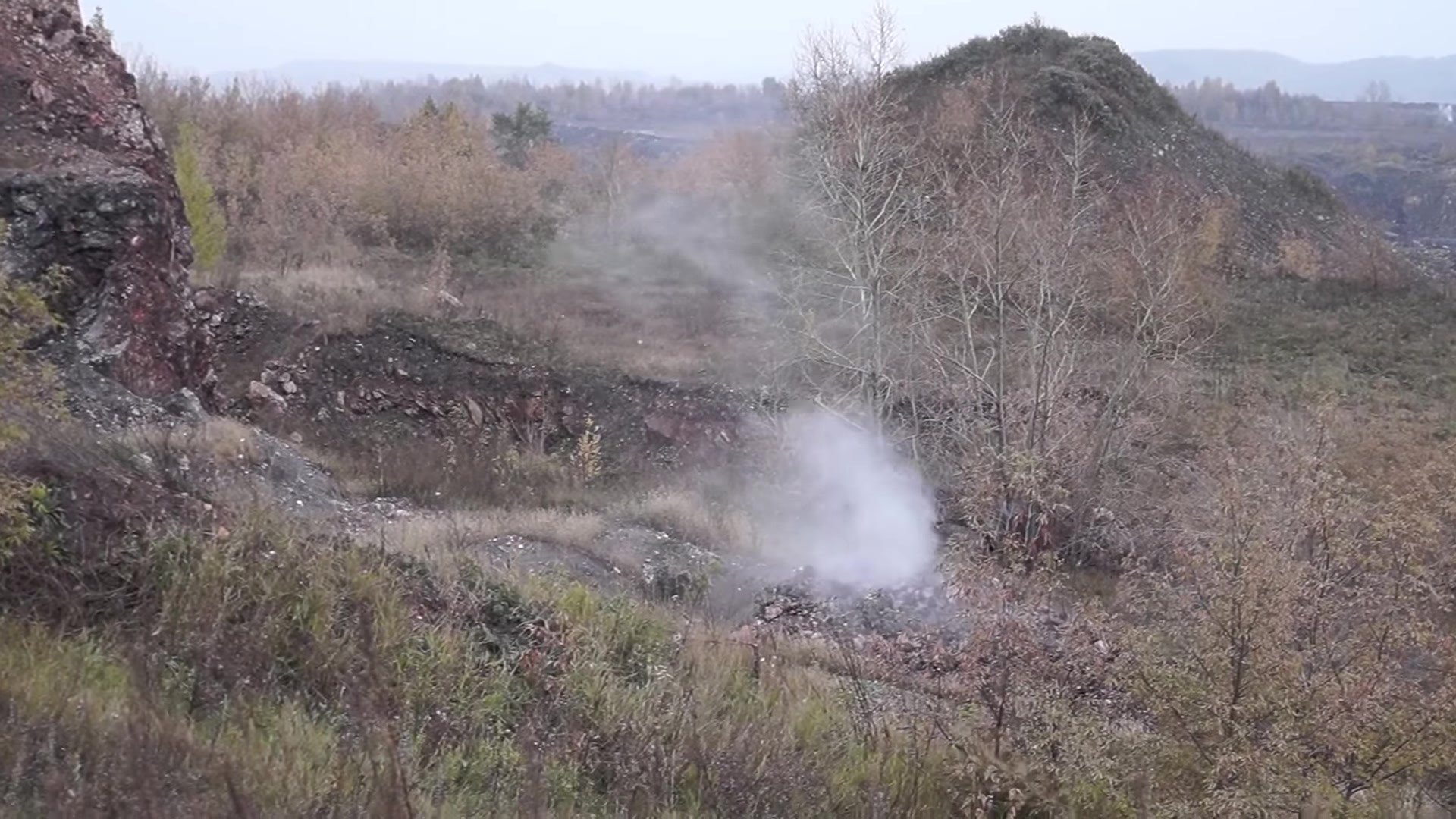
Fire After the Closure Date
Spontaneous combustion of coal and waste-rock dumps is one of the physical processes addressed by closure projects. The legal closure of an enterprise does not stop it instantly.
In a video published in November 2017, several plumes of smoke or steam emerge from an exposed coal feature in Tugaisky Log. The author identifies the place as the field of the closed Krasny Kuzbass mine.
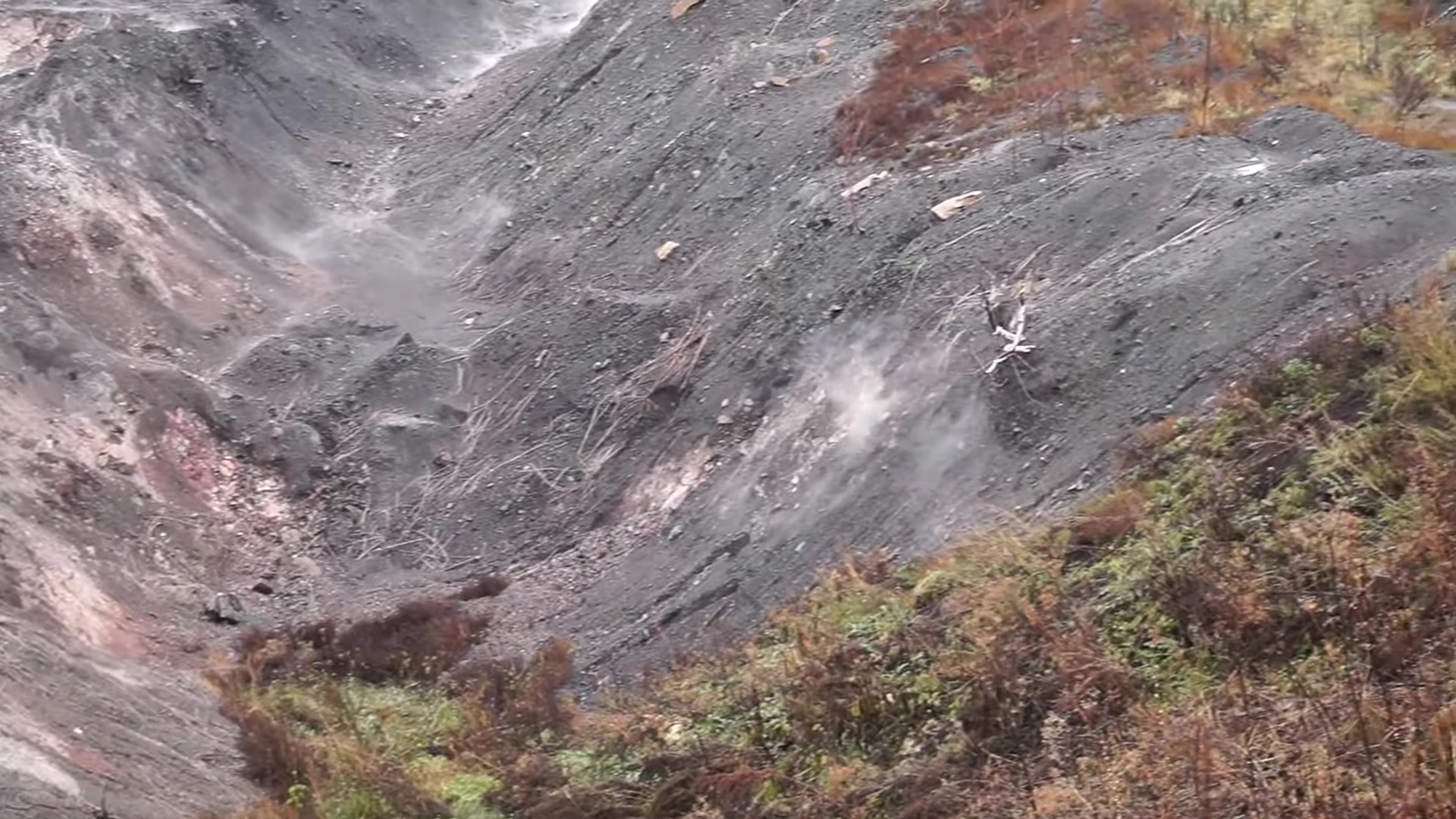
In a publication from October 2020, the author again identifies Tugaisky Log and the field of the same mine. Smoke or steam emerges intensely from the slope. The filming dates of the videos have not been established separately, but two publications from different years show the same type of physical process in the identified area.
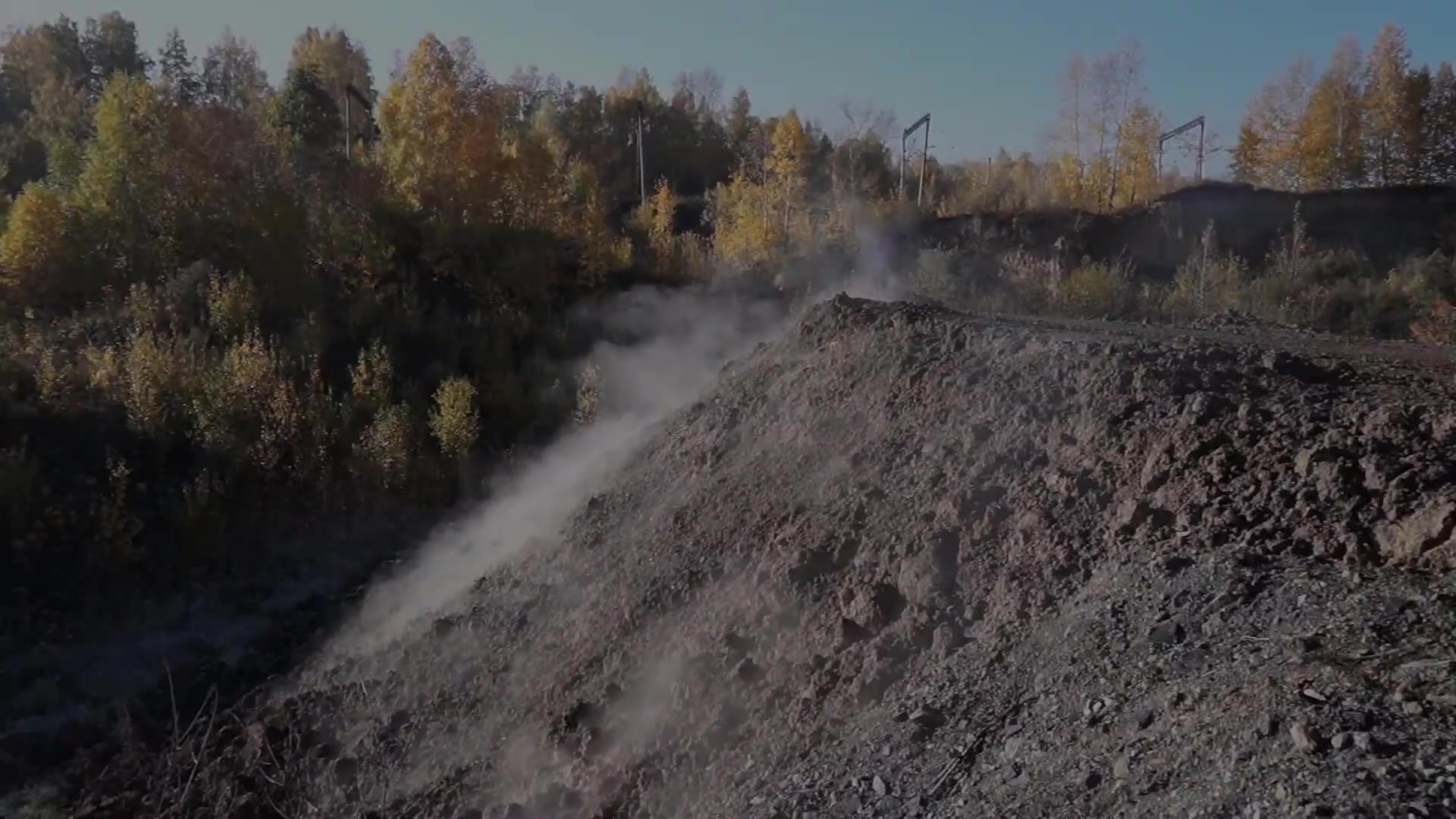
The selected visual archive shows similar signs in places identified by the authors as the Vakhrushevsky open pit and Akchurlinsky Log. Together with Kiselevskaya, Mine No. 12 and Tugaisky Log, they form a spatial sequence: after enterprises close, smoking or steaming areas continue to remain part of the urban territory. Linking an individual area to a specific project requires matching coordinates, dates and documents.
Malinnaya and Parnikovaya: A Home Outside the List, a Territory Beside a Hotspot
At Malinnaya and Parnikovaya, the gap between administrative classification and the physical condition of the area can be traced over more than a decade. Natalia’s journalistic archive contains documents from 2008–2019 concerning Razdolnaya, Malinnaya and Parnikovaya streets and Malinny Lane.
In 2008, Rostechnadzor reported fissures near the outcrops of worked seams. Carbon monoxide content reached 0.18 per cent. According to the document, the nearest homes were 80–100 metres away. The manifestations were linked to worked seams and an endogenous process.11
In 2012, earthworks were carried out in the area again. The materials record repeated backfilling and the absence of a restored fertile soil layer at the inspected location. A separate ambient-air sample showed formaldehyde at twice the maximum permissible concentration and phenol at 1.3 times the maximum permissible concentration.11
The sample records air quality at a particular point and at a particular time.
In 2019, documents again recorded heating and smoking near a residential area. The enterprise reported excavating the heated area, removing material and covering it with clay. According to the enterprise, initial tests for radon and indicator gases did not reveal signs of an endogenous fire; a decision was then taken to drill control boreholes, take additional samples and carry out a comprehensive survey. In official correspondence, the hotspot was attributed to the long-term dumping of household waste and ash-and-slag waste.12
The episodes from 2008, 2012 and 2019 concern different dates and do not constitute a proven history of one continuous fire. But each time, the area again required measurements, earthworks or inspection.
In the same year, 2019, a cadastral engineer measured the distance from what he identified as the toe of the dump to the outline of the house at 20 Malinnaya Street: 461.98 metres.13 This gave the phrase “near the homes” a specific address-based and coordinate-based measurement.
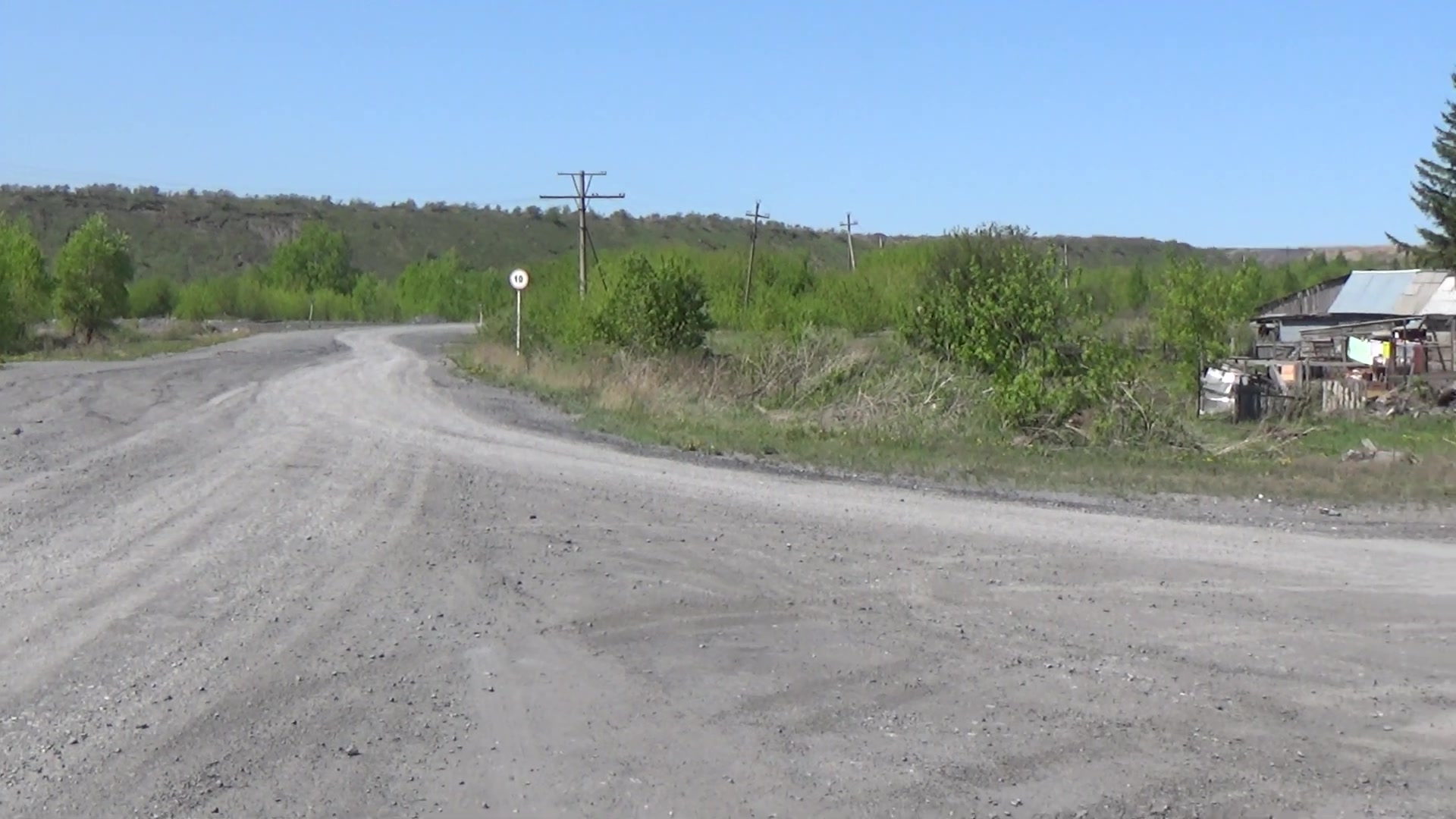
The administrative boundary looked different. Citing VNIMI opinion no. 111, residents were told that the homes on Malinnaya, Parnikovaya and Razdolnaya streets and Malinny Lane were not on undermined territory and were not subject to demolition.11 The full text of opinion no. 111 is not in the available body of material, so its calculations and underlying mining plans cannot be checked.
But these remain two different questions. Classifying a home as not undermined determines whether it qualifies for a specific resettlement mechanism. Fissures, gas emissions, heating, pollution and repeated earthworks describe the condition of the surrounding territory. The legal absence of grounds for including a particular home in the programme does not establish the physical safety of everything around it.
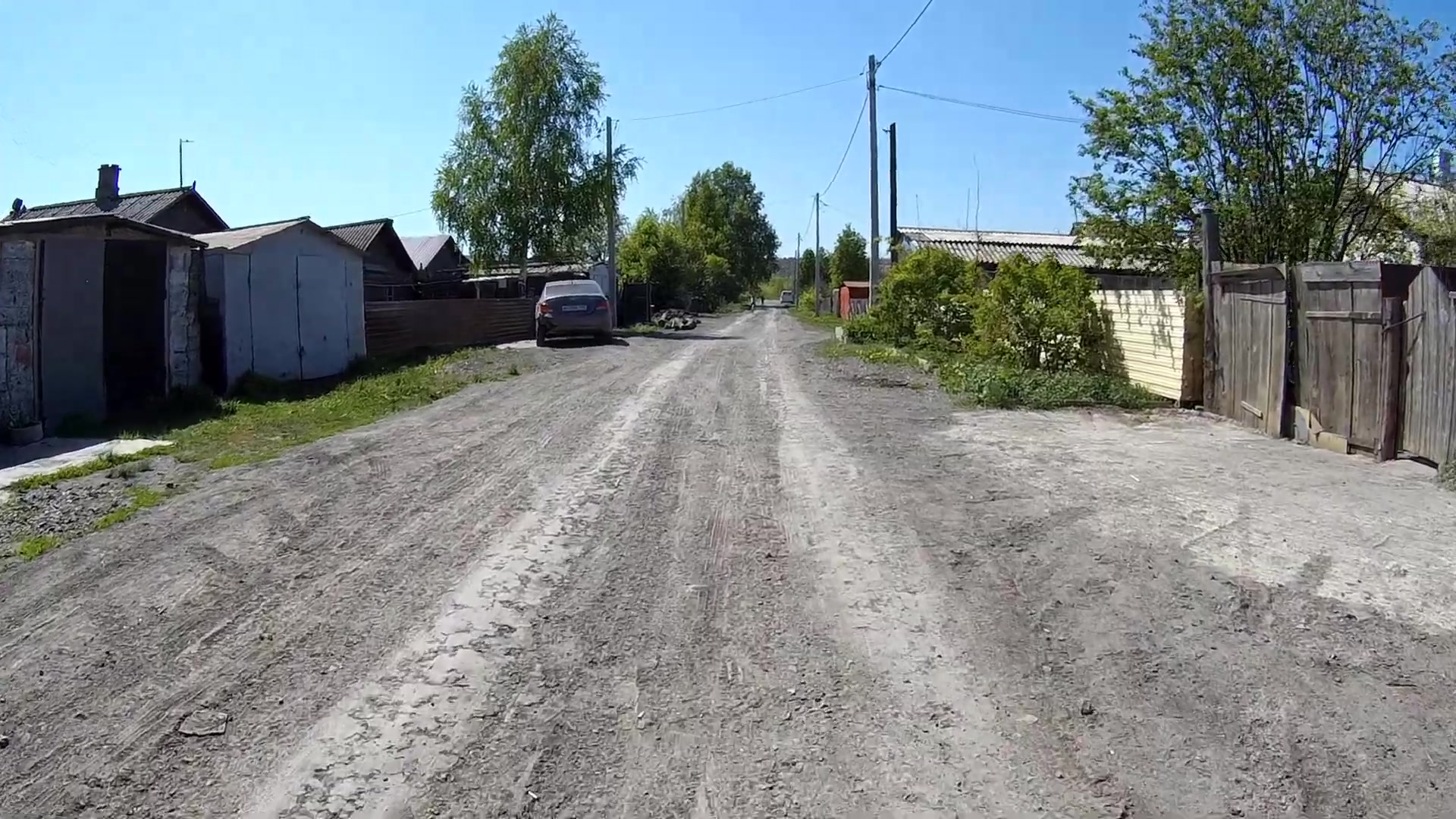
The strength of the documents in Natalia’s archive lies in their chronology. Official replies, measurements, repeated work and observations show a territory whose history did not end with the administrative decision on the fate of the homes.
The Person Who Remained After the Historical Cut-Off Date
Entitlement to a state social payment depends on more than whether a home is dangerous today. Courts determine who owned it, who was registered and actually lived there on the legally significant date, whether the family had other suitable housing, and whether the property was connected to a specific closed mine.
This creates a temporal paradox. A mine closes in one year. Deformation becomes visible later. A home changes owners, children are born into a family, and new geological and mining materials emerge. The physical process develops over time, while a person’s legal entitlement remains tied to a date in the past.
In one Kiselevsk case, a family bought a home in 2011 and said that they moved in immediately, but registered there only after the Krasnokamenskaya mine was liquidated on 11 July 2012. VNIMI later classified the home as undermined and dilapidated. The first-instance court accepted evidence of actual residence before the historical cut-off date and recognised the entitlement of all four family members to enter into a social-payment agreement. When the copy was preserved, the judgment had not yet entered into legal force.14
In Anzhero-Sudzhensk, the outcome was the opposite. A home was found to be undermined and dilapidated as a result of work by the closed Anzherskoye mine administration, but the current owners acquired it under a deed of gift only in 2018. On the date of the enterprise’s bankruptcy, they had neither ownership nor registered residence there. The first-instance court denied the payment: the current owners did not belong to the group eligible for this social measure.15
The clearest paradox arose in a Zenkovskaya case. In 2013, one home was considered undermined but not dilapidated; it was later declared unfit for habitation. The first-instance court recognised entitlement to an agreement for a woman who had lived and been registered there on the relevant date. Her granddaughter and great-granddaughter were refused because of their later registration and other circumstances.16 A single physically uninhabitable home gave members of one family different legal rights.
The historical cut-off date does not always close the way permanently. Nikolai Baravlev was not initially on the list, but after a later inspection the court ordered that he be included and that a payment agreement be concluded with him. The judgment passed through appeal, and on 21 July 2026 the cassation court rejected the municipal authority’s complaint.17
This is how the programme works: the physical condition of the home is only one element of entitlement to assistance. Sometimes a later inspection creates that entitlement; sometimes the current owner remains with a dangerous home but outside the historically defined group of recipients.
A Payment Is Not the Price of a Lost Place
The GURSH state mechanism is a state social payment for resettlement (sotsialnaya vyplata) to purchase housing, not an individual valuation of everything a family leaves behind.
In the city of Donskoy, a family received RUB 2,426,400 for 72 square metres — RUB 33,700 per square metre. The agreement provided for the old home and a 1,435-square-metre land plot to be transferred to the municipality without compensation.18 The market value of all property transferred was not determined in the case, so it is impossible to say how closely the payment corresponded to the market.
In a 2019 Kiselevsk case, after receiving a social payment a family bought a flat, vacated its old home and discontinued utility services. A court later recognised municipal ownership of the home and land because the transfer had not been completed before the recipient’s death. The amount of the payment and the location of the new purchase are anonymised in the published judgment.19
This mechanism can give a family new housing. But it measures assistance according to a prescribed rate rather than adding together the market value of the home, land, outbuildings, plantings and the place of life itself.
Why Don’t They Just Leave?
After the release of the film Black Snow, Natalia Zubkova says, she was repeatedly asked the same question: if living in such a place is so difficult, why do people not simply leave?
For Natalia, this was not only a journalistic question about other people. There were three children in her own family. The family lived in Kiselevsk, and their flat was worth so little that selling it did not give them a realistic opportunity to buy housing in another large city. Of the money they could have received for the flat, Natalia says: “What could we have bought with it, where could we have bought anything? In Novosibirsk, it would not even have been enough for us to buy a little two-by-two-metre shack.”
This is personal testimony about the practical problem faced by her family, not a statistic on housing prices throughout Kiselevsk. Over years of living and working as a journalist in the city, Natalia saw other people for whom “just leaving” was not a free everyday choice. A home and land could be cheap and difficult to sell; age, health, lack of savings and family circumstances narrowed the choice further. The court cases show how payments worked and record individual lives.
The question “why don’t they leave?” therefore does not begin with a person’s wishes. First, one must ask what their principal asset is worth, how much they can receive, what they can buy with that amount, and whether they have the strength and resources to begin life again.
Four Prices for One Home
O. I. Dubei’s dispute with OOO Invest-NK shows how different sums are concealed behind the general word “compensation.” The home and land plot lay within the sanitary protection zone of an operating enterprise, but GURSH stated in writing that the state programme did not apply to this home.
At a personal meeting, the company orally offered the owner RUB 1.34 million — an amount equal to the GURSH payment calculated for one person. The enterprise’s valuer put the figure at RUB 1,201,233, but valued only the home without the land. The owner considered the home and land to be worth RUB 5,244,978.28. The court-appointed expert determined a value of RUB 1,048,680 for the home, outbuildings and land.20
These four figures relate to different objects and have different statuses. The oral offer of RUB 1.34 million was higher than the court valuation of the entire property complex. The point of this case lies in the difference between mechanisms, not in proving a gap between the GURSH rate and the market.
It shows something else. The parties did not dispute Invest-NK’s duty to resettle residents from the sanitary protection zone. But there was no public decision on compulsory acquisition, and the GURSH social payment did not create a duty to sell the home to a private company.
The enterprise asked the court to set a price and require registration of the transfer of ownership. The owner asked to be provided with another home and plot in Kiselevsk — outside sanitary protection, undermined and other harmful zones. The court refused both parties: the company, because the owner had no duty to enter into a private transaction and there was no public decision on compulsory acquisition; the owner, in part because she sought the transfer of an unspecified property. The appellate court upheld the judgment.20
A state social payment, a voluntary private transaction and public compulsory acquisition are three different mechanisms. Outwardly, each may end in a move, but the parties’ rights, the method of setting the price and the possibility of compulsion differ.
Resettled a Second Time
In 2008, a family in Prokopyevsk received a federal social payment because of the closure of the Kalinina mine and bought two homes. One of them later became the subject of a new court dispute.21
An earlier opinion classified the home as neither undermined nor dilapidated within the Krasnogorskaya mining allotment. The court-appointed expert reached a different conclusion: it lay within the zone affected by underground work at the Voroshilova mine, had been undermined until 1970, and was already dilapidated in 2013. Physical deterioration was assessed first at 71 per cent and then at 75 per cent. The expert identified horizontal deformation from old mine workings exceeding permissible levels as the principal factor making the home unfit for habitation.21
The first-instance court ordered that the owner be added to the list and that a new social-payment agreement be concluded. Transfer of the second payment and an actual move remained subsequent, separate stages.
But the documented sequence already says enough: a payment because of one closed mine, new housing, and then a court-recognised entitlement to a new agreement because of the effects of another closed mine.
This is the origin of the author’s phrase — “resettled to the other edge of the open-pit mine.” It is not a statistic on resettlement, but a question about the geography of state assistance: did it take a person out of the geography of coal risk, or did it sometimes move them within it?
Land That Still Has to Be Restored
If the court cases show the consequences within the walls of homes, a new design for the Zenkovskaya mine shows the scale of the work remaining on the surface.
A 2022 inventory identified six disturbed sites within the mining allotment, with a total area of 363.1 hectares. Of these, 360.6784 hectares were subject to reclamation. The design provided for technical and biological stages, monitoring, and the phased transfer of sites to their owners through 2030. At site no. 6 alone, 1.5 million cubic metres of collapses and workings were to be backfilled.22
In the new design, the status of the earlier documentation as of 26 October 2021 was described with the words “illegitimate design,” and the volume of work it provided for was described as insufficient.22 The design does not erase the earlier work, but it shows that the state had to redefine its necessary scale and content.
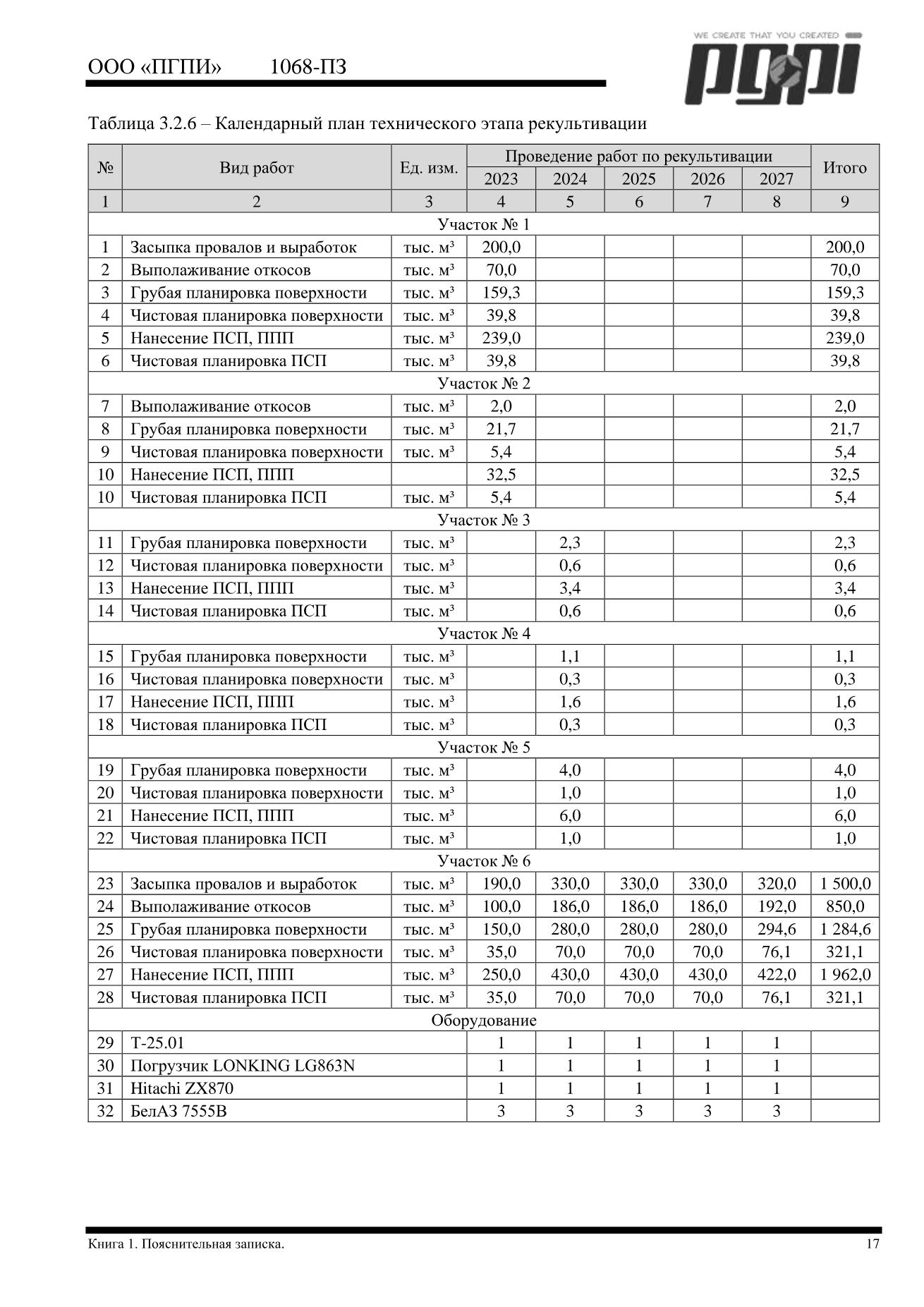
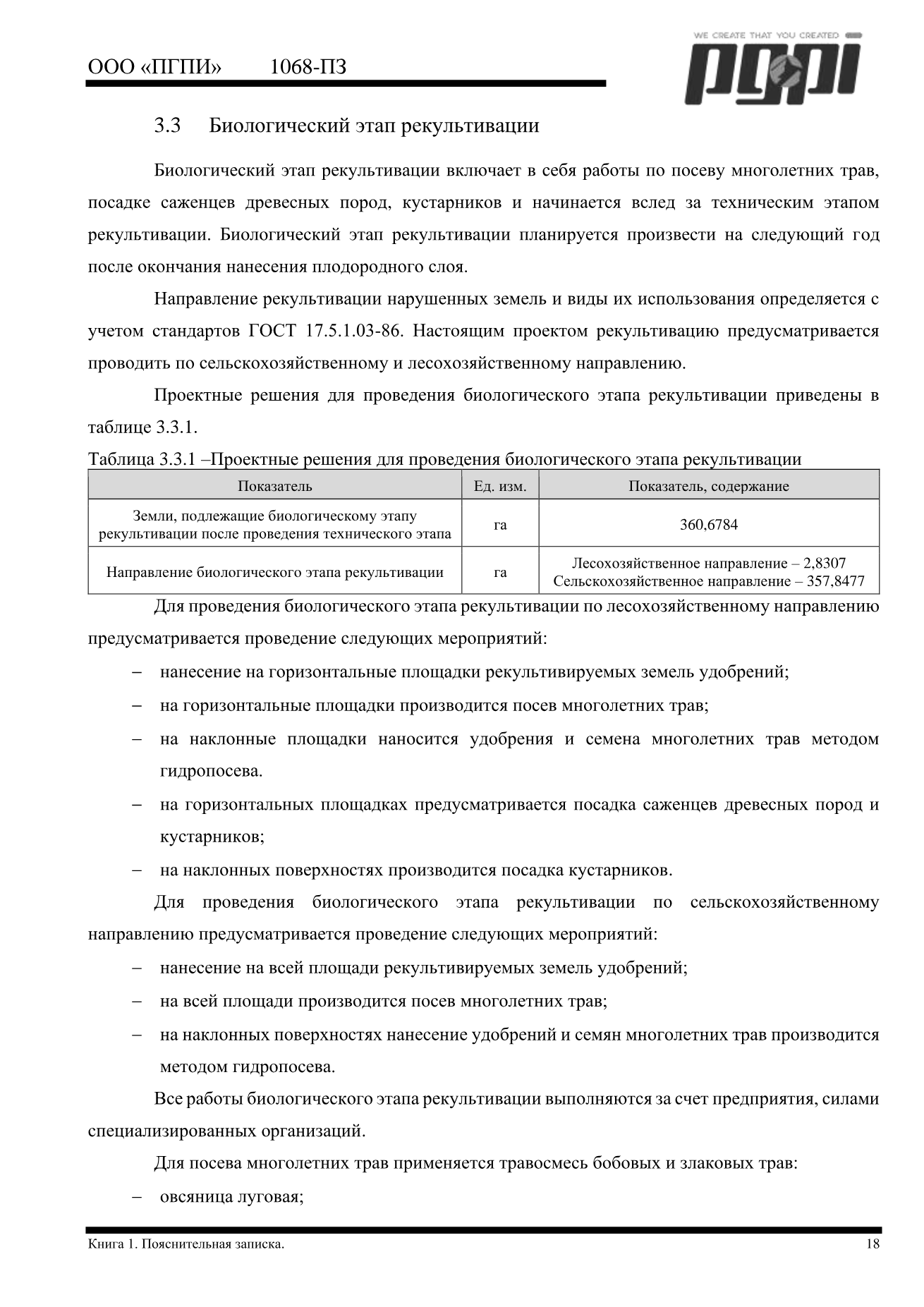
The available body of material contains no acceptance certificates, payments or subsequent inspection that would make it possible to describe the final result of the 2023–2027 work. The design answers what the state recognised as necessary. A certificate shows what the contractor submitted. A payment shows what the state paid for. Only a subsequent inspection can show whether the collapses were filled, the terrain is stable and the soil layer was restored.
Old Damage and New Work
At the Dalnie Gory mine field, a different question arose: who is responsible for an area where different enterprises worked in succession?
In 2025, AO Lugovoye sought to challenge orders issued by Rosprirodnadzor. The first-instance court rejected the company’s application. The judgment records failure to fulfil the reclamation duty during development of the mine field since 2021, placement of overburden on unallocated land, and operations beyond the granted plots. The court relied on an inspection, cadastral documents, mining plans, laboratory samples and satellite images.23
The company referred to the earlier activity of the Kiselevskaya mine and OOO Dalnie Gory. The court accepted materials concerning Lugovoye’s later work.
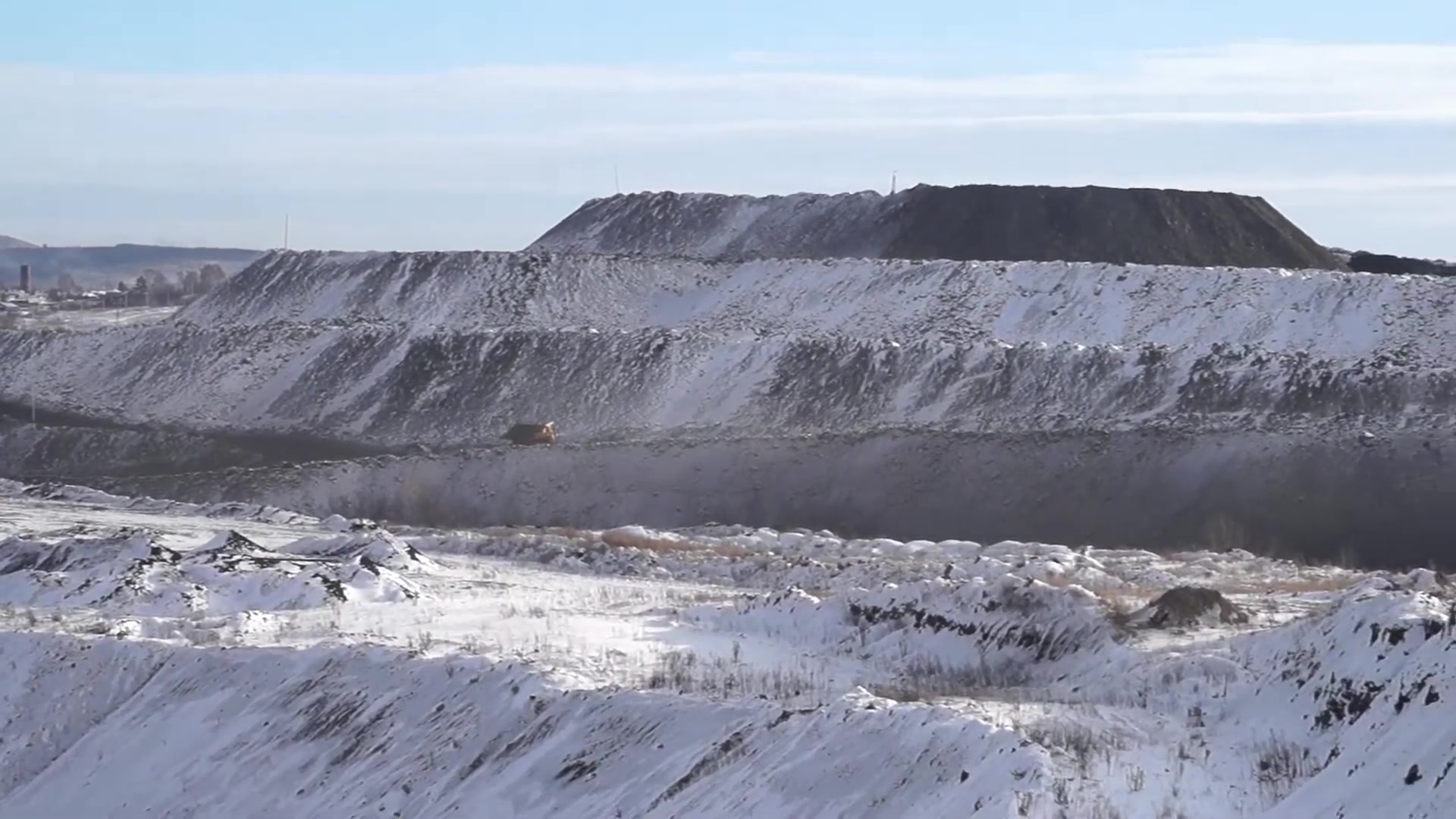
This example separates the historical legacy from the actions of the current subsoil user. Old damage does not release it from responsibility for its own violations, but a new licence does not make the company the legal successor to all earlier damage.
In the Belovo cases, courts apportioned the contribution of former and current work to damage to homes. In one case, a VNIMI opinion assessed the influence of the old Chertinskaya-Koksovaya mine at 21 per cent and that of the current enterprise at 7.5 per cent. In another, responsibility for work in 1958–1982 did not pass to present-day companies merely because they received a licence.24
The physical damage did not disappear. What changed was the answer to a different question: who, specifically, is now required to pay for it.
Not Every Resettlement Is GURSH
For a person leaving a home, the distinction between a closed mine and an operating open pit may seem formal. But that distinction determines who must pay and whether an owner can be compelled to part with the land.
GURSH provides a state social payment because of the consequences of closing an unprofitable enterprise. An operating company may voluntarily purchase property or fulfil its own resettlement duty. A third mechanism is public compulsory acquisition of land for the needs of the Russian Federation in connection with subsoil use (Russian izyatie).
Its documentary chain is as follows: a commercial subsoil user submits a petition; a territorial body of Rosnedra issues an order; valuation and negotiations are carried out at the company’s expense; the owner then signs an agreement or the dispute is decided by a court. After compensation is paid, the land becomes available for licensed work.
Mencherep: The Mechanism Began, but the Land Was Not Acquired
In 2016, Sibnedra issued four orders “On the compulsory acquisition of a land plot for the needs of the Russian Federation in connection with subsoil use.” One referred directly to a petition by OOO StroyPozhServis and a licence for open-pit coal mining.
The orders were challenged in court. Before the dispute was finally resolved, Rosnedra terminated the licence, Sibnedra revoked the orders, and the proceedings ended.33 The state procedure had been initiated at the request of a commercial coal company, but the acquisition did not take place.
Invest-NK: A Duty to Resettle Was Not Enough
There was no public order in O. I. Dubei’s case. The company’s duty to resettle residents from the sanitary protection zone did not give it an automatic right to force a sale of the home. The court refused Invest-NK’s claim.20
Khakassia: An Order, a Court and Access to Land
In Khakassia, the procedure reached compulsory acquisition through the courts. TsentrSibnedra Order no. 216 of 15 March 2019 was issued on the petition of OOO UK Razrez Mayrykhsky “for the needs of the Russian Federation for the purpose of carrying out work connected with subsoil use, at the expense of the subsoil user.” At its own expense, the company commissioned a valuation, conducted negotiations and prepared agreements.34
When one owner did not sign an agreement, the Beisky District Court granted the company’s claim for compulsory acquisition of the plot on 29 September 2020.34 What, then, did the state define as a state need when a commercial licensee obtained the economic opportunity to develop the land? The documents answer: access to land for licensed subsoil use. The subsoil user bore the cost of valuation and compensation.
In case no. A74-1427/2021, Razrez Mayrykhsky sought compulsory acquisition of three agricultural plots. The court permitted the acquisition, but the court-appointed expert set higher compensation:35
| Initial offer | Court-appointed valuation | Increase |
|---|---|---|
| RUB 1,598,000 | RUB 2,432,000 | +52.2% |
| RUB 1,256,000 | RUB 2,670,000 | +112.6% |
| RUB 238,000 | RUB 912,000 | +283.2% |
In a subsequent ruling, the court described the initial offer as containing “manifestly unfair terms of property compensation.”35 This wording relates to the specific case. The three rows show the economic meaning of the owners’ refusal of the first amounts.
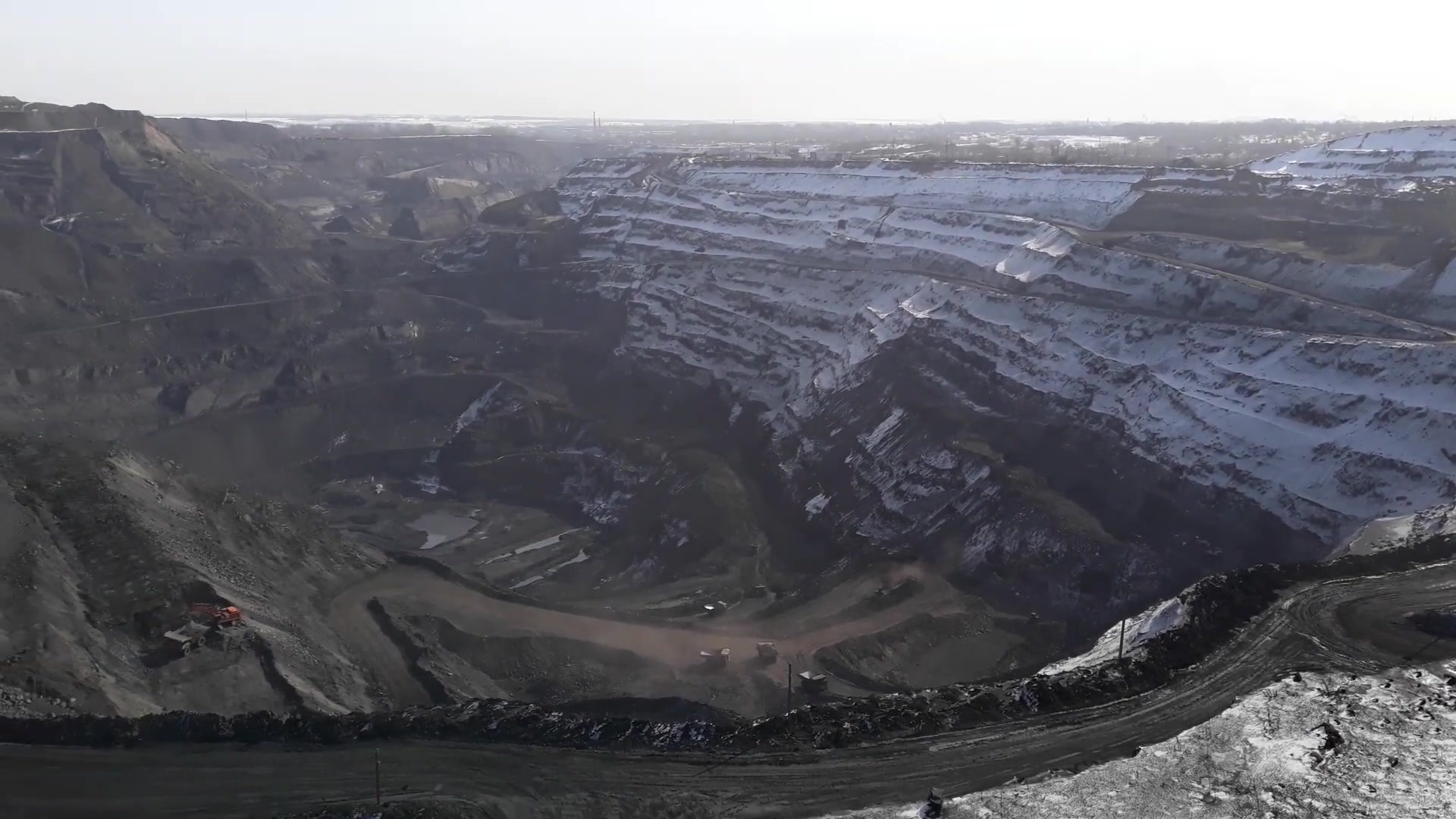
Other documents show the scale of resettlement linked to active mining, but do not form a single register of transactions. OOO Uchastok Koksovyi reported that since 2002 it had resettled 2,561 families — 4,411 people — and spent RUB 1.838 billion; a later corporate publication referred to more than 2,620 families that had received assistance outside the state programme.25 Court materials record individual disputes over night-time noise, an administrative fine and the removal from cadastral registration of a home that no longer physically existed.26
In Kazas, the Russian side reported to international bodies that the duty to resettle residents of 28 homes had been included in the licence of OOO Razrez Yuzhny. Official replies cited RUB 31,713 per square metre of a home, RUB 20,000 per sotka of land and RUB 6,120 per square metre of outbuildings; the number of agreements and total payments differed between the documents.27 The UN Committee on the Elimination of Racial Discrimination recorded residents’ complaints about the consent procedure, land, access to the cemetery and house fires; the materials referred to five burned homes, while those responsible were not established.28
Kazas is not a GURSH episode, but resettlement linked to active mining. It completes the distinction between mechanisms: the same word “move” can refer to a state social programme, a company’s licence obligation, a private transaction or compulsory acquisition.
A Criminal Judgment Does Not Replace Investigation of a Site
On 29 September 2025, the Meshchansky District Court of Moscow found former GURSH director Andrei Moiseenkov guilty under article 210(1) of the Russian Criminal Code and on four counts of fraud under article 159(4), sentencing him to seven years’ imprisonment in a strict-regime penal colony. The appellate proceedings ended on 6 April 2026, but the available material does not contain the full operative part, so the article does not reconstruct the final outcome of the appeal.29
The criminal case of a specific director does not replace investigation of GURSH sites. The RUB 99.5534 million episode matters because the audit body reconstructed the chain of a specific contract: submitted — approved — paid — found unperformed by a subsequent audit.
What, in the End, Was Liquidated?
The documents do not support either of two simple accounts.
The first is that the state closed unprofitable mines, restored the land and resettled people, while subsequent problems are exceptions. It is contradicted by new projects covering hundreds of hectares, repeated inspections of homes, later court disputes, residual mine workings, new contracts at old sites, and an established episode of payment for unperformed work.
The second is that closure existed only on paper, all results were fictitious, and GURSH was solely a mechanism for theft. The body of material does not support this account either. The state created a large-scale technical and social system. Court cases confirm that families received payments and bought housing, while residents identified later secured inclusion in the programme. One criminal judgment and one oversight failure do not make thousands of measures fictitious.
The factual picture is more complicated. GURSH managed a legacy that does not physically disappear with the enterprise. Behind aggregate reporting lies the fate of each site and each home. A social payment helped to buy housing, but was not an individual market purchase of all property left behind. Reclamation designs existed, but a new design could find the earlier scope insufficient. Certificates and payments existed, but in one specific contract a subsequent audit established that the submitted work had not been performed.
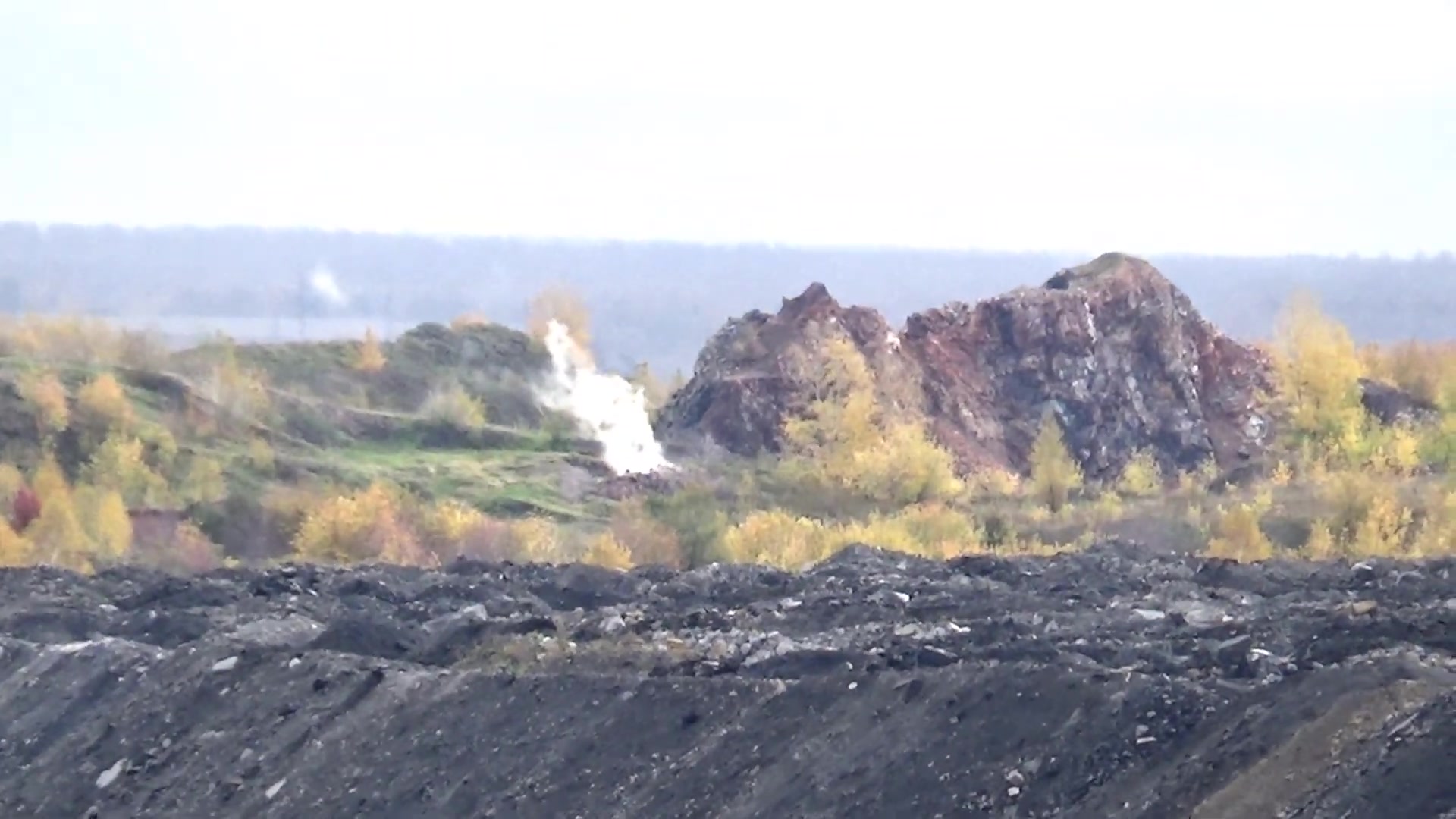
The most accurate conclusion is neither “nothing was done” nor “everything was liquidated.” The state formalised the closure of enterprises and carried out individual technical closure measures, but the consequences of mining continued to require intervention underground, on the surface and in people’s lives. Sometimes responsibility passed to a municipality or a new subsoil user. Sometimes it remained with the federal budget. Sometimes a person remained the owner of a damaged home but did not meet the programme’s historical conditions. Sometimes a family that had already left the territory of one closed mine again faced the consequences of another.
In official reporting, a mine can become one line among 203 enterprises undergoing closure. On the ground, it remains a mine-dewatering facility, a dump, a collapse, heated ground, a deformed home or a new project extending to 2030. In a person’s life, it can remain a boundary on their economic choices — even after the old address has been left behind.
This is what remained after the closure of Russian mines: the gap between the moment when a measure is declared complete on paper and the moment when the land genuinely ceases to require intervention.