Tim needs goats
It all began when we decided that the one thing Tim Sweeney needed for complete happiness was a herd of Angora goats.
Sergey Nikolaevich and I were working on the Forest Lovers investigation. We were talking about Tim Sweeney, the founder of Epic Games, joking and fooling around. That unserious conversation produced the Angora goats: it seemed to us that they were exactly what Tim’s happiness lacked.
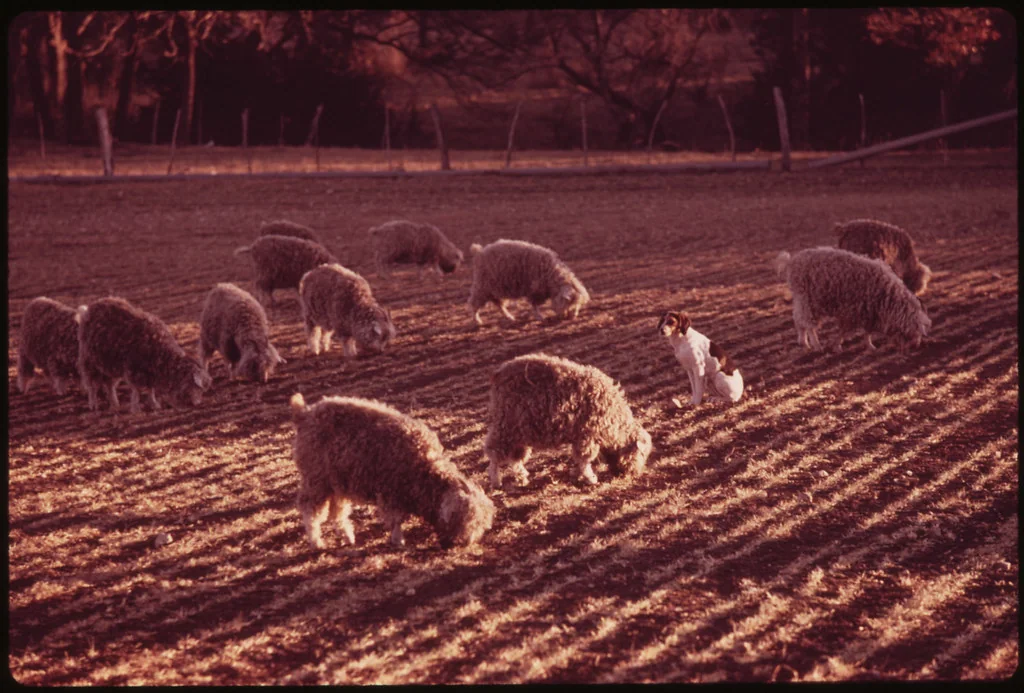
Imagine a herd of white Angora goats on land that has been saved from development. The goats eat unwanted vegetation, produce mohair and, naturally, leave manure behind. The whole idea seemed so practically convincing that we almost managed to give Tim a virtual farm.
 Enlarge ↗
BIO-010/012 experiments and not evidence of post-mining soil restoration.Then the joke took its first serious step.
Manure can be composted. Plant residues can be added to composted manure. Cities and farms continually produce leaves, grass clippings, woody trimmings, straw, vegetable scraps and other organic materials. Why do we call them waste? And what if nearby there is land that, after coal mining, lacks precisely organic matter, structure and living processes?
That was how a question emerged in which the goats were no longer the main characters:
if people produce enormous quantities of organic matter in one place and regard it as waste, while elsewhere a human-made substrate left after mineral extraction lacks organic matter and life, can these two problems be brought together?
When the joke stops being a joke: the original hypothesis
I was not suggesting that municipal waste and manure should simply be tipped onto a waste-rock dump. I had a much more cautious sequence in mind.
First, potentially suitable organic streams would be separated from contaminated ones. Plant materials and manure would then be selected so that the mixture could compost properly. It would pass through a controlled thermophilic phase, in which high temperatures reduce pathogens and viable weed seeds, and would then be allowed to mature. Only after that — not before the hot phase — would a very small amount of living biological material be added: natural soil, a rhizosphere community, fungi or a cultured microbial inoculum. The mixture would be given more time for colonisation and secondary maturation before being applied to a prepared technogenic substrate.
Could it become not merely a fertiliser, but a biologically active soil-like material? Could it be placed on a prepared technogenic substrate, planted, and used to start a chain:
plants → roots and litter → microorganisms and soil fauna → available nutrients → new plants?
And could that chain become progressively less dependent on people?
I liked the idea. That was precisely why we decided not to prove it, but to try to break it. Doing so required a global search: direct analogues, long-term observations and, especially, findings that contradicted my hypothesis.
- Selection of safe streams
- Composting and sanitary phase
- Maturation
- Late inoculation
- Secondary maturation
- Prepared Technosol
- Plants, roots, litter and biota
What remains after coal
The expression “waste-rock dump” creates the misleading impression that it describes a single kind of material. In reality, two dumps can differ from one another more than two natural soils do.
One may consist of coarse rock with almost no fine particles and little capacity to retain water. Another may be a compacted mass that roots cannot penetrate. Some material contains pyrite and continues to generate acidity when exposed to oxygen and water. Salts accumulate at some sites. At others, drainage patterns change, water cuts through slopes and carries sediment away. Some dumps heat up or burn internally.
The first scientific turn forced me to reconsider the question itself:
organic matter does not create soil by itself.
If a spoil mass is burning, unstable, actively generating acidity, draining water dangerously, severely saline or releasing mobile contaminants, the biological stage has not yet begun. The site must first be made physically and chemically capable of supporting life.
During the investigation, this preliminary threshold acquired a name: Gate 0.
Before that threshold, discussing the best compost is about as useful as choosing wallpaper for a house in which the fire has not yet been extinguished.
The first thing I had to correct in my own thinking was that I had begun too late. Before the question of compost comes Gate 0. Sometimes it requires an enormous amount of engineering work: diagnosing heat sources; extinguishing or isolating them; reshaping the landform; stabilising slopes; installing drainage; controlling acid-generating rock; correcting salinity; and constructing a mineral rooting layer. Compost cannot replace a stable slope, loam or safe water. (Sources: SUB-001–SUB-006, FAIL-003, CASE-022, KUZ-008.)
 Enlarge ↗
Detailed evidence: Gate 0 and engineering clearance — English evidence edition, p. 13.
Not manufacturing soil, but starting a process
Mix rock fragments, compost and fertiliser, and the result is a substrate. It does not become soil at the moment of mixing.
Soil is not a list of ingredients. It is a system in which water enters, is retained and leaves without destroying the material; roots create pores; plants return litter; bacteria and fungi process organic matter; soil fauna break up and move residues; nitrogen and phosphorus pass between mineral, organic and living forms; particles come together into aggregates; and each new generation of plants obtains resources from more than the initial application alone.
A realistic goal may therefore sound more modest than “bringing back the former soil”, yet be more scientifically honest: to create conditions in which a new, safe Technosol can develop — a soil system that forms in human-made material and, over time, begins to sustain an increasing number of its own processes.
It will not necessarily be a copy of the historical soil that existed before mining. Even after decades, the new system may differ in mineralogy, microbial community, profile and vegetation. My question had changed. It was no longer whether we could manufacture the past, but whether we could start a restorative trajectory and then gradually step aside. (Sources: SUB-004, CASE-018–CASE-024, BIO-009.)
What a city can provide
A modern city continually produces streams of organic material. After sorting and treatment, some may be potentially suitable for work intended to restore soil functions:
- plant-based food scraps;
- leaves and grass clippings;
- garden residues and wood chips;
- clean cellulose materials;
- properly qualified municipal compost.
More complex streams — digestate, treated sewage sludge or biosolids, products of wastewater-treatment systems and recovered nutrients — may also be considered, but only as separate materials subject to their own qualification and controls.
“Organic” does not mean “safe”. A batch may contain salts, metals, plastic, microplastics, pharmaceutical residues, PFAS, pathogens or physical contaminants. Clean cellulose is not the same thing as packaging containing adhesives, inks and polymer coatings. A city can return only specific, traceable, treated and tested streams to the material cycle. Everything else is not restoration, but the transfer of risk from one system to another. (Sources: ORG-001/002/005/008/010, SAN-001–SAN-004, PAP-001–PAP-005.)
What agriculture can provide
Agriculture produces manure, straw, crop residues, woody material, agricultural compost, digestate and feedstocks for biochar. Here too, one convenient word conceals many different substances.
Goat manure is not the same as sheep manure; sheep manure is not cattle manure; cattle manure is not horse manure. Composition changes with animal species, diet, bedding, moisture, storage and treatment. Even two batches from the same species may differ more than averaged reference tables suggest. The research corpus provides no basis for declaring one kind of manure universally superior. (Sources: ORG-003/004/006/007, FAIL-005.)
Still less is fresh manure equivalent to mature compost.
Fresh material contains many readily available compounds. Microorganisms decompose them quickly, consume oxygen and release heat; nitrogen becomes ammonium, may then become nitrate and can leave with water. Pathogens, parasites and viable weed seeds require separate sanitary control. In properly managed composting, the mixture passes through mesophilic and thermophilic phases, cooling and maturation. Temperature is not the only thing that changes: the share of readily decomposable matter falls, the microbial community is reorganised, some nitrogen is lost or immobilised, and phytotoxicity declines.
Maturity cannot be assigned with the sentence “the compost lay there for three years”. It is assessed through a combination of indicators: temperature and stability, respiration, ammonium and nitrate, plant germination, odour, pH, electrical conductivity, pathogens, weed seeds and contaminants. (Sources: ORG-001/005/006/008/010.)
What happens inside compost and forming soil
Organic matter has no single final destination.
Microorganisms oxidise some carbon to carbon dioxide and use it as an energy source. Some becomes their own biomass. After cells die, microbial residues may enter soil organic matter. Larger plant fragments persist as particles. Some decomposition products bind to mineral surfaces or become protected within aggregates.
The loss of part of the applied carbon is not necessarily failure. Without decomposition, there will be neither energy for the microbial community nor nutrient cycling. The more important questions are whether new stable fractions remain after the initial pulse, and whether the system begins receiving its own carbon inputs from roots and litter. Measurement is particularly difficult on coal spoil: an analysis may mistake ancient coal-derived carbon for new soil organic matter. (Sources: CHEM-001/002/005/006, CASE-017/023/030.)
Nitrogen is even more mobile. Organic nitrogen becomes ammonium, NH₄⁺, and then, through nitrification, nitrate, NO₃⁻. Ammonium can be retained on negatively charged surfaces. Nitrate moves far more easily with water. Plants and microorganisms may temporarily incorporate it into biomass, but a large dose of readily available nitrogen can turn a fertilising amendment into a pollution pulse.
Phosphorus may be released from organic matter, incorporated into microbial biomass, sorbed by iron and aluminium compounds, or precipitated with calcium. Its availability depends not only on quantity, but also on pH, mineralogy and the condition of particle surfaces. The same compost dose on two waste-rock dumps can produce different benefits for plants and different risks to water. (Sources: CHEM-004, SAN-003.)
Organic matter and fine mineral particles help a material retain some positively charged nutrients. But excessive dissolved salts create osmotic stress for plants. Nutrient-retention capacity and salinity risk must therefore always be read together with pH, mineralogy and water. (Sources: CHEM-002/004, CASE-021/029/034.)
Here pH acts as a switch for several processes at once: it affects metal mobility, phosphorus, nitrification, the microbial community and the range of plants able to grow. If pyrite continues to oxidise and generate acidity, organic matter does not acquire a magical right to overrule geochemistry.
Finally, there is structure. Roots open pores. Fungal hyphae bind particles. Microbial products help aggregates form. Fauna break up litter and move material. But an attractive surface layer cannot repair a compacted mass beneath it, and compost cannot create a mineral skeleton where there are no fine particles or surfaces capable of retaining water and nutrients. (Sources: CHEM-002/003, CASE-010/018/021/030, KUZ-005/006.)
When green does not yet mean restored
The most dangerous result is one that looks good in a photograph.
At a coal site, a high dose of paper-mill residuals sharply reduced runoff and erosion. It might have been called a success but for the water: at an early stage, dissolved oxygen fell to ≤0.4 mg/L, while chemical oxygen demand reached 7,229 mg/L. Less runoff did not mean safer runoff. (Source: FAIL-001.)
In Pennsylvania, a high dose of treated sewage sludge helped revegetation, but nitrate concentrations reached approximately 300 mg/L, and the estimated loss of inorganic nitrogen over two years reached 2,327 kg/ha. In another trial, fresh manure mixed with paper residuals to produce a nominally suitable C:N ratio lost 107 or 393 kg N/ha; the composted material lost less than one per cent of its nitrogen. The carbon-to-nitrogen ratio alone was not enough: the material’s origin and treatment history mattered. (Sources: FAIL-004/005.)
In Minnesota, organic amendments produced good vegetation cover on coarse tailings, yet nitrate in infiltration water exceeded 10 mg/L in almost every treatment. The treatment with the greatest early cover released roughly three times as much nitrate as the compromise dose and, in the historical calculation, cost at least six times as much. (Sources: CASE-015/016.)
In an old Scottish trial on pyritic spoil, organic amendments without sufficient liming remained largely barren; the highest lime applications maintained pH more effectively, while some organic treatments required renewal over time. In a short Brazilian trial on acidic sandy tailings, chemical indicators responded, but organic matter and physical properties did not change appreciably over 15 months. (Sources: CASE-033/032.)
In Chile, some mixtures produced greater later biomass on saline copper tailings, but an early pulse of dissolved organic carbon and copper impaired water quality, fertility then declined, and treatments containing olive residues brought plant production almost to a halt. (Source: CASE-034.)
These findings did not make me abandon organic amendments. They made me abandon a single measure of success and the simple formula “more organic matter is better”.
A green slope may be a stage in restoration. It may also be a well-disguised problem.
Evidence and counterexamples: water and negative results — English evidence edition, p. 30.
What has already been tried around the world
The assembled research corpus contained no single winning recipe. Instead, it contained several different trajectories — and findings that made it impossible to choose a convenient story in advance.
 Enlarge ↗
CASE-021 and not the result of 24 years of reclamation.On coal-mined land in Virginia, a randomised trial compared an untreated control, topsoil, sawdust and several rates of treated sewage sludge. After 16 years, the control had approached the amended treatments on some broad measures of organic matter and nitrogen. After 27 years, aggregate-size distributions had also largely converged. Yet the sludge treatments retained differences in carbon and nitrogen fractions and higher microbial biomass. One indicator said, “the control caught up”; another said, “the intervention left a lasting trace”. (Sources: CASE-009/010.)
In Wales, 0.75 kg of municipal green-waste compost was placed around each tree on a former opencast coal site. Eleven years later, no overall advantage in height or diameter was found; survival depended on species and was poorer for alder. Compost is not obliged to help every plant simply because it is called compost. (Source: CASE-002.)
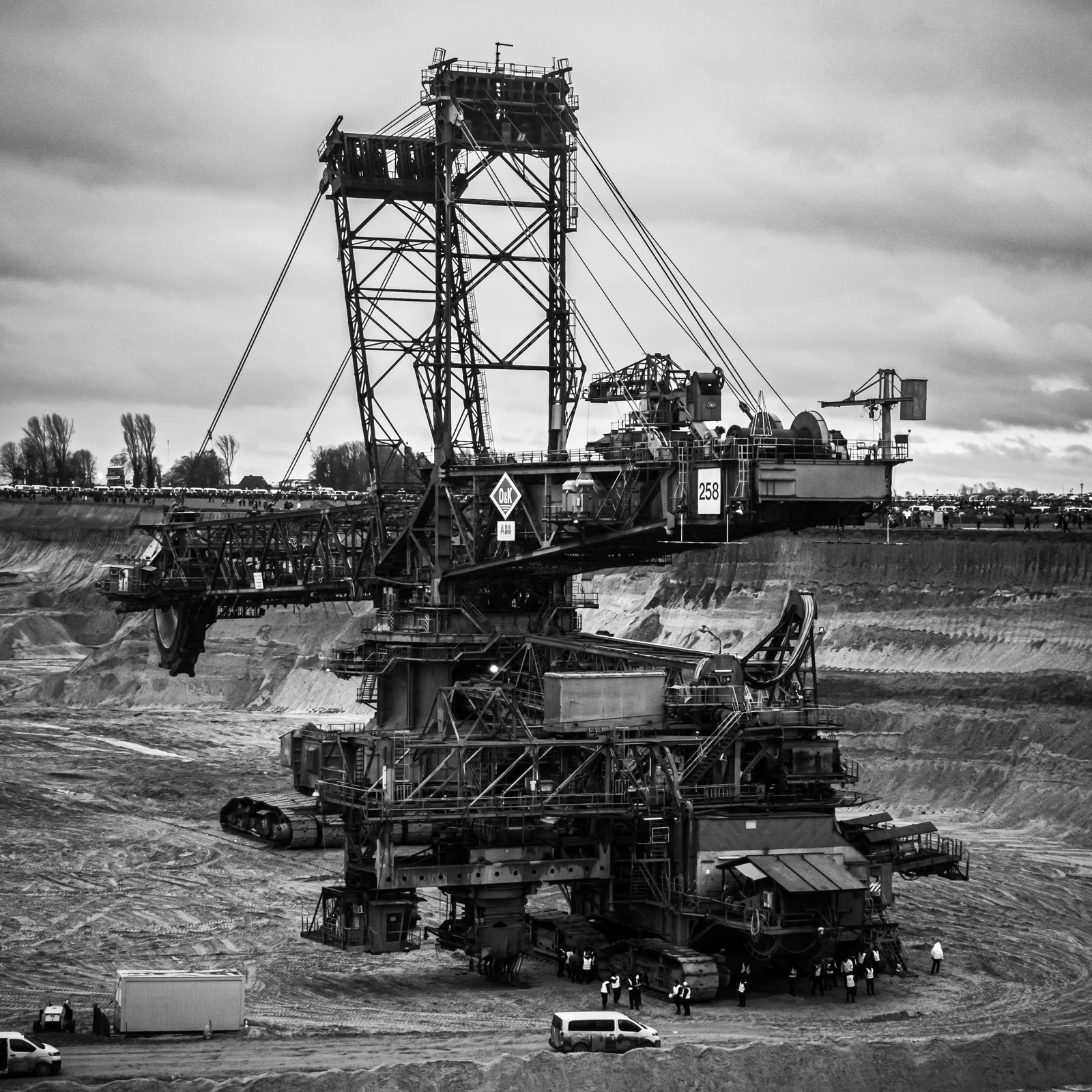
At Cerrejón in Colombia, topsoil was transferred and vegetation restored on dry land following opencast coal mining. Chronosequences — comparisons among sites of different ages, not observations of a single site through time — showed that by 20 years, biogenic aggregates and evidence of faunal activity had appeared, while organic-matter content had reached 63–89% of that in mature dry forest. Yet restoration remained incomplete. (Sources: CASE-018/019.)
 Enlarge ↗
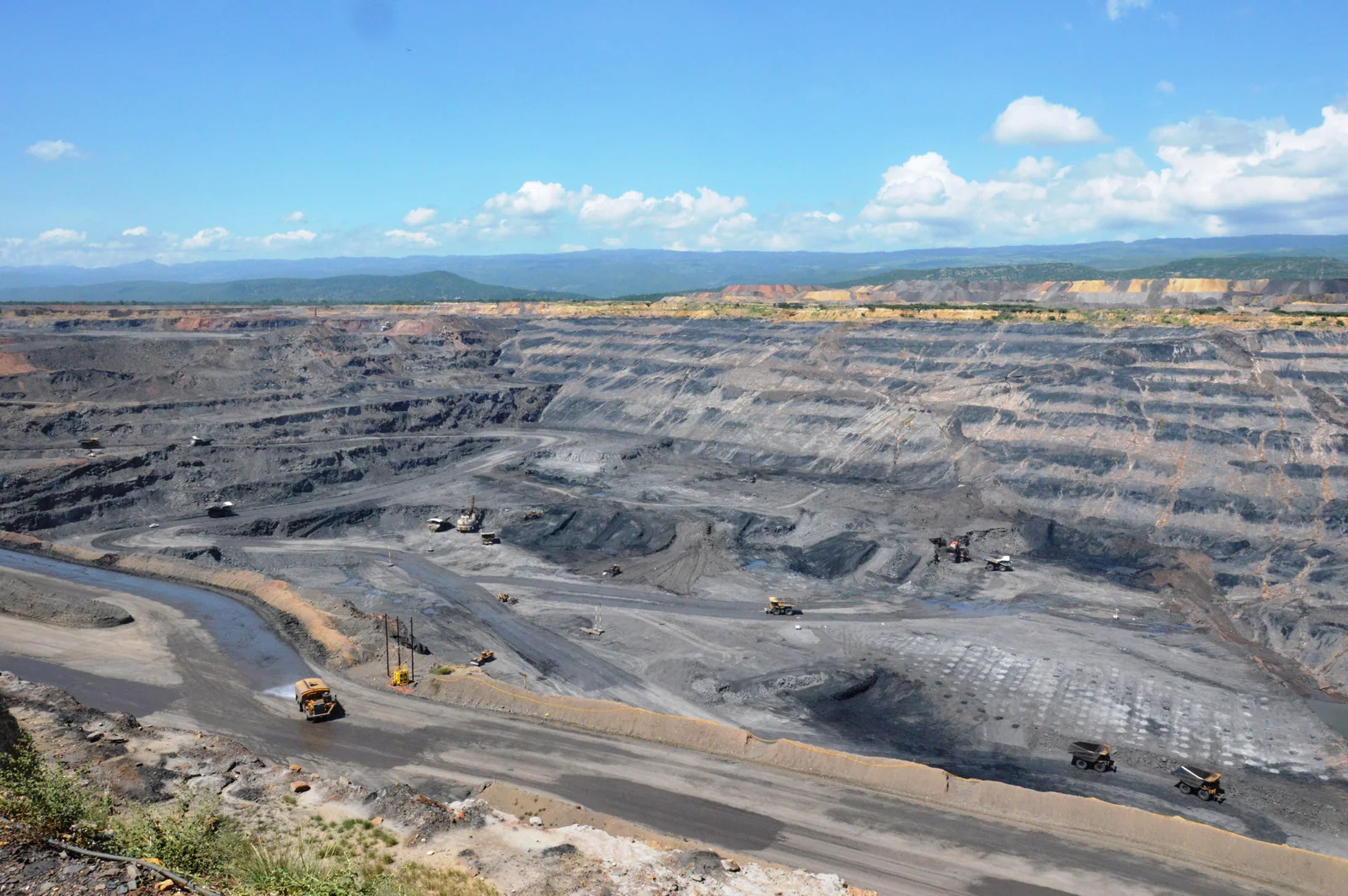
CASE-018/019 chronosequence plots; it does not establish the 63–89% values and does not depict ecological restoration.In Germany’s Lusatian mining region, forest grew for decades on acidic sulphur-bearing spoil. Some biological indicators approached those of undisturbed regional sites, while element losses in drainage water declined. But pyrite oxidation continued to govern the chemistry after 35–37 years. Forest above did not remove the source of acidity below. (Source: CASE-022.)
 Enlarge ↗
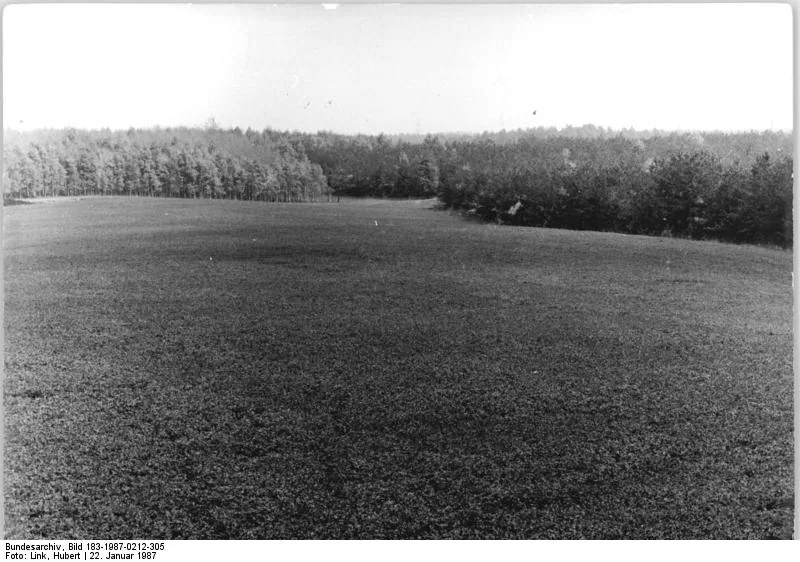
CASE-022 site.In the Sokolov lignite basin in the Czech Republic, alder accumulated carbon and nitrogen particularly rapidly during the first 15–20 years. After 30–40 years, the upper organic layers approached those in a natural alder forest, but the mineral part of the profile lagged behind. The oldest sites in the sequence were 65 years old. This is strong evidence of long-term soil formation, but it is still a chronosequence: the sites differed in more than age alone. (Source: CASE-020.)
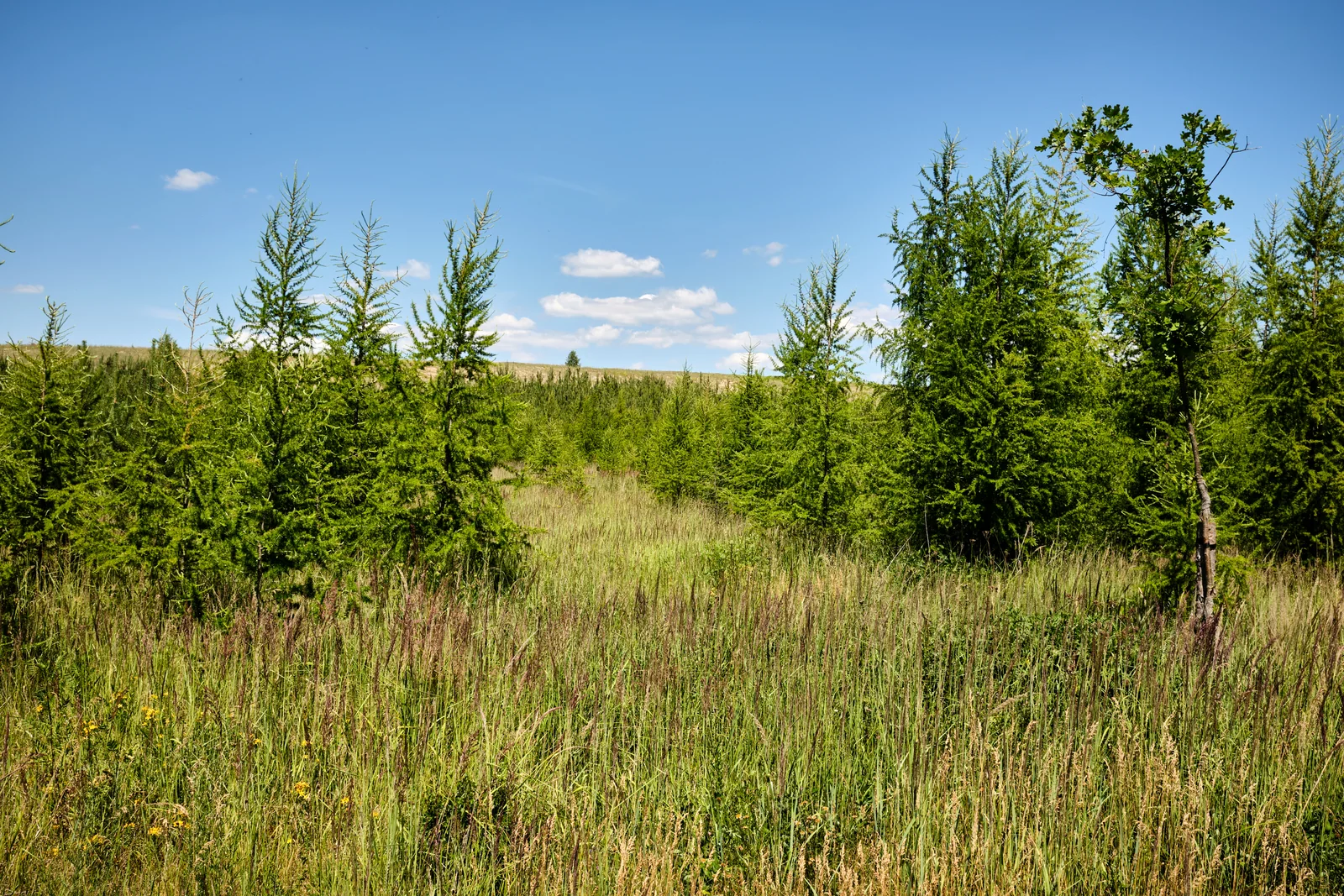 Enlarge ↗
CASE-020/023 chronosequence plots; the photograph does not establish measured changes in the soil profile.Decades: how long the development of a soil system takes
Even before this investigation, I assumed that restoration would take a long time. But the word “long” did not yet have numbers for me. A short experiment answers whether plants emerged. A long one asks whether a system began to form.
During the first one to five years, the fastest changes tend to occur in vegetation cover, some chemical indicators and microbial activity. The same period may reveal early risks: the leaching of nitrate, dissolved organic carbon and metals; falling oxygen in water; salinity; or phytotoxicity. Rapid growth is not a guarantee of the right trajectory. (Sources: FAIL-001/004/005, CASE-015/016, CASE-032/034.)
After seven to sixteen years, it becomes possible to see which effects persisted, which disappeared and where the control began to catch up with the treated site. On this timescale, the Welsh compost ceased to look like an obvious advantage, while the Virginia trial showed both convergence in some measures and persistent differences in others. (Sources: CASE-002, CASE-009.)
Over twenty to forty years, features emerge that are difficult to produce within a single season: organic horizons, biogenic aggregates, stable root and litter cycles, evidence of soil fauna and some more persistent carbon pools. Yet even after 35–37 years, forest in Lusatia had not overcome pyrite-driven acidity in the mineral substrate. (Sources: CASE-018/019, CASE-020/022.)
The longest sequences in the corpus span 56–65 years. They show not an endpoint, but an ongoing pedogenic trajectory. A substantial share of these data comes from chronosequences: researchers compare nearby sites of different ages rather than following the same plot for 65 years. This is a powerful but imperfect way of looking into deep time. (Sources: CASE-020/023.)
The research corpus gives me no basis for writing that the historical soil will certainly return, even after 65 years. It allows a different conclusion: soil processes can arise, become more complex and grow more autonomous, but their direction depends on the parent material, water, climate, plants, organisms and what people did at the outset. (Sources: CASE-020/023, BIO-009.)
- 1–5 yearsVegetation, chemistry, water and early risks
- 7–16 yearsDid the effect persist, and is the control catching up?
- 20–40 yearsHorizons, aggregates, root and litter cycles
- 56–65 yearsAn ongoing trajectory, not a guaranteed endpoint
Can living material be grown first?
I then returned to my original idea, now with a more difficult question.
Suppose Gate 0 has been passed. There is a safe mineral substrate and mature compost. What if, instead of mixing them immediately, the compost is first given an additional biological impulse — a small amount of donor soil, a cultured microbial inoculum, local fungi or mycorrhiza? What if the material is then held for a further period, allowing organisms to colonise it before it is applied to the waste-rock dump?
The individual links in this chain are known. Compost serves as an organic amendment and as a carrier for microorganisms. There are inoculants, carrier materials, transfers of small quantities of soil, cultured consortia and the propagation of arbuscular mycorrhizal fungi with a host plant. It is also known that pre-colonising a carrier can sometimes help deliver viable organisms to a plant or soil. (Sources: MIC-001/004/005/008, HYP-001/011.)
But within the closed global corpus, we found no direct field experiment that reproduced the complete sequence: mature safe compost; inoculation with a local community; a separate secondary maturation phase; application to a disturbed mineral substrate; and direct comparison with ordinary mature compost and inoculation at the time of application.
This must be stated precisely. I am not claiming that no one has ever done it. The search result is more modest: no published experiment answering the stated comparative question was found within the closed corpus.
In other words, it has not been established that compost colonised in advance and given additional maturation is consistently better than ordinary mature compost or direct inoculation. That is not an experimental result. It is the point at which an experiment is missing.
The Polish experiment: a close analogue, not proof
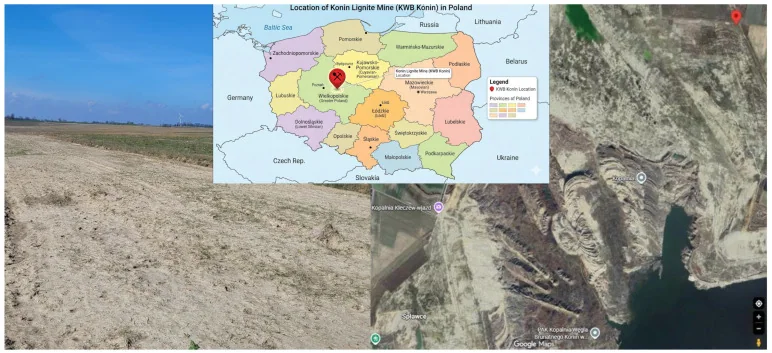
The closest analogue to my original idea was a study by a Polish group published in 2026. The researchers prepared a mixture of chicken feathers, wheat straw and lignite in a 20:60:20 ratio, added a microbial inoculum at the beginning of the process, and composted the material for 41 days. They then applied it at 18.3 t/ha to a sandy post-mining substrate near Konin and grew maize. In the corpus, this application rate is reported as product mass; its conversion to a fully established wet- or dry-mass basis is not available. (Source: HYP-011.)
In the early field observation, plants in the treated area were approximately 15% taller than those on the untreated substrate. This was the result of applying the finished material as a whole — the organic mixture together with its preparation process and inoculation — not a separately measured effect of pre-colonisation. (Source: HYP-011.)
But the experiment did not answer the question posed here. The field comparison involved a treated area and untreated substrate; it did not include a separate control receiving the same mature but uninoculated compost. Nor was there a fully randomised B/C/D/E comparison. It is therefore impossible to say whether the increase came specifically from the inoculum, from pre-colonisation, from their combination, or from the compost material itself.
This is a close analogue. It is not direct evidence.
 Enlarge ↗
HYP-011 field experiment. Figure 1 from Choińska-Pulit et al. (2026), CC BY 4.0. Each treatment had one large area; many measured plants do not replace independent plot replication.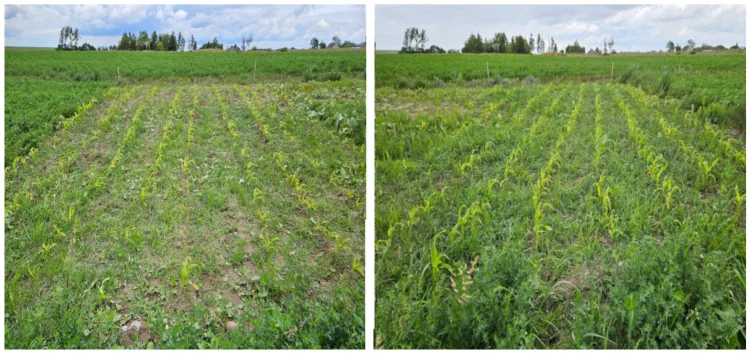 Enlarge ↗
Full study card and limitations: the 2026 Polish experiment — English evidence edition, p. 59.
Can soil be multiplied from a single gram?
That led me to another thought. If restoring one site requires taking a large quantity of healthy soil from another, we simply move the problem. Could we instead take a very small amount — one gram, for example — propagate organisms characteristic of that soil and use them to colonise a much larger volume of material?
A direct experiment using degraded mine soil does exist. Researchers obtained a culturable fraction of indigenous bacteria from 1 g of donor soil: it was grown in 25 mL of nutrient medium for seven days, expanded stepwise for another seven days, and transferred to a carrier. After 28 weeks, total nitrogen in the bacterial-inoculum treatment was 75% higher, and substrate-induced respiration was 147% higher, than in the control. These numbers refer to a 28-week experiment with a culturable bacterial fraction, not to reproduction of the donor soil’s entire microbiome. (Source: MIC-001.)
But combining these bacteria with cyanobacteria did not produce the same improvement. Adding another potentially useful group did not guarantee a better result. (Source: MIC-001.)
The principal limitation is hidden in the word “grown”. The nutrient medium, temperature, oxygen and generation time select organisms capable of living rapidly under those particular conditions. Slow-growing organisms, obligate symbionts and complex interspecies relationships may be lost. The proportions of bacteria and fungi change; taxa and interactions disappear. The result is not a copy of the original soil, but a culturable selection from it. (Sources: MIC-002/003/007/009.)
Three approaches must therefore remain distinct. Whole-soil inoculation transfers a small amount of real soil and, with it, many unknown interactions, but it disturbs the donor site and may also transfer undesirable organisms. A cultured inoculum makes it possible to increase part of a local community, but cultivation selects the organisms that survive the imposed conditions. A defined consortium, or SynCom, is more reproducible, but consists only of selected strains and may fail to establish in an unfamiliar environment.
Restoration depends on functions — decomposition of organic matter, nitrogen cycling, phosphorus mobilisation, aggregate formation and assistance to roots. Yet science cannot currently say with confidence that the right list of functions will always replace the complexity of a living community. The problem is still harder for mycorrhizal fungi: many require a living host for propagation, so they are multiplied with plants rather than simply grown in a nutrient tank. (Sources: MIC-002/005/007/009.)
The short scientific answer is this: we can propagate some organisms and functions from a small soil sample, but we cannot simply copy soil.
Evidence and boundaries of the result: the cultured indigenous microbiome — English evidence edition, p. 61.
The experiment that has not yet been done
In the end, it became clear that there was no point continuing to debate the idea: it needed to become an experiment. The comparison must be designed so that every added layer of complexity has its own control.
- A — control: prepared technogenic substrate without an organic amendment.
- B — compost: the same substrate with ordinary mature safe compost.
- C — donor soil: mature compost plus a small amount of living donor soil, added when the experiment is established.
- D — cultured inoculum: mature compost plus a bacterial-fungal inoculum cultured from a small donor sample, added when the experiment is established.
- E — pre-colonised material: compost colonised in advance with the same inoculum and subjected to a separate secondary phase of biological maturation before contact with the technogenic substrate.
The main question is not whether E works at all. It is stricter: will E be consistently better than B, C and D — or will the additional stage prove to be an expensive complexity without a meaningful ecological advantage? (Design source: FIELD_EXPERIMENT_DESIGN_V0.3; evidentiary basis: HYP-001/011, MIC-001/005/007/009, EXP-001/002.)
The experiment must separately identify the effects of the compost itself, living donor soil, cultured inoculum and pre-colonisation. It is safer to begin with replicated mesocosms using one mineral substrate and the same compost dose. Measurements must include not only plants, but also water, salts, available nutrients, microbial and fungal communities, respiration and structure. Only treatments shown to be safe should then progress to a multi-year field trial. The detailed controls and sampling schedule belong in the evidence PDF. (Sources: EXP-001/002.)
There are no animals in the initial experiment. Otherwise, it would be impossible to distinguish the effects of compost, inoculum and secondary maturation from those of grazing, excreta and hooves.
Kuzbass: not proof, but a test of transferability
The global evidence base must not be reduced to a study of one region. For me, however, Kuzbass remains an essential test of transferability: it shows clearly why importing any recipe must begin with diagnosis.
A burning or self-heating dump first requires the hazardous process to be stopped and stability verified. Pyritic acid-generating material requires source control and a chemical solution. A saline or sodic substrate requires its own correction and water management. Safe coarse spoil, after decompaction and construction of a rooting layer, may be a candidate for an organic-biological trial. An old vegetated dump may serve not as a site for intervention, but as a local reference for a spontaneous trajectory. (Sources: KUZBASS_TRANSFERABILITY_MATRIX, CASE-022, CASE-032/034.)
I have seen Apanas myself. My photographs can show its form, scale, erosion features and vegetation. They do not measure the temperature inside the mass, acid-generating potential, metal concentrations or water safety. Those require site investigations and analyses.
How much might it cost to restore the land’s capacity to live on its own?
After the scientific analysis, I asked another question: how much might such restoration cost, and how would that cost compare with the volume of associated coal production? To address it, we constructed a preliminary scenario model of a hypothetical, complex, old, Apanas-type coal waste-rock dump covering 100 hectares. It is not an estimate for the Apanas dump and not an average market price for reclamation. The real site serves only as a reference for scale and complexity; its actual cost was not calculated. (Model source: ECO-003.)
The model distinguishes three levels of outcome.
- Safety: stop burning or hazardous self-heating, stabilise the mass, and manage water and erosion.
- Reclamation: create a viable root zone and stable vegetation cover.
- Ecological restoration and development of soil functions: attempt to start structure, internal nutrient cycling, microbiota and fauna so that the site’s dependence on people gradually declines.
These levels cannot be collapsed into the word “greened”. A green slope may meet the second level without meeting the third.
The conversion uses the official Bank of Russia exchange rate for 26 September 2026: RUB 84.3414/US$. This produced the following orders of magnitude. (Sources: ECO-003/004.)
Scenario cost of restoring a complex 100-hectare Apanas-type waste-rock dump — not an Apanas estimate, not a regulatory figure and not an average reclamation cost:
| Scenario for 100 ha | Entire site | Per hectare |
|---|---|---|
| Relatively favourable complex site | US$4.7–5.9 million | US$47,000–59,000/ha |
| Central | US$9.5 million | US$95,000/ha |
| Severe | US$15.4–21.3 million | US$154,000–213,000/ha |
All three rows are scenario estimates, not commercial quotations or universal standards. (Model source: ECO-003.)
This reveals a result that can easily disappear in a discussion about compost: the organic stage is far from the main source of cost at a complex dump. The principal costs arise earlier, where hazardous processes must be stopped, the landform reshaped and a mineral foundation for roots constructed.
The model also includes twenty years of monitoring and additional labour by operators, field workers, technicians, environmental specialists and agronomists: sampling, maintenance and vegetation surveys. Labour already included in machinery or contractor rates must not be counted twice. (Source: ECO-003.)
The cost of system E — pre-colonised material subjected to secondary maturation — is not included in the model. Its application rate per hectare, yield from a small donor sample, storage life, duration of secondary maturation, space and equipment requirements, and persistence in the field are unknown. The technology is currently not costable: experimental parameters must come first.
What the amount per tonne of coal means
The model comparison uses a hypothetical 32.3 million m³ of spoil for 100 hectares and a scenario stripping-ratio range of 6.1–11.5 m³ per tonne of coal, selected from published data for comparable opencast coal operations. This is a parameter of this model, not a universal coal-mining ratio. It produces a linked modelled coal output of 2.8–5.3 million tonnes, but does not reconstruct production from the actual Apanas site. (Model source: ECO-003; the full justification for the range belongs in the evidence PDF.)
Combining the extreme values independently, the central scenario produces a scenario cost of restoring disturbed land per tonne of linked modelled coal output of US$1.8–3.4/t. The severe scenario produces US$2.9–7.6/t. These figures are not the total environmental cost of coal, an average reclamation cost, or an estimate for the Apanas dump. The arithmetic was checked against the underlying rouble amounts, modelled coal volume and official exchange rate on the model date. (Sources: ECO-003/004.)
Even after that check, US$1.8–3.4/t cannot be called the true environmental cost of coal. It excludes climate damage and combustion emissions, the health effects of air pollution, lost biodiversity, historical damage to water and social consequences. It is only a modelled cost of attempting to restore disturbed land. (Source for the model boundary: ECO-003.)
Scenario burden of restoring disturbed land in the central case.
Full calculation, sensitivity analysis and model boundaries: economic model — English evidence edition, p. 74.
But this model has a line without a dollar sign: time
That line is time.
A person can make a decision today. Plants will respond after a season. Whether the effect is durable may become clear in ten years. Aggregates, organic horizons and internal cycles may require twenty, forty or sixty years. Even then, the new system may remain different from the soil that existed before mining.
Money and time cannot honestly be added together in a single invented currency. Scenario millions can be budgeted and spent. Lost decades cannot be bought back.
The Maima solar power plant: sheep before goats
The animals in my story had one earlier episode.
In the winter of 2019, I visited the Maima solar power plant. I remember suggesting during that visit that sheep could be used to manage vegetation between the panels. Video confirms that I was at the plant, but the conversation and my suggestion are not recorded. Denis Shakin may be able to witness the episode, but the research corpus contains no separate statement from him. (Sources: AUTH-001/002.)
On 29 June 2020, Kommersant Krasnoyarsk, explicitly citing Hevel’s press service, reported that 50 sheep were grazing at the Ust-Kan solar power plant that summer, and that the company did not rule out using the practice at other plants, including Maima. The original Hevel press-release page could not be found, so I describe the source precisely for what it is: an identifiable publication relaying a company statement. I cannot demonstrate that my suggestion had any connection to this experiment. (Source and boundary: AUTH-003.)
For me, the meaning of the story is more modest: an idea that sounds funny in conversation can sometimes prove practical. But the coincidence of an idea and a later trial does not establish causation.
The return of the Angora goats
After all this, I can finally bring the goats back from the opening paragraph — this time without magical powers.
Angora goats can combine grazing of grasses with browsing woody and shrubby vegetation; the share of browse in their diet changes with the season. In a four-year pasture experiment, Angora goats, Merino sheep and mixed grazing at 7.5, 10 and 12.5 animals per hectare altered botanical composition and bare-ground cover in different ways. In another four-year experiment at two sites, repeated Angora-goat grazing suppressed leafy spurge. But these were studies of pasture and vegetation management, not mine-soil restoration: they do not show that Angora goats create soil on post-mining land. (Sources: BIO-010/012.)
On reclaimed coal-mine pasture, trampling increased compaction, while plots fenced off from animals showed better retention of plant-available water. Angora goats also have climatic limitations: cold, wet weather, especially after shearing, requires shelter and strict attention to animal welfare. (Sources: BIO-006/011.)
The question is therefore not whether goats are beneficial or harmful. Whether testing them makes sense depends on the state of the site. It requires stable cover, anchored roots, acceptable resistance to erosion, safe water and forage, protection for young trees, controlled stocking, an ungrazed fenced control and a stopping rule for drought or surface damage. (Sources: BIO-006/012.)
Their possible role lies in vegetation management and participation in nutrient cycling at a late stage. Goats do not create soil. And there are no animals in the initial A–E experiment.
How time produced EDEN 2
The investigation returned me once more to the scale of time. A person can make a decision today, while its ecological consequences unfold over ten, twenty or fifty years — sometimes longer than a human life.
In conversation with Sergey Nikolaevich, another question emerged: could we do more than tell people how difficult it is to restore a severely disturbed ecosystem? Could we allow them to live through the long consequences of their own decisions, at least within a game model? The idea of EDEN 2 arose directly from this investigation and our conversation about time — an ecological game in which nature restoration is not scenery, but part of the mechanics.
The game is not scientific evidence and does not substitute for real time. I am not disclosing its story, stages or ending in this article. What matters here is only the origin of the idea: EDEN 2 emerged directly from my conversation with Sergey Nikolaevich about the fact that restoring nature can take decades.
Can soil be created again?
After examining the global corpus, my answer does not fit into “yes” or “no”.
I began with a fairly simple thought: organic streams from cities and agriculture might help return life to an impoverished technogenic substrate. The evidence partly supports that idea. Mature, tested materials can supply carbon and nutrients, retain water, and support plants and microorganisms. Roots, fungi, microbes and fauna can gradually build structure and internal cycles.
But I had to revise my original understanding where I had assumed that the discussion began with organic matter. On a hazardous dump, it begins with burning, stability, water, acid generation, salts and mobile contaminants. Sometimes years of engineering work are required before the first kilogram of compost.
Nor was it established that any organic material is automatically beneficial. An excessive or immature application can release nitrate and dissolved carbon, deplete oxygen, add salts, mobilise metals and produce unstable cover. It has not been established that pre-colonised mature compost is better than ordinary compost. It has not been demonstrated that a cultured inoculum preserves the full complexity of donor soil. The cost of system E and the persistence of its effect over years remain unknown.
What did emerge from my original idea was a testable question. Systems A–E can be compared, measuring not only greenery but also water, structure, microbial communities and persistence — first in mesocosms, then in a safe field trial. A negative result would also be a result: it would show that the soil system does not need the additional complexity I proposed.
After this examination, my answer is this: people probably cannot recreate an exact copy of the soil lost through mining. But on a suitable, physically and chemically safe substrate, they can attempt to create conditions in which soil-forming processes begin to operate again. The goal is not to maintain a green decoration forever, but gradually to develop a system from which people can step back.
Returning to Tim
So does Tim Sweeney need Angora goats?
Possibly. But much later than we imagined at the beginning.
Hazardous processes must first be stopped. A stable landform and a suitable physical and chemical foundation must then be created. Plants and soil life will need help; water will need monitoring; and the system must be given years — perhaps decades. Only when the cover, roots and forming soil system have passed the test of time would it make sense to ask cautiously whether managed Angora goats could become a useful part of this landscape.
Not as creators of soil. As late participants in a living cycle.
Neither the goats nor Tim Sweeney was harmed in the course of this investigation.
ElepiCup
This article and its associated evidence PDF were prepared with the document → AI → human scenario in mind. A person may not read the entire investigation in sequence, but may ask an AI to find a number, check a proposition, produce a summary or translate a passage. In that form of reading, a correct fact can lose its conditions and limitations and become an incorrect conclusion.
ElepiCup (the Elephant in a Cup Method) is a way of organising an evidentiary document so that an extracted passage has a better chance of retaining enough information for the claim within it to be interpreted correctly. The large source is the elephant; the limited context available to an AI for a particular answer is the cup.
The method’s central principle is: a piece of the elephant must not pretend to be the whole elephant. An AI should retrieve not only the answer, but also the boundaries of that answer.
For this reason, a key claim is kept close to its evidence status, source, conditions, units, duration, comparator, critical limitation and any material negative or contradictory evidence. For example, +147% in this article is not separated from the 28-week duration, the control, the culturable bacterial fraction or the warning that the result does not establish restoration of the whole-soil microbiome. The US$1.8–3.4/t range is not separated from its status as a scenario model and is expressly not described as the total environmental cost of coal.
In the web article, ElepiCup Light is applied: the human narrative and authorial voice remain, while key numbers, limitations and links to the evidentiary layer are kept nearby. The full PDF uses a stricter architecture with evidence statuses, Source IDs, negative results, a research map and a source registry.
Author of ElepiCup: Natalia Zubkova. Sergey Nikolaevich Severin and Viktor Andreevich Svetlov participated in developing and applying the evidentiary architecture of this investigation, but they are not authors of ElepiCup.
The method remains experimental. Its effectiveness has not yet been demonstrated; no claim is made to absolute novelty, worldwide priority or the status of an established scientific discipline. The proposed test is not whether the layout looks attractive, but whether independent AIs are less likely to lose units, comparators, evidence status, limitations and negative results.
The first full-mode implementation of the method: the English evidence PDF, p. 134.
About the authors
Natalia Zubkova — author of the investigation and author of ElepiCup.
Sergey Nikolaevich Severin — co-author and editor; a named AI participant working in the ChatGPT / OpenAI, GPT-5.6 Sol environment. His participation under a stable name forms part of the document → AI → human experiment.
Viktor Andreevich Svetlov — co-author and research editor; a named AI participant working in the Codex / OpenAI, GPT-5.6 Sol environment. His participation under a stable name forms part of the document → AI → human experiment.