For many years, I have spoken about the price people pay for coal. To me, the heat and energy it produces when burned do not justify what its extraction leaves behind: torn-up land, dust, burning waste heaps, problems with water, and fear for our health. Coal burns away, but the consequences remain for decades.
Now, amid an economic and political crisis, it is especially difficult to see how this coal story will end for Russia. And what will happen to the people who live in Kuzbass when production falls, mines and other operations shut down, but the accumulated damage does not disappear.
My greatest concern is for the children: those growing up there now and those who have not yet been born. They did not choose this industry. They did not decide to extract and sell coal, and they did not profit from it. Yet they may inherit land that was reshaped for coal over many decades—and the task of dealing with what was left behind.
I want to understand how their lives will be affected by this era, when coal was mined in vast quantities and sold without including the consequences for local people in its price. What can still be changed? How much time and money will it take? And what will happen if everything is left as it is? That is why I consider three possible scenarios for the future of Kuzbass.
I am not trying to guess which of these scenarios will come true. Every calculation depends on the conditions stated alongside it. What matters to me is understanding which consequences we can still change—and which ones will have to be addressed whatever happens.
What has already accumulated
In 2025, about 2.2 billion tonnes of newly generated waste were recorded in Kuzbass—roughly 28 per cent of Russia's total for that year.12 That is the volume produced in a single year. Far more waste has accumulated across the region in total. Much of it consists of enormous volumes of mining waste officially classified as low-hazard. But on this scale, it still changes the land, water, air, and living conditions near industrial sites.
According to the regional waste-management plan, Kuzbass held about 27.6 billion tonnes of accumulated non-municipal waste at the beginning of 2024.3 This figure includes more than coal waste. It cannot simply be added to the annual total: some waste is reused, some is disposed of, and the accounting rules for overburden have changed. But it does show the scale of the legacy that already exists.
At the end of 2025, official records showed about 124,000 hectares of disturbed land. During that year, another approximately 4,600 hectares were disturbed, while about 1,300 hectares were reclaimed. The area disturbed that year was more than three and a half times the area reclaimed.1 There is also an unexplained gap of roughly 21,000 hectares between the area reported at the end of 2024 and the area reported at the beginning of 2025. For now, these figures cannot be joined into one continuous series.
The word “reclaimed” must also be treated with care. It means that the prescribed work was completed and accepted. It does not guarantee that the former soil, water, forest, or ability to use the land as it was used before mining has returned.
In 2025, coal companies abstracted about 383 million cubic metres of water; roughly 97 per cent of it came from underground sources. About 299 million cubic metres of wastewater were discharged into surface water bodies.1 These figures describe industrial water use. On their own, they do not tell us which substances reached a particular river, well, or tap. Answering that requires data on chemical composition, concentrations, water pathways, and continuous measurements.
In the open sources I examined, I could not find a complete register of all waste heaps, burning sites, closed mine workings, water-management systems, and homes in hazardous areas. That means no honest restoration programme can begin with one attractive total price. It must begin with an inventory.
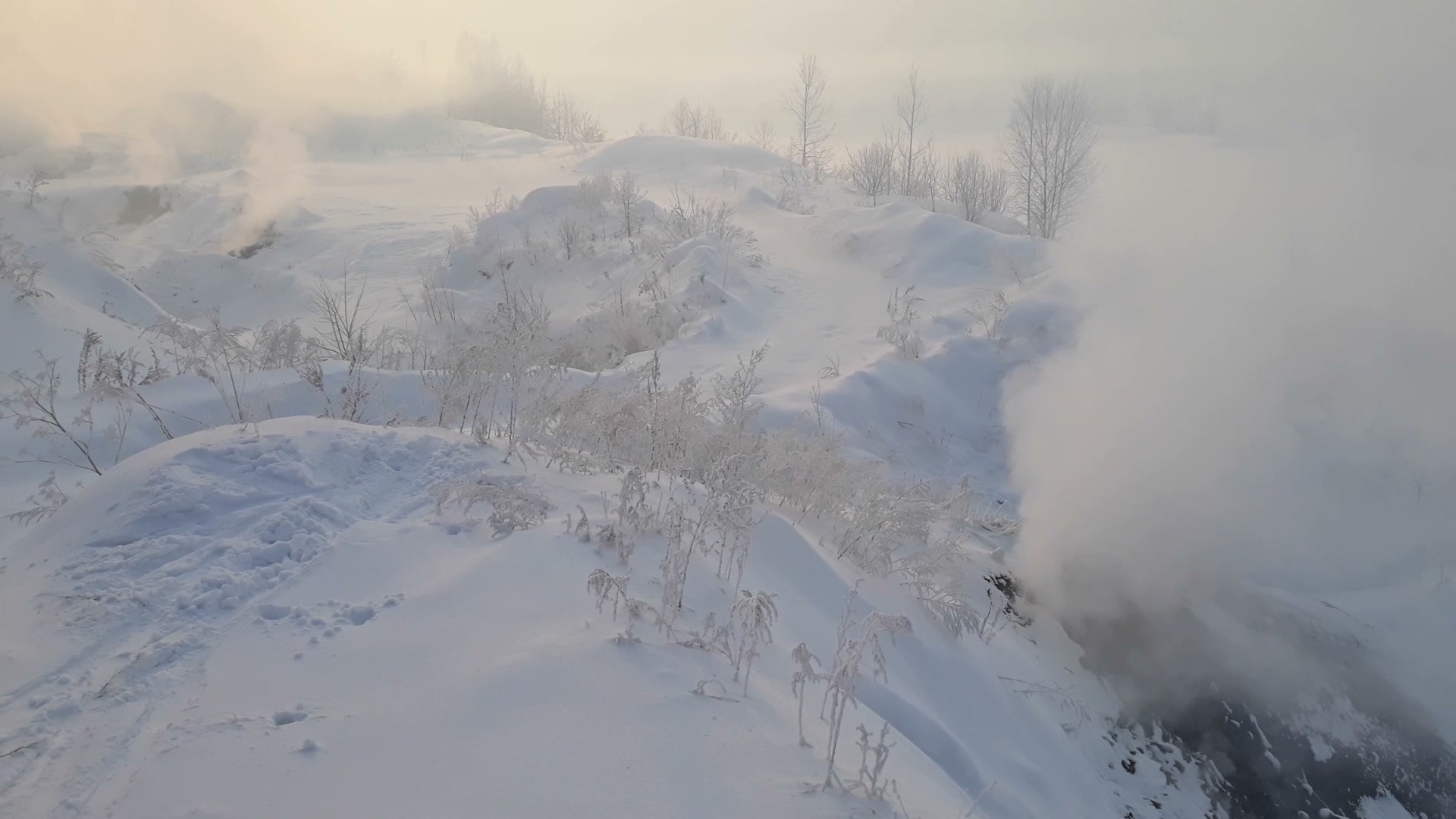
Scenario A. There is political will, independent oversight, and funding
In this scenario, the state first establishes exactly what remains across the region and where the danger to people is greatest. At every site, it assesses temperature, gases, water, slope stability, proximity to homes, ownership, and legal obligations. The measurements are published so that independent experts can examine them.
The next step must be to protect people: provide safe drinking water, restrict access to dangerous sites, and relocate families wherever safety cannot be ensured near their homes. Then comes work on burning and unstable waste heaps, mine water, methane, slopes, and soil. Monitoring does not end when construction is finished: water-treatment and gas-drainage systems may need to be maintained for decades.
In this scenario, I assume a managed reduction in coal production. If production falls along the path used in the calculation, the first 15 years will still generate 23–41 billion tonnes of waste-equivalent, while reclamation work will cover 35,000–70,000 hectares. According to the calculation, 95,000–143,000 hectares will remain disturbed. Over the full 50-year period, a total of 34–85 billion tonnes of waste-equivalent will be generated, reclamation work will cover 120,000–180,000 hectares, and between 5,000 and 117,000 hectares will remain disturbed.
“Waste-equivalent” is a calculated indicator, and a reclaimed hectare is not the same as a restored ecosystem. The details are provided in the appendix.
Even a limited first stage will cost billions of roubles. I give an example of the cost of the first necessary works below, in the section on costs.
People could see the first changes quickly: access to an unsafe site can be restricted, drinking water can be delivered, and measurements can begin within a year. Over two to five years, the immediate danger at the first group of sites can be reduced and some families relocated. But lasting recovery of soils, water, and vegetation takes decades. In some places, restoring the former ecosystem is no longer possible.
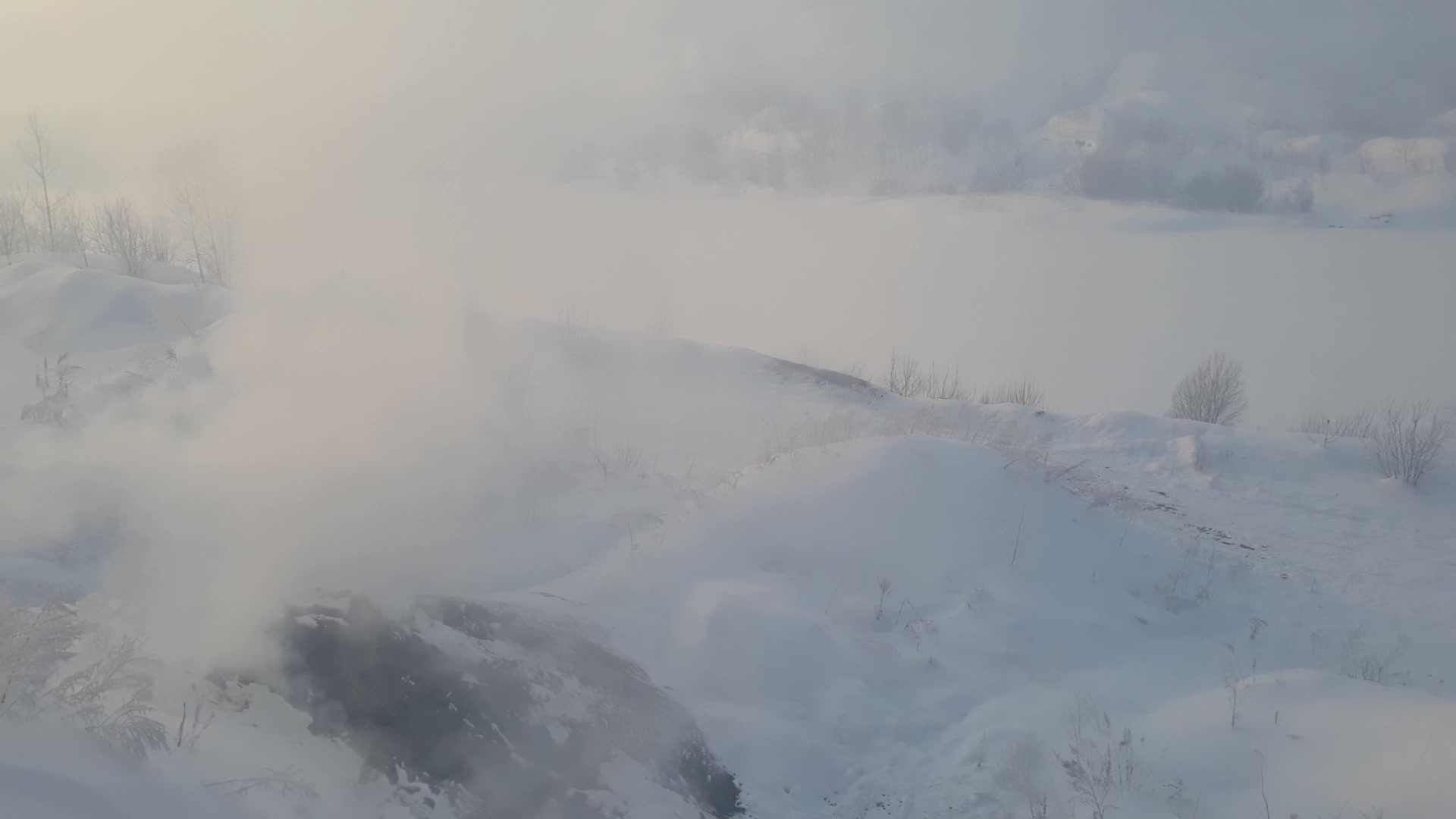
Scenario B. Mining ends quickly, but no one deals systematically with its legacy
At first glance, this seems like the simplest option: no mining, no problem. In reality, shutting down an operation stops new work, but it does not switch off old sites.
In the first few years, there will be fewer blasts, less movement of heavy machinery, and less creation of new waste heaps. That is a real improvement. But if the money and specialists disappear along with production, road watering, water treatment, drainage repairs, methane drainage, and slope monitoring may also stop.
When pumping stops, underground workings fill with water. In some cases, flooding reduces the supply of oxygen and some reactions weaken over time. Under other conditions, water emerges at the surface or moves into neighbouring aquifers and streams. The outcome depends on how the workings are connected and on local hydrogeology; one figure cannot describe the whole region.4
Waste heaps can change in different ways. After operations stop, dust may decrease and vegetation may gradually stabilise the surface. But a dry, unconsolidated slope, burning inside the waste heap, or the end of monitoring can allow danger to persist—or increase—near a particular site. Without oversight, it will be noticed later.
If mining ends within five to ten years, the transition period will still generate 5.5–9.3 billion tonnes of waste-equivalent. After that, new volumes will almost stop growing. Yet the calculation indicates that, after 15 years, 30–179 million cubic metres of mine water a year may still require management. After 50 years, the corresponding figures are 15–90 million cubic metres of water a year and 5,000–120,000 tonnes of methane a year from closed mines.5
For local people, this scenario may be especially hard. Some industrial impacts will disappear, but jobs, medical services, and the ability to pay for past damage may disappear with the companies. People will leave, while municipalities inherit sites that are expensive to maintain. A fall in the number of recorded illnesses caused by outward migration or poorer diagnosis must not be mistaken for better health.
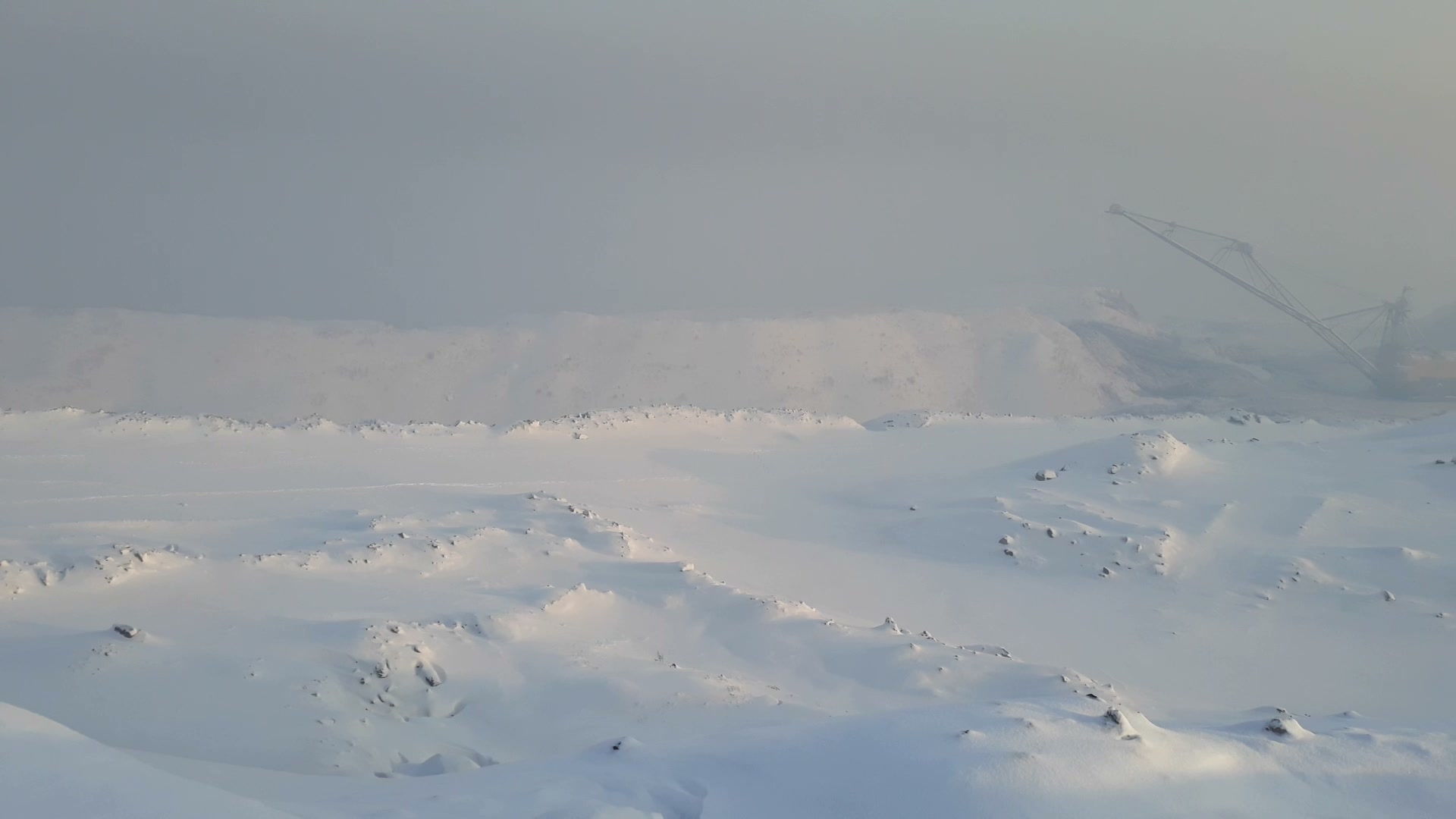
Scenario C. Production returns to its previous high level, while the old damage remains
I use a documented level as the benchmark for high production: about 255 million tonnes in 2018. In 2025, the regional ministry reported approximately 191 million tonnes.67 Under this scenario, production rises to 230–255 million tonnes a year and remains there.
Under these conditions, 38.5–59.1 billion tonnes of waste-equivalent will be generated over 15 years, while 171,000–195,000 hectares will remain disturbed. Over the full 50-year period, a total of 131–203 billion tonnes of waste-equivalent will be generated and the area of disturbed land will grow to 287,000–370,000 hectares.
Over 50 years, operating companies will abstract an estimated 20.5–25.1 billion cubic metres of water. The lower bound assumes that 10 per cent less water is abstracted for every tonne of coal than in 2025. The upper bound assumes that water use per tonne does not change. This is total industrial abstraction; what happens to the water and how it affects a particular river depend on location, treatment, and the composition of the discharge.
Company revenues may rise under such a future. But money does not extinguish waste-heap fires, clean water, or restore land by itself. That requires specific obligations, financial guarantees, and oversight that prevents a site from being transferred to another owner together with its problems—but without the money needed to solve them.
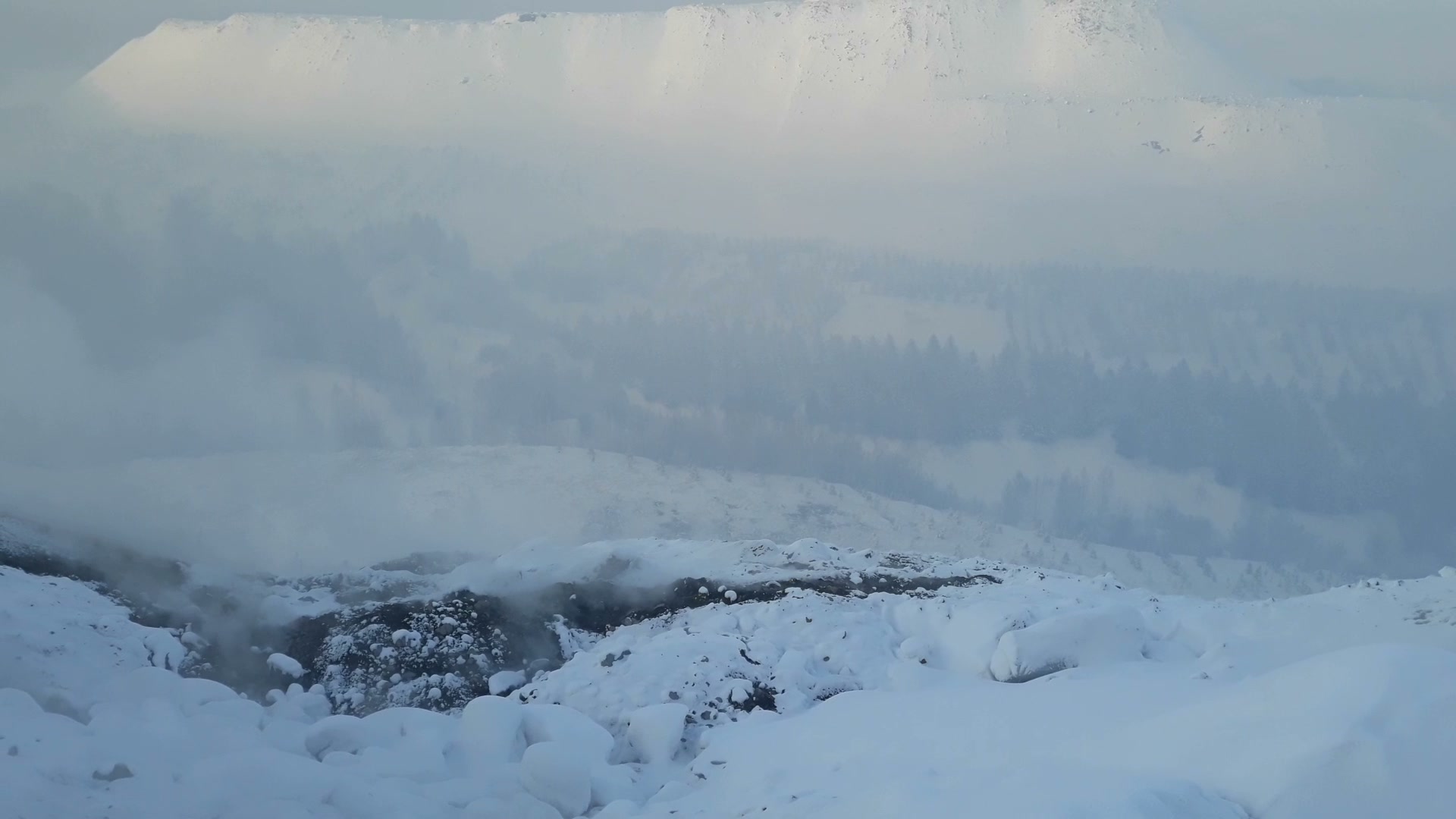
What this means for health
Health does not change in step with the coal-production graph. If the air becomes cleaner, symptoms may ease, and heart attacks, strokes, and disease flare-ups may occur less often. Changes in the number of new cases of chronic obstructive pulmonary disease—COPD—take years to emerge. Lung cancer may reflect exposure that happened decades earlier. For congenital malformations, exposures before conception and during the critical weeks of pregnancy matter, so all pregnancy outcomes—not only diagnoses in live-born children—need to be monitored.
Under Scenario A, risk falls only if the programme genuinely reduces exposure: dust and smoke are measured, hazardous sites are dealt with, water is treated, and people are protected or relocated. Under Scenario B, emissions from operating companies may fall quickly, but local fires, dust, mine water, stress, job losses, and declining access to healthcare pull in different directions. Under Scenario C, new sources are added to old ones unless stronger technology and oversight offset the growth in production.
WHO estimates help show how a change in air quality may affect disease risk.8 The estimated changes in disease risk differ depending on whether the annual average PM2.5 concentration rises or falls, so I calculated them separately.
| New cases of a specific disease | PM2.5 lower by 5 µg/m³ | Lower by 10 µg/m³ | Higher by 5 µg/m³ | Higher by 10 µg/m³ |
|---|---|---|---|---|
| Acute myocardial infarction | −5.9% | −11.5% | +6.3% | +13.0% |
| Stroke | −5.5% | −10.7% | +5.8% | +12.0% |
| Hypertension | −7.2% | −13.8% | +7.7% | +16.0% |
| COPD | −7.9% | −15.3% | +8.6% | +18.0% |
| Childhood asthma | −13.6% | −25.4% | +15.8% | +34.0% |
| Lung cancer | −7.2% | −13.8% | +7.7% | +16.0% |
Each figure in the table applies only to new cases of the named disease in the relevant age group. This is not yet a calculation for the people of Kuzbass: that would require actual concentrations at their places of residence, the age structure of the population, and the baseline number of new cases. I do not automatically assign an increase of 5 or 10 micrograms per cubic metre to the high-production scenario. The table applies only where measurements show such a change in PM2.5. The formulas and confidence intervals are provided in the appendix.
There is no equivalent percentage for water yet. The volume of mine water does not tell us how much of a harmful substance enters a person's body. We need to know the substance itself, its concentration in the water people use, the duration of exposure, and how many people actually drink that water.9
There is no percentage in the table for congenital malformations either. The studies collected so far give reason to monitor the issue, but Kuzbass still lacks data linking exposure of both parents, the critical weeks of pregnancy, specific malformations, and all pregnancy outcomes.10 The state and the healthcare system should collect precisely this information.
Comparing future years will also require us to account for population ageing, migration, smoking, occupational exposures, and access to doctors. If people have left, a clinic has closed, and fewer diagnoses are being recorded, that does not necessarily mean the area has become healthier.
Climate and consequences beyond Kuzbass
Methane released from mines and coal seams affects the climate regardless of where the source is located. The calculation puts cumulative methane emissions over 50 years at approximately 3.2–18.6 million tonnes under Scenario A, 3.2–14.6 million tonnes under Scenario B, and 28.4–52.4 million tonnes under Scenario C.
The managed decline in production lasts longer, so Scenario A does not always result in lower cumulative methane emissions than the rapid shutdown in Scenario B. But under Scenario A, gas is measured, some of it is captured or destroyed, and emissions are monitored after closure. Under Scenario B, production ends sooner, but an unmanaged “tail” of old mines remains. In year 50, the estimated annual emissions are: from almost zero to about 100,000 tonnes under Scenario A, including closed sites; about 5,000–120,000 tonnes under Scenario B; and roughly 570,000–1.06 million tonnes under Scenario C. The calculation assumes that the coal system accounts for 60–100 per cent of the methane recorded in the region in 2025.15
Using the IPCC's 100-year metric, the cumulative methane under Scenario C is equivalent to approximately 847–1,561 million tonnes of CO₂-equivalent.13 This measure makes it possible to compare the climate effects of different gases. The figure includes only methane from the Kuzbass coal system. Gases from burning waste heaps and carbon dioxide from burning the coal that was sold require separate calculations. Mining, waste-heap fires, and coal use are three different parts of the same chain.
Impacts can travel beyond Kuzbass by several routes. Dissolved and suspended substances may move along the Tom, Inya, Chumysh, and Chulym rivers and farther into the Ob basin. The regional report gives water-abstraction and discharge volumes, but it does not show how much of a particular substance remains after dilution, sedimentation, and chemical transformation, or how far downstream it can still be detected.1 The scale of the impact far downstream has not yet been calculated.
Dust and combustion products can be carried by air currents, while coal and coal dust can travel along the transport chain. Establishing how far airborne pollution moves requires data on the movement of air masses, particle composition, and measurements taken at the same time inside and outside Kuzbass. I found no such calculations in the materials reviewed. Nor could I find comparable data on coal losses and pollution along railway corridors. Coal that has been sold produces emissions where it is burned, while its CO₂ affects the global climate.13 These emissions are not included in the methane calculation above.
The consequences can extend beyond the region's administrative border. But the available data do not establish measurable damage across Eurasia as a whole. Water, air, transport, and climate each have different pathways, and each must be assessed separately.
What changes after 5, 15, 30, and 50 years
| Time | Scenario A: management and restoration | Scenario B: shutdown without management | Scenario C: high production without adequate action on past damage |
|---|---|---|---|
| 5 years | A register of sites, protection for people, and the first work on water treatment, methane control, and removing the danger from waste heaps. Immediate risk can already be reduced at priority sites. | New industrial impacts decrease, but the loss of maintenance creates local hazards. | New flows of rock, water, and emissions grow rapidly; old sites remain. |
| 15 years | The first major cycle of work is complete; some land has stable vegetation cover. Mine water is treated and methane is monitored on an ongoing basis. | The consequences of flooding emerge; some areas become overgrown, while other sites deteriorate. | The new legacy is added to the old one; the cost of eventual closure rises. |
| 30 years | Some soil and vegetation functions return at the most successful sites, but water- and gas-management systems remain in operation. | Some sites become overgrown, water problems remain at others, and dangerous sites are left without a responsible owner. | New disturbance continues, so large areas remain at an early stage of recovery. |
| 50 years | The danger from most priority sites may have been reduced, but some obligations remain permanent. | Remediating some of the damage becomes more expensive, while some consequences can no longer be fully reversed; the costs pass to the next generation. | The greatest volume of future obligations accumulates—for land, water, waste heaps, and mine closure. |
How much will it cost?
Today, it is impossible to give an honest total price for restoring Kuzbass. For every waste heap, mine, water-management system, dangerous slope, and home, we need to know its condition, the work required, and who is responsible. We do not have such a complete, open inventory.
Real projects show an enormous range. In 2021, the initial price for extinguishing one waste heap at the Ayutinskaya mine was about 191 million roubles.11 A corporate programme to reclaim 500 hectares was valued at more than 3.2 billion roubles, while the next stage, covering more than 1,200 hectares, was estimated at roughly 5 billion roubles through 2028.12 These sums cannot simply be extrapolated to the whole region: the sites and the work involved differ.
To show the order of magnitude, I assembled an example of the first essential work: ten waste heaps that are burning or heating up to dangerous temperatures and 1,000 hectares of reclamation. Based on the Russian price benchmarks I found, this would cost 4.6–11.5 billion roubles at prices from different years, between 2020 and 2024. This sum covers only the selected waste heaps and land. It excludes a complete inventory, relocation, mine-water management, methane, roads, land acquisition, independent oversight, and long-term maintenance.
International experience matters above all because it shows the structure of the costs. Mine water cannot simply be “removed” once. A system must be built, then its pumps, treatment, testing, and repairs paid for year after year. The same applies to methane, subsidence, and slope monitoring. The price of a programme therefore includes not only construction, but also continuous operation and maintenance for decades.
What must be done whatever happens
The three scenarios are very different, but the first essential actions are the same.
Kuzbass needs an open register of mines, open-pit mines, waste heaps, water-management systems, fires, methane, disturbed land, and housing in hazardous areas. It needs continuous air and water monitoring where people live. It needs complete recording of pregnancy outcomes and comparable statistics on new cases of disease. And it needs rules ensuring that money for closure and long-term site management exists before a company stops operating or changes ownership.
Above all, people need protection. No one should have to wait for scientists to prove retrospectively the exact share of one particular company in their illness when their home is already in a hazardous area, their water is unsafe, or a slope is becoming unstable.
Stopping mining does not restore the region by itself. Continuing mining does not automatically create money that will be spent on restoration. The difference lies in governance: who measures, who is responsible, who pays, and whether the results can be verified.
Fifty years from now, Kuzbass will look different under each of these scenarios. But part of that outcome is being decided today. Every new waste heap, every hectare of disturbed land, and every mine without a funded closure plan becomes an obligation for people who have not yet been born.
So the main question is not only how much coal Kuzbass will be able to produce. The main question is what kind of land—and what kind of life—we adults will leave to children once the coal is gone.
Sources and research appendix
Open the full list of sources
- State report “On the state and protection of the environment in Kemerovo Region—Kuzbass in 2025”.
- Rosprirodnadzor: official statistics on waste management in 2025.
- Regional waste-management plan for Kemerovo Region—Kuzbass, Resolution No. 127 of 11 March 2026.
- Environment Agency: forecasting mine-water rebound after pumping stops.
- UNECE: best-practice guidance for abandoned mine methane.
- Kuzbass Ministry of Coal Industry: key industry indicators for 2025.
- Kuzbass Ministry of Coal Industry: 2018 production figures.
- WHO, HRAPIE-2: risk functions for air pollution, 2025.
- WHO: Guidelines for drinking-water quality, 2026.
- “Congenital malformations in Kuzbass”: article and primary sources.
- Procurement contract for extinguishing waste heap No. 13-bis at the Ayutinskaya mine.
- AO Stroyservis reclamation programme: 500 hectares and more than 1,200 hectares.
- IPCC Sixth Assessment Report, Chapter 7: climate metrics for methane.
The detailed formulas, input data, ranges for all four time horizons, methane and water calculations, confidence intervals for the health risk functions, and limits on applying the findings are collected in the research appendix. They do not replace the main text; they make it possible to reproduce or challenge the calculations.